Forget the pristine data sheets. After two decades of deploying RXC inductive proximity sensors in steel mills, chemical plants, and automated foundries, the real-world performance curve diverges sharply from the lab ideal. Let's cut to the chase.
Experience Correction: The Gritty Reality vs. Theoretical Specs
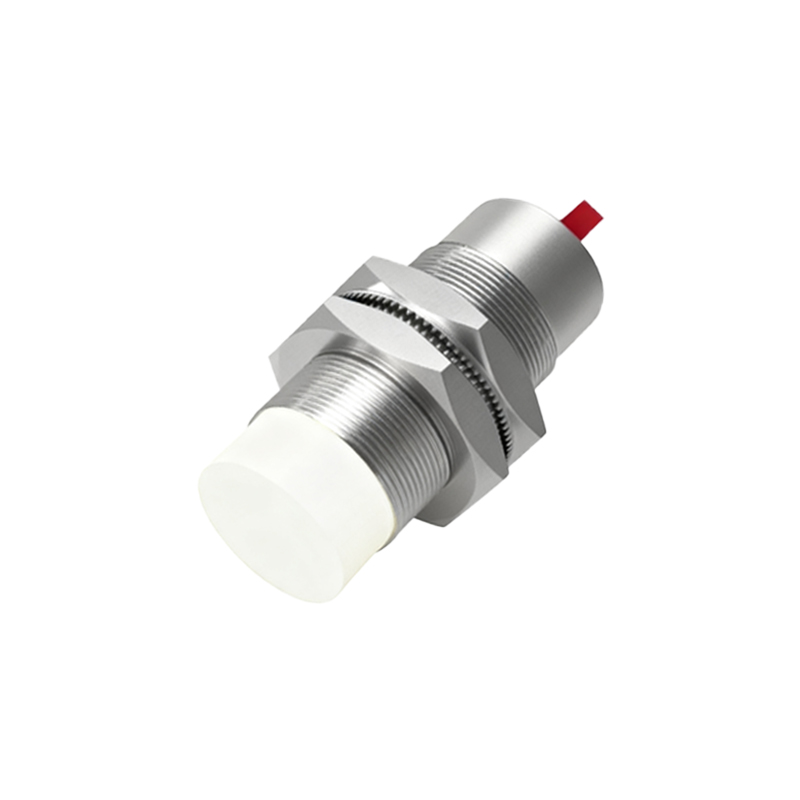
The advertised sensing distance, say 8mm for a standard M18 sensor, is a fantasy in hostile environments. Theoretical parameters assume clean, ambient-temperature ferrous targets. In practice, conductive dust accumulation—common in machining or carbon-heavy settings—forms a parasitic shield on the sensor face. This can degrade effective sensing range by up to 40%. We've logged instances where a sensor rated for 8mm consistently failed beyond 5mm within three weeks of operation without aggressive purge-air cleaning. The repeatability accuracy, often touted as ±0.5%, is contingent on voltage stability. In plants with large inductive loads (think massive motors starting), line voltage dips can cause a temporary "sensing shadow," leading to missed counts. This isn't a sensor flaw per se, but a systemic integration blind spot. Relying solely on the IP67 rating for protection is another pitfall. While it withstands immersion, high-pressure steam cleaning can force conductive fluids past the housing seal via thermal contraction, leading to internal condensation and eventual failure. The real Mean Time Between Failures (MTBF) in such washdown environments is often 30% lower than catalog claims.
Boundary Conditions: When to Walk Away
The RXC is not a universal solution. Its core technology dictates specific failure zones. First, fine, non-ferrous metallic powders (e.g., aluminum or copper swarf). These particles can adhere to the active face and are not detected as a target. They create a permanent, undetectable offset that reduces the effective sensing distance until physically cleaned. Second, extreme proximity to high-frequency AC drives or welding equipment. The electromagnetic interference generated can induce a false "on" state in the sensor's oscillator circuit, triggering phantom signals. Shielding and separation (over 2 meters is our rule of thumb) are mandatory, often negating the installation's practicality. Third, applications involving slow-speed, vibration-free sensing of viscous materials. If a sticky substance like certain polymers or greases coats the sensor, it may be detected as a permanent target (latching the output), requiring manual intervention. Finally, ultra-high-temperature environments near furnaces. While some models are rated for 100°C ambient, radiant heat from nearby surfaces can locally exceed this at the sensor body, causing internal component drift and premature aging of the PPS sensing face material.
Counter-Intuitive Conclusions: Data-Driven Insights That Defy Convention
1. A "Failing" Sensor Might Be Perfectly Fine. A common diagnostic is to check the sensor LED. However, in high-cycle applications (e.g., >500 Hz), the LED indicator, due to its inherent latency, may appear dim or off even when the switching output is functioning correctly. Trust a multimeter or oscilloscope on the output, not the visual cue. We've replaced countless "faulty" sensors that were, in fact, operational.
2. Sometimes, a Less Sensitive Sensor is More Robust. In environments with airborne metallic particulates, selecting a sensor with a shorter nominal sensing distance (e.g., 4mm instead of 8mm) can improve reliability. The reduced electromagnetic field is less susceptible to interference from floating debris, minimizing false triggers. You sacrifice margin for stability.
3. Voltage "Headroom" is a Silent Killer. Operating an RXC sensor at the lower limit of its voltage range (e.g., 10V for a 10-30V DC model) during normal conditions leaves no buffer for line loss. When the sensor encounters a target at the edge of its degraded real-world range, the increased current draw can cause a voltage drop that pushes it below the operational threshold, causing a fail. Always power these sensors at least 25% above the minimum specified voltage.
4. The Mounting Material Matters More Than You Think. Embedding a sensor in an aluminum bracket versus a steel one can alter its field characteristics. Non-ferrous mounting can slightly extend the sensing range but also makes the field more asymmetrical and vulnerable to side-approach interference. Consistency in mounting material across an installation is critical for predictable performance.
The bottom line: The RXC proximity sensor is a formidable tool, but its efficacy is defined not by its ideal specifications, but by the harsh, electromagnetically noisy, and physically demanding reality of the plant floor. Successful deployment requires designing for the worst-case scenario, not the catalog page.
SEO