For two decades, I've specified, installed, and cursed proximity sensors in environments ranging from sterile pharmaceutical labs to slag-dusted steel mills. The glossy datasheet for your KINCH sensor tells one story; the reality on the factory floor writes another. Forget the basics. Let's talk about what actually matters when the pressure is on and downtime costs thousands per minute.
Experience Correction: Where Theory Meets Grime
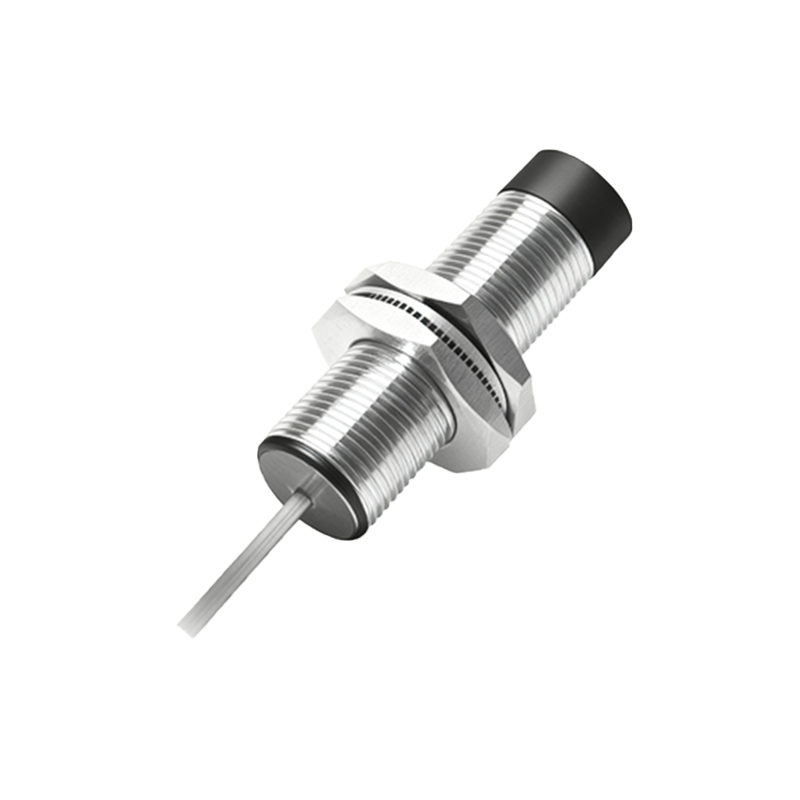
The rated sensing distance (Sn) is a fantasy conceived in a cleanroom. In practice, it's a variable, not a constant. For a standard KINCH inductive sensor rated at 10mm, I've seen effective range degrade by up to 60% when coated with a consistent, fine metallic powder (e.g., aluminum or iron oxide). The issue isn't just missed detection; it's the hysteresis shift. The sensor might still trigger, but the release point creeps unpredictably, causing timing faults in high-speed indexing applications. The correction? Derate aggressively. In heavy particulate environments, treat a 10mm sensor as a 4mm device for critical positioning. Secondly, the IP67/IP68 rating implies immersion resilience. What it doesn't cover is thermal cycling. Rapidly cooling a sensor body heated by ambient process heat with a washdown spray can create a vacuum inside the housing, drawing in moisture through microscopic cable gland imperfections. I've witnessed more failures from this "breathing" effect than from direct water jets.
Boundary Conditions: When to Walk Away
KINCH sensors, like all inductives, have failure modes that are catastrophic if ignored.
1. Non-Ferrous Metals at High Speed: Sensing aluminum or copper targets on high-RPM spindles (>3000 RPM) is a gamble. Eddy currents generated in the target can create a phase-shifted signal that the sensor's electronics interpret as a fluctuating presence/absence state, leading to chaotic output. The solution is often a capacitive or specialized HF-oscillating sensor, not a standard inductive.
2. Embedded Installation in Ferrous Material: Datasheets show flush-mounting in steel. They rarely mention the "halo effect" of a worn mounting hole. If the sensor collar contacts a ferrous bore degraded by vibration, it can partially saturate the magnetic field, reducing effective range by up to 30% and creating a dead zone. Always use non-ferrous mounting bushings in worn structures.
3. Extreme Static Fields: Placing a standard sensor within 0.5 meters of a DC welding station or a large DC motor's bus bar is a recipe for drift. The static magnetic field can bias the sensor's ferrite core, permanently altering its sensitivity. This damage is often irreversible and not detectable by a simple function test.
Counter-Intuitive Conclusions: Data Over Dogma
1. A "Failing" Sensor Might Be Perfectly Healthy: The most common diagnostic for a suspected sensor failure is to swap it with a new one. If the problem persists, the blame shifts to wiring or PLC. However, I've documented numerous cases where the new sensor also "failed." The root cause was ground potential difference between the machine chassis and the control cabinet, inducing noise on the signal line. The original sensor was sensitive enough to reflect this instability; a lower-quality replacement might have masked it temporarily. The fix was a dedicated ground strap, not a new sensor.
2. Higher Frequency ≠ Better Response: Many assume a 5kHz switching frequency sensor is "faster" than a 1kHz model for high-speed applications. This is misleading. The critical metric is response time, not switching frequency. A 1kHz sensor with a 0.1ms response time will reliably detect a target present for 0.5ms. A poorly designed 5kHz sensor with a 2ms response time will miss it entirely. Obsess over the response time graph in the datasheet, not the headline frequency.
3. Shielding Can Reduce Reliability: In a dense panel with multiple sensors and VFD cables, the instinct is to specify fully shielded cables for everything. This can create ground loops and capacitive coupling nightmares. For inductive sensors in AC/DC mixed environments, using unshielded cable for runs under 2 meters and focusing on proper conduit separation (min. 200mm from power lines) often yields more stable performance than a poorly implemented shield grounded at both ends.
The final, hardest lesson: No sensor is universal. The value of a brand like KINCH lies in its consistency, giving you a predictable baseline from which to apply these brutal, experience-driven corrections. Specify not for the ideal condition, but for the worst-case failure your process can tolerate. That is