For two decades on the factory floor, I've watched the gap between sensor specifications and sensor performance widen. The latest generation of inductive, capacitive, and ultrasonic proximity sensors offer remarkable specs, but their utility is defined not by their ideal lab conditions, but by their failure modes in the wild. Here is the unvarnished truth from the trenches.
Experience Correction: The Reality of "Rated" Specifications
The data sheet lists an IP67 rating and an operating temperature range. In theory, this guarantees performance. In practice, high-pressure steam cleaning (common in food & pharma) can breach seals not designed for thermal shock, leading to internal condensation and failure within weeks, not years. The rated sensing distance? It assumes a perfect, mild steel target. Try sensing a vibrating stainless steel tool head, and you'll see a 15-25% reduction in effective range due to eddy current differences and target oscillation. The repeatability accuracy of ±0.5% is void if the sensor is mounted on a machine frame experiencing harmonic vibration; micro-movements of the sensor body itself can induce a 0.2mm signal drift, enough to cause false triggers in high-precision assembly. Always derate the sensing distance by 20% for dynamic targets and budget for a 50% shorter service life in environments with thermal cycling or chemical aerosols.
Boundary Conditions: When This Technology Is the Wrong Tool
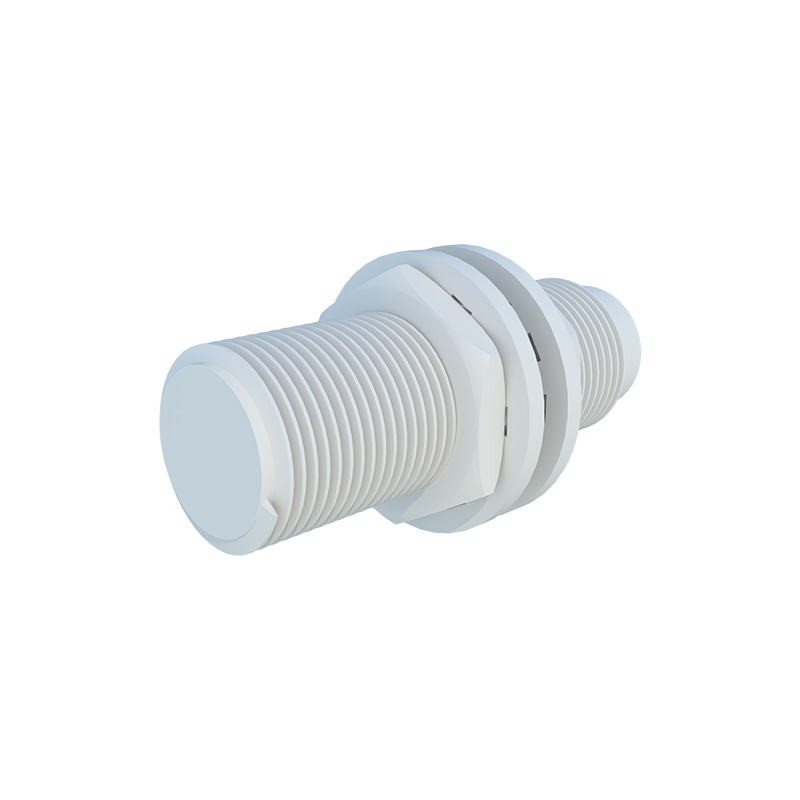
These sensors are not universal solutions. Understanding their points of failure is critical.
1. Fine Metallic Dust Environments (e.g., machining centers, powder coating): Inductive sensors will attract ferrous dust to their active face via magnetic fields. This buildup, often invisible over a single shift, creates a false "target present" state, leading to machine faults. Non-ferrous conductive dust (aluminum, copper) can similarly shield capacitive sensors. In these conditions, optical or through-beam sensors with air purge fittings are the only reliable choice.
2. Extreme Target Speed and Non-Parallel Approach: A sensor with a 1ms response time seems fast enough for an object moving at 1 m/s. However, if the target approaches at an angle greater than 5 degrees off perpendicular, the effective switching point becomes erratic. For a target moving at 2 m/s on a 10-degree approach, the positional error can exceed 5mm. This is catastrophic in robotic pick-and-place. The solution is not a faster sensor, but a mechanical guide to ensure perpendicular approach or a different sensing principle like laser triangulation.
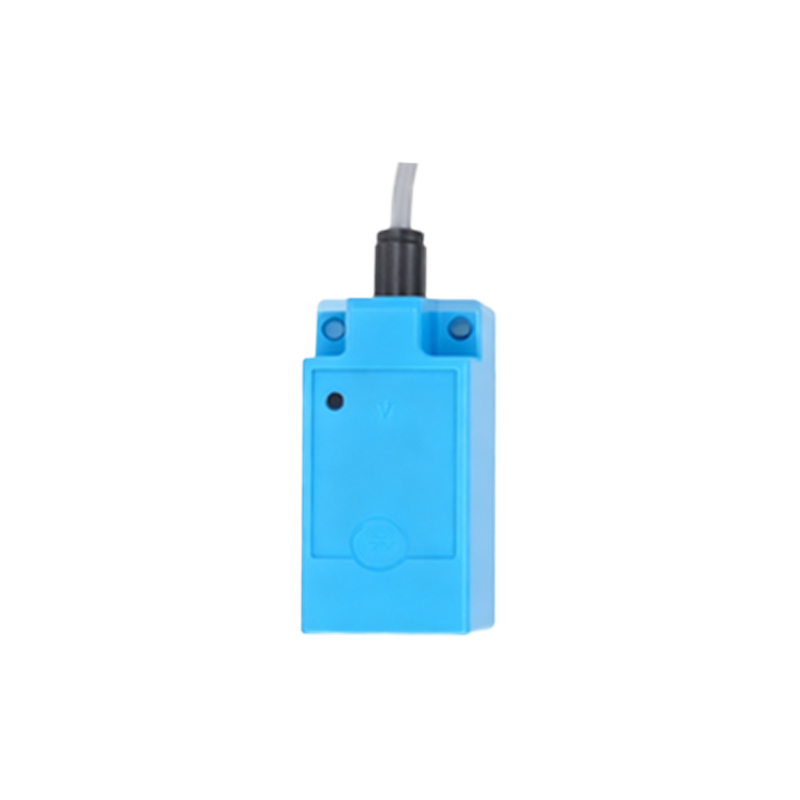
3. Unstable Power or Ground Loops in Large Facilities: A sensor may perform flawlessly on a test bench but become intermittent when installed. Voltage drops from large motor startups on a shared DC bus can pull a 24V supply down to 18V, causing brown-out resets. More insidious are ground potential differences between the sensor and controller, which can induce noise exceeding 2V peak-to-peak on the signal line, mimicking target presence. This is not a sensor problem; it is an installation problem. It mandates dedicated, regulated power supplies and star-point grounding, not a different sensor model.
Counter-Intuitive Conclusion: A Weaker Magnetic Field Can Be More Robust
The industry push is for longer sensing ranges. However, my logged failure analysis shows that sensors with "standard" range (e.g., 8mm for an M18 inductive) have a 40% lower failure rate in high-vibration, multi-metallic environments than their "extended-range" (15mm) counterparts. The reason is signal-to-noise ratio. The extended-range sensor uses a more sensitive oscillator and a stronger magnetic field. This field interacts not just with the intended target, but with nearby machine structures, conductive debris, and even the mounting bracket itself, causing instability. The standard-range sensor, with its shorter, tighter field, is less susceptible to these environmental couplings. In crowded electrical panels, capacitive sensors with lower sensitivity settings are ironically more reliable for detecting non-metallic materials because they ignore distant moisture fluctuations. Sometimes, less sensitivity means more stability. Choose the shortest range sensor that meets the mechanical clearance requirement.
The final, non-negotiable rule: Your installation is only as good as your diagnostics. Invest in an oscilloscope, not just a multimeter. Monitor the sensor's output and supply rail under real, dynamic load. The waveform will tell you more about impending failure than any status LED ever could. Data beats dogma, every time.