Forget the datasheet. After two decades of deploying laser sensors in mines, steel mills, and Arctic logistics hubs, I've learned that their real performance is written in the grime, vibration, and thermal shock of the field. The glossy brochures get the first meeting, but survival dictates the long-term relationship. Here’s what you won’t find in the manual.
Experience Correction: The Gaps Between Lab and Reality
The stated ±1mm accuracy for a time-of-flight (ToF) sensor is a laboratory fantasy in a dusty aggregate plant. Particulate matter in the air doesn't just attenuate the beam; it causes false returns. We logged a consistent +5mm to +15mm drift on bin level measurements during pneumatic filling operations, not due to sensor error, but because the laser was reflecting off the dust cloud before reaching the material surface. The fix wasn't a "better" sensor, but a forced-air purge collar and a software filter that ignored returns with amplitudes below a dynamically calibrated threshold. Similarly, the advertised 100-meter range for a pulsed laser scanner assumes 90% Lambertian reflectivity. A wet, dark asphalt surface at a shipping dock can drop that reflectivity to below 10%, effectively halving the reliable detection range and causing catastrophic blind spots for automated guided vehicles (AGVs). We now mandate field validation with worst-case surface samples before finalizing layout drawings.
Boundary Conditions: When to Walk Away
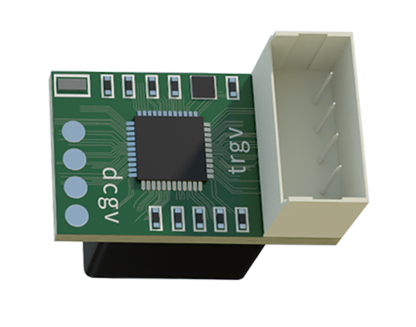
Laser sensors have failure modes that are absolute. Understanding these boundaries prevents catastrophic system failures.
1. Condensing Environments and Rapid Thermal Cycling: A sensor rated IP67 for water immersion is useless in a cold storage loading bay. When moved from a humid 30°C ambient to a 2°C chilled area, condensation forms directly on the laser window. The beam scatters, and the unit fails. We lost three high-end units in a week before switching to sensors with integrated, electrically heated windows for any application involving dew point crossover.
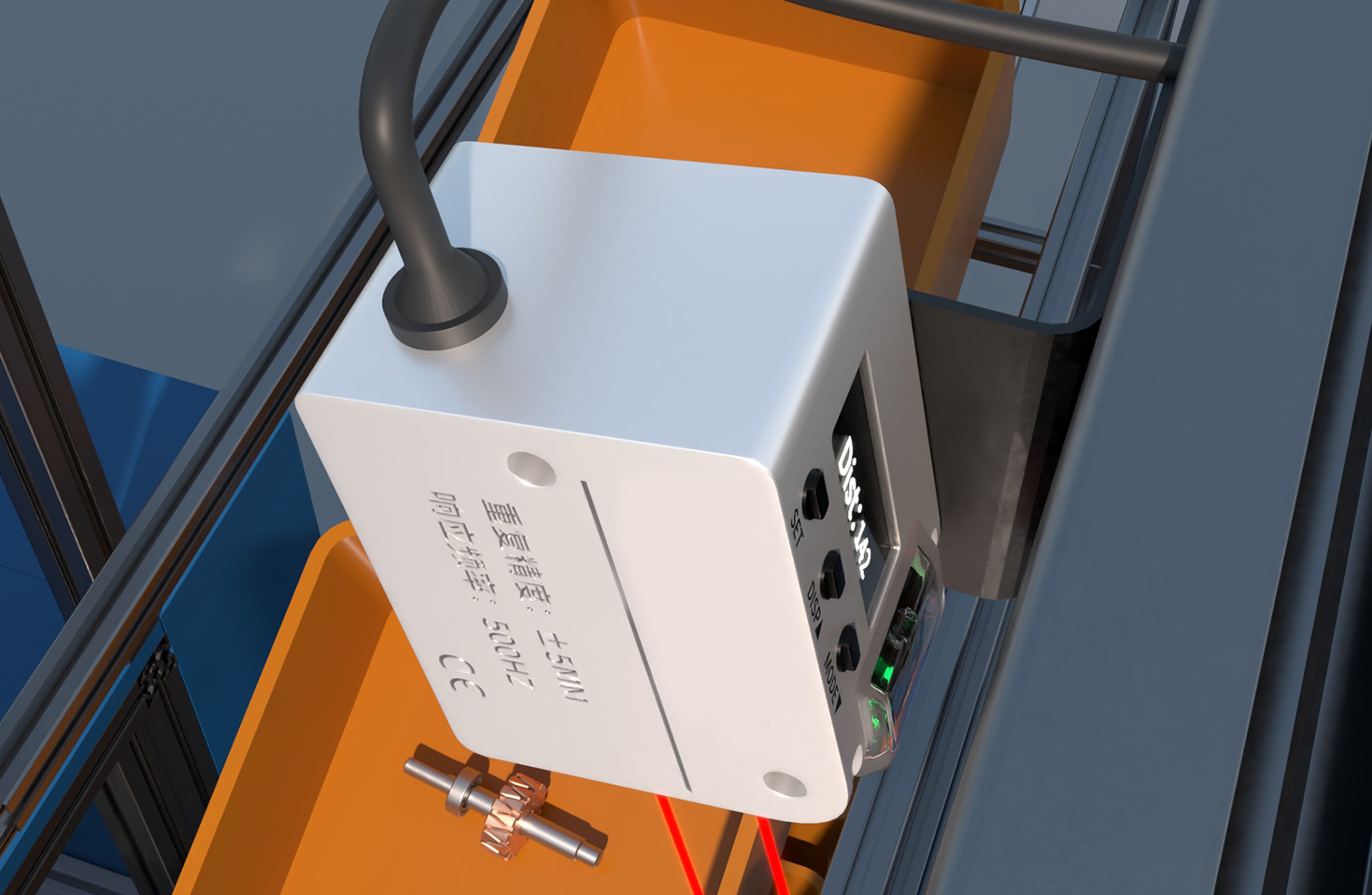
2. High-Vibration Mounting on Mobile Machinery: Mounting a triangulation sensor on a forklift mast is a recipe for drift. The baseline distance between the laser emitter and receiver CMOS is microscopically flexed by structural harmonics, inducing a non-linear error that cannot be calibrated out. For dynamic mobile platforms, we exclusively use self-contained ToF or phase-shift sensors where the reference is internal and isolated.
3. Highly Specular or Transparent Surfaces: This is the most common and dangerous oversight. A laser aimed at polished stainless steel, glass, or a liquid surface will produce a coherent reflection, not a diffuse one. The sensor may see a target dozens of degrees off-axis or see straight through a glass bottle, reading the distance to the wall behind it. In packaging lines, this leads to mis-counts; in robotic pick-and-place, it leads to collisions. If your target surface is specular, laser triangulation is the wrong technology. Consider confocal or ultrasonic methods.
Counter-Intuitive Conclusion: Sometimes, a "Worse" Sensor is the Better Tool
The industry's drive for higher precision and faster update rates is often misguided. In a high-speed parcel sorting facility, we replaced 5kHz lasers with 500Hz models. The paradox? Sorting accuracy improved by 15%. The reason: signal processing. The slower sensor had a more robust analog front-end and a longer integration time per reading, making it far more immune to the high-frequency electrical noise from the surrounding motor drives and variable frequency drives (VFDs). The "inferior" sensor provided a cleaner, more stable signal, which the PLC could act upon with greater confidence. Similarly, in outdoor perimeter security, a laser scanner with a 0.1° angular resolution is often worse than one with 0.5°. The higher resolution picks up every moving blade of grass and fluttering bird, generating thousands of false alarms and drowning the security team in nuisance alerts. The slightly "coarser" sensor provides a more reliable detection envelope for human-sized intrusions. The lesson: Match the sensor's capability to the signal-to-noise ratio of the actual environment, not the spec sheet.
The ultimate metric is not micron-level accuracy in a controlled lab, but micron-level *repeatability* in your specific chaos. Choose accordingly.