Forget the glossy datasheets and pristine lab results. After two decades of wrestling with sensors in environments ranging from chemical washdowns to offshore drilling platforms, I can tell you that the real performance of a "waterproof" proximity sensor is defined in the margins—the places marketing materials fear to tread. Let's cut straight to the hard-won, operational truth.
Experience Correction: The Myth of IP69K and Eternal Life.
The industry treats an IP69K rating as a holy grail. It's not. It signifies high-pressure, high-temperature water jet protection in a controlled test. The brutal reality is that cyclic thermal shock is the true killer. A sensor surviving 80°C washdown then immediately hit by -20°C ambient air creates a vacuum inside its housing. Over hundreds of cycles, this "breathing" effect will eventually draw contaminants past even the best seals. I've seen more IP69K-rated sensors fail from this than from a direct jet. Furthermore, the "MTBF" (Mean Time Between Failures) figures quoted are based on standard conditions. In a high-vibration food processing line with caustic cleaners, actual lifespan can be 40-50% lower. The material of the sensing face is another critical oversight. PBT housings may hold, but a glass-filled polyamide sensing face can micro-crack under repeated impact from high-pressure sprays, leading to slow moisture ingress and eventual dielectric failure, not captured in standard ingress tests.
Boundary Conditions: Where This Technology Will Let You Down.
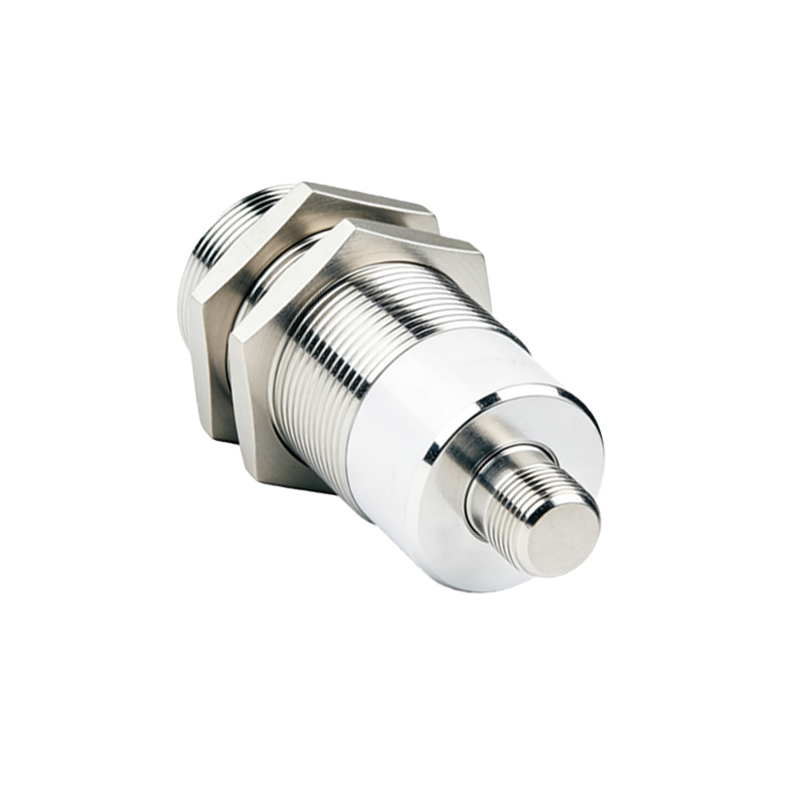
Deploying these sensors with blind faith in their waterproofing is a recipe for catastrophic downtime. Here are the non-negotiable red zones:
1. Continuous Partial Immersion in Certain Media: Immersion in water is one thing; immersion in a mixture of water and animal fat, vegetable oil, or certain cutting fluids is another. These fluids can degrade seal elastomers (like standard NBR) over time, causing them to swell and lose clamping force, or become brittle and crack. The failure is slow and insidious.
2. High-Speed Turbulent Fluid Environments: Mount a sensor near a powerful agitator or pump discharge. The IP rating assumes directed jets. Turbulent, aerated fluid creates chaotic, hammering pressures on seals far exceeding test parameters and can induce resonant vibration in the sensor body, loosening mounting hardware and stressing cable gland entries.
3. Applications with Frequent Steam Sterilization: If the process involves live steam (e.g., >121°C, 1 bar overpressure), standard "high-temperature" waterproof sensors are inadequate. The repeated expansion/contraction and the potential for vacuum formation during cooling will compromise most standard designs. You need a sensor specifically engineered for autoclave-style conditions, with metal-to-metal seals and often a pressurized housing.
4. When Condensation is the Primary Threat: A cold sensor in a warm, humid environment will condense water inside the housing if it is not hermetically sealed or nitrogen-purged. An IP rating is irrelevant against this internal enemy. This is a common, devastating failure in refrigeration and outdoor applications with large diurnal temperature swings.
Counter-Intuitive Conclusion: A Weaker Housing Can Be More Reliable.
This will sound heretical: In highly corrosive environments (e.g., saltwater, chlorine atmospheres), a sensor with a slightly lower mechanical strength but superior corrosion-resistant housing (e.g., high-grade 316L stainless with proper passivation) will outlast a "tougher" sensor made from coated 304 stainless or plated brass every single time. The reason is failure mode. The corrosion-resistant housing maintains seal integrity at the critical thread and gland interfaces. The "tougher" sensor may resist a dent, but its compromised coating leads to crevice corrosion under the seals, causing a sudden, total failure. Data from offshore installations shows a 300% increase in meancorrosion allowance (MCA) for sensors where seal interface corrosion was the root cause of failure. Similarly, in some high-vibration settings, a sensor with a flexible PVC cable jacket outperforms one with a "tougher" PUR jacket, as the PVC's damping characteristics reduce strain transmission to the critical cable gland entry point, the number one failure location in dynamic applications. Durability is about system harmony, not just individual component brute strength.
The final verdict is this: Selecting a waterproof proximity sensor is not about choosing the highest IP rating. It is a forensic analysis of your specific failure vectors: thermal cycling, chemical compatibility, dynamic stress, and the enemy within—condensation. Interrogate the supplier on seal material (FKM/Viton for aggressive chemicals, EPDM for steam), housing passivation processes