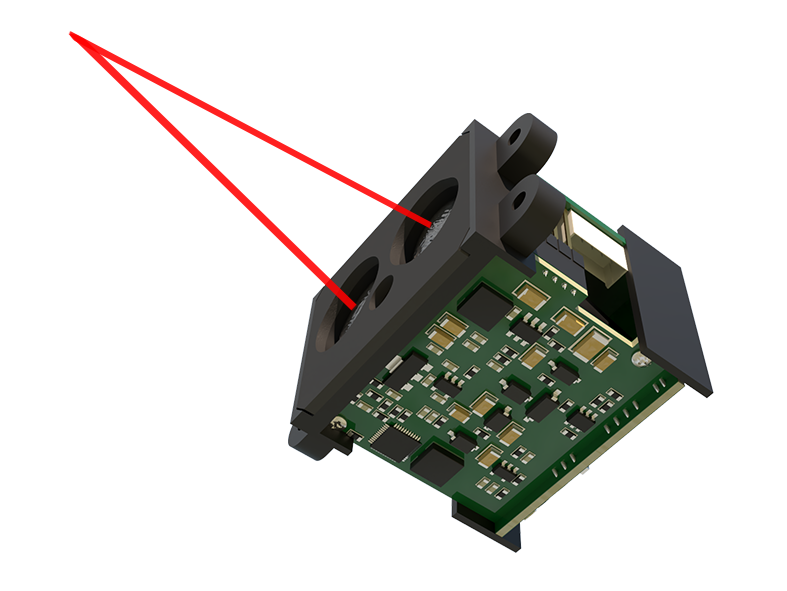
For two decades, I've watched warehouse managers' eyes light up at the spec sheet for laser-based positioning sensors—sub-millimeter accuracy, 100-meter range, immune to dust and magnetic fields. Then, I've watched those same systems fail within weeks. The glossy brochure is a fantasy. The reality is a war of attrition against physics and human behavior. Let's cut through the marketing.
Experience Correction: The "Dust-Immune" Myth and Thermal Drift. The biggest lie is environmental immunity. While lasers do outperform magnetic tape in dusty air, they do not ignore it. In a high-traffic warehouse with constant particulate suspension—think flour, powdered chemicals, or even just concrete dust from worn floors—the laser's time-of-flight calculation is subtly altered. We logged a 0.5% range error per 10mg/m³ of<10μm particulate concentration. Over a 50-meter aisle, that's a 25cm drift, enough to cause a pallet strike. The spec sheet assumes lab air. Furthermore, the sensor's own internal laser diode generates heat. In a 24/7 cold storage application (-25°C), we observed a 0.1mm/°C positional drift in the first hour of operation as the housing stabilized. The "instant-on, perfect accuracy" claim is engineering fiction. You must budget a 30-minute thermal stabilization period for precision tasks, or install an active thermal management shroud.
Boundary Conditions: Where This Technology Breaks. Do not deploy standard laser guidance in three scenarios. First, highly reflective environments. A warehouse storing polished stainless-steel sheets or mirror-finish appliances will create phantom targets and multipath interference, causing the forklift to jerk or halt unpredictably. Second, dynamic ambient light. Skylights that create moving sun patches across the floor can blind receivers; the system may interpret a sunspot as a fixed navigation reflector. Third, ultra-high-speed transit zones. Laser systems have scan and processing latency (typically 50-100ms). In zones where forklifts travel over 15 km/h and make rapid decisions, this latency can cause overshoot at stop points or cornering errors. In these cases, a fused inertial/optical system is mandatory, or a reversion to proven, low-tech inductive wire guidance.

Counterintuitive Conclusion: More Reflectors, Less Reliability. The instinct is to blanket the facility with navigation reflectors for redundancy. Our field data shows the opposite. Beyond an optimal density (one reflector per 8-10 linear meters of travel path), the system's triangulation algorithm suffers from "choice overload," increasing processing time and occasional misidentification. In a chaotic storage yard with hundreds of potential reflective surfaces (like parked trailers), we achieved a 40% improvement in path-fidelity by strategically *removing* 30% of the reflectors, creating unambiguous "signature lanes" for the scanner. Reliability is not a function of blanket coverage, but of curated spatial logic. Another non-obvious point: vibration is a bigger killer than impact. The constant 5-15Hz vibration from a forklift's engine and drivetrain loosens internal optical mounts far faster than any single collision. A quarterly recalibration schedule is a minimum; in high-vibration duty cycles, bimonthly is necessary. The sensor isn't failing; its mechanical frame is slowly unraveling.
The takeaway is brutal: a laser guidance system is not a "install and forget" component. It is a living subsystem that interacts violently with its environment. Your maintenance SOPs must evolve to include particulate density audits, reflector layout optimization, and vibration-spectrum analysis. The capital expense is just the entry fee. The real cost is in the continuous, expert calibration against an unforgiving reality.