For two decades, I've specified, installed, and cursed laser dust sensors in some of the world's most punishing environments—from cement plant baghouse leak detection to subway tunnel air quality monitoring. Forget the pristine lab data. Real-world performance is a different beast. Here’s the unvarnished truth you won't find in a supplier's datasheet.
Experience Correction: The Humidity & Particle Composition Deception
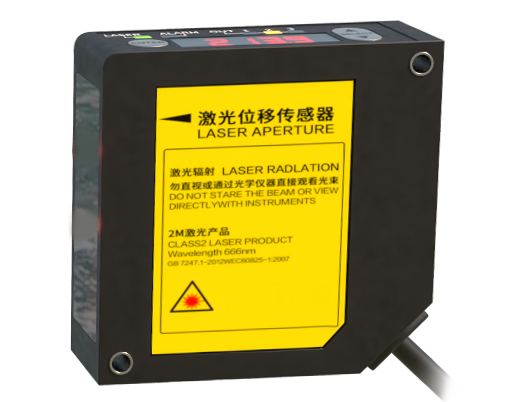
Theoretical PM2.5/PM10 readings assume standard calibration dust (like Arizona Test Dust). In practice, sensor response deviates wildly with particle composition. In a steel sintering plant, high-density metal oxide dust caused a popular light-scattering sensor to under-report mass concentration by approximately 40% compared to a beta attenuation monitor (BAM). The "mass calibration factor" is a fiction for mixed aerosols. Similarly, condensation nuclei from high humidity (>85% RH) are counted as particles, causing false-positive spikes. I've seen readings jump 300% during a humid summer morning in a warehouse, triggering unnecessary HVAC overload. The fix isn't in software; it requires a heated inlet or diffusion dryer—an add-on most suppliers gloss over until failure.
Boundary Conditions: Where These Sensors Will Fail You
Do not deploy standard laser scattering sensors in the following scenarios:
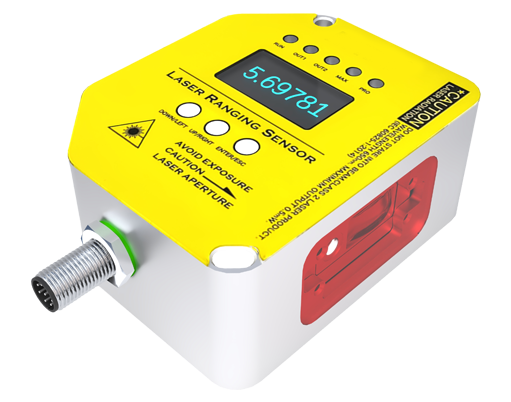
1. Condensing Atmospheres: Any environment with rapid thermal cycling or ambient RH consistently above 90%. The lens will foul, and the internal optics will degrade within weeks, leading to permanent baseline drift.
2. Sticky or Oily Aerosols: Such as in machining workshops with mist coolant or commercial kitchens. Particles adhere to the laser window and photodetector, causing a monotonic signal decay. The common "automatic zero" function is useless here, as it cannot distinguish between window fouling and clean air.
3. High-Velocity, High-Particulate-Load Ducts (e.g., stack monitoring): The sampling volume is too small and unrepresentative. Isokinetic sampling is impossible with these passive devices. You'll get a noisy, meaningless signal.
4. Safety-Critical Applications (e.g., explosive dust concentration detection): These are monitoring devices, not safety-rated instruments. Their response time, accuracy, and reliability are insufficient for life-safety interlocks.
Counter-Intuitive Conclusion: A Cheaper Sensor Array Often Beats a Single "High-Accuracy" Unit
The industry obsession with correlating a single low-cost sensor to a $15,000 reference instrument is misguided. A more robust and informative strategy is deploying a spatially distributed array of 3-5 mid-range sensors. Data fusion from this network can identify local anomalies (e.g., a single malfunctioning filter), map pollution gradients, and provide system redundancy. In a pilot at an automotive paint booth, a quartet of mid-tier sensors (with a combined cost lower than one "premium" model) provided a 95% uptime versus 70% for the single high-end unit, which required frequent off-line calibration. The insight: Precision in one spot is less valuable than reliable, representative trend data across a zone. The key metric shifts from "accuracy vs. BAM" to "cross-correlation stability within the array."
The core takeaway: The value of a laser dust sensor is not its nominal specifications but the supplier's depth of application knowledge and willingness to disclose *limitations*. Demand failure mode case studies. Ask for raw digital signal output logs from field trials, not just polished PDF reports. Your system's reliability depends on this gritty, operational truth, not marketed perfection.