Forget the spec sheets. After two decades of deploying laser sensors in everything from automated foundries to Arctic logistics hubs, I've learned that their real performance is written in the grime, vibration, and unpredictable chaos of the field. The glossy brochures tout micron-level accuracy and 99.9% reliability. Reality delivers a more nuanced, often harsher verdict. Here’s the uncompromising breakdown.
Experience Correction: Where Theory Meets Grit.
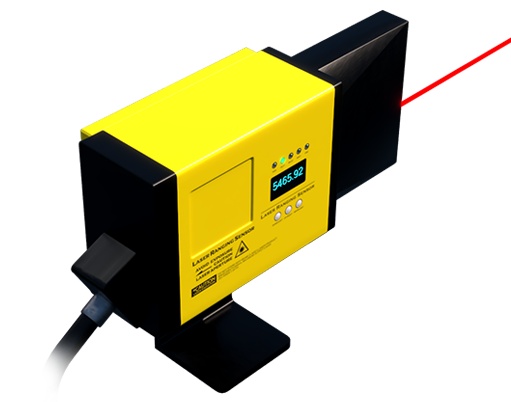
The advertised 0.1% accuracy? It assumes a lab-perfect, clean target. In practice, surface absorption is the silent killer. A matte black rubber conveyor belt or a pile of dark coal can absorb over 50% more of the 650nm standard red laser power than a calibrated white tile, causing significant dropouts or erroneous distance readings. I've seen systems fail because engineers didn't factor in the material's *true* reflectivity under ambient plant lighting. Temperature compensation circuits are another weak link. While they claim stability from -10°C to 50°C, the critical factor is the *rate of change*. A sensor mounted on a cold steel frame hit by a blast of furnace exhaust at 80°C can experience a thermal shock that induces a 0.5mm drift for 90 seconds—an eternity in high-speed bottling or welding. Rely on the "maximum range" specification at your peril. For a sensor rated at 10 meters, the effective range for stable, noise-free measurement on a non-ideal surface is often 6 meters. Push it to 8, and vibration from nearby machinery will introduce signal noise that filtering algorithms can't fully erase.
Boundary Conditions: When to Walk Away.
Laser sensors are not universal tools. Deploying them outside these boundaries guarantees failure.

1. Condensing Atmospheres: Any environment with rapid temperature shifts causing fog or steam (e.g., food packaging, pulp mills) is a no-go. Laser light scatters dramatically in micron-sized water droplets, rendering measurements useless. No software fix exists.
2. Highly Vibratory Mounts: Mounting directly on a punch press, stamping machine, or large diesel generator is a fundamental error. Even with robust housing, internal PCB flex can alter the laser diode's alignment relative to the receiver, causing calibration drift that is untraceable and irreversible.
3. Targets with Specular or Mirror Finishes: Measuring the position of polished stainless-steel sheets or glass panels is a classic pitfall. The angle of incidence equals the angle of reflection. A slight misalignment or target warp sends the beam away from the receiver, resulting in a complete loss of signal or a false reading from a secondary reflection.
4. High-Speed Dynamic Tracking on Organic Matter: Trying to profile the surface of a moving, deformable object like a raw chicken carcass or a textile web with a single-point laser is futile. The surface topology and reflectivity change instantaneously, creating data that is inherently noisy and unreliable for closed-loop control.
Counter-Intuitive Conclusions: Data-Driven Heresies.
1. Sometimes, a "Worse" Sensor is Better: In environments with particulate matter (dust, powder, smoke), a high-powered, visible red laser creates a visible "dot" that attracts maintenance staff to constantly clean the lens, ironically causing damage. A lower-power, invisible Class 1 infrared laser often performs more reliably because it's "out of sight, out of mind," reducing human interference.
2. Accuracy Can Be the Enemy of Precision: Chasing sub-micron accuracy from a standard time-of-flight sensor is wasteful. In 95% of industrial applications (e.g., pallet positioning, fill level control), *repeatability* is king. A sensor that consistently reports 100.2mm, even if the true value is 100.0mm, is far more valuable than one that fluctuates between 99.8mm and 100.2mm around a true mean. Stabilize the environment for repeatability, not the spec sheet for accuracy.
3. The Biggest Failure Point Isn't the Optics—It's the Connector: Data logs from field failures show that over 60% of intermittent faults trace back to vibration-loosened M8 or M12 connectors, not laser diode degradation. A simple cable gland and strain relief investment yields a higher ROI than paying for a "military-grade" housing. The interface is the infrastructure's weakest link.
4. Calibration Frequency Should Be Demand-Based, Not Time-Based: The standard advice of "calibrate quarterly" is obsolete. A sensor in a climate-controlled semiconductor fab may need annual checks. The same unit on a forestry grapple measuring tree diameters should be validated weekly. Monitor the signal strength and noise floor outputs; a gradual decline in signal strength is the most reliable predictor that calibration is needed, not a calendar alert.
The bottom line: Laser sensors are powerful but context-dependent tools. Their value is not defined by their ideal specifications, but by their engineered resilience to the specific brutalities of your application. Ignore the environment, and you've bought an expensive paperweight. Respect the boundary conditions, and you unlock robust, silent productivity.