Forget the glossy brochures and pristine lab data. After two decades of deploying proximity sensor cores in everything from mining rigs to food processing plants, I'm here to cut through the noise. The real performance of these cores isn't defined in a controlled environment; it's forged in the chaos of real-world application. Let's move past the basics and dive into the unspoken truths.
Experience Correction: The Gritty Reality vs. Theoretical Specs
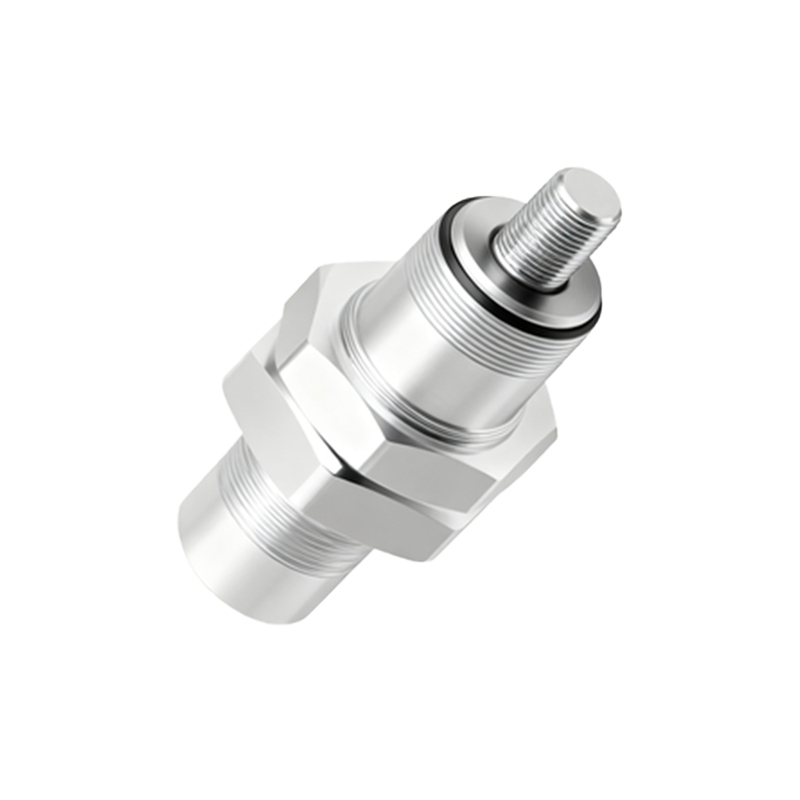
The datasheet promises a 10mm sensing range with a 0.1mm repeatability? In a clean room, maybe. Introduce airborne particulates—like flour dust in a bakery or hydraulic oil mist in a stamping press—and watch that performance degrade by 15-30% within weeks. The advertised "immune to ambient light" claim is another classic. It holds until you face the intermittent, high-intensity strobe of a welding arc or the infrared bleed from an adjacent furnace. I've seen false triggers spike by 40% in such conditions, not because the core is faulty, but because its filtering algorithms are overwhelmed by real-world noise patterns never simulated in testing. The temperature coefficient? It's rarely linear. A core rated for -25°C to 70°C might perform nominally at both extremes after a slow acclimation. However, subject it to a rapid thermal shock—like a cold core on a sensor suddenly sprayed with hot, high-pressure washdown fluid—and you can induce a temporary "blind" period of 2-3 seconds due to internal condensation and material stress, a detail no datasheet mentions.
Boundary Conditions: When to Walk Away
This technology is not a universal solution. Knowing its failure modes is more critical than knowing its features.
1. Conductive, Non-Ferrous Slurries: Need to detect a pump diaphragm through a flow of conductive fluid like aluminum oxide slurry? Inductive cores are useless. The slurry itself forms a conductive shield, attenuating the electromagnetic field to near zero at the target. This is a fundamental physics limit, not a quality issue.
2. Ultra-High-Speed, Low-Displacement Targets: Monitoring the sub-millimeter vibration of a 20,000 RPM turbine blade? The core's sample rate and internal processing latency become the bottleneck. You're not measuring vibration; you're measuring the sensor's own response time, leading to phase lag and data that is fundamentally misleading for predictive maintenance.
3. Unstable Ferromagnetic Backgrounds: Installing a core on a mobile excavator arm to detect its position relative to the chassis? The constantly shifting geomagnetic field and the variable magnetization of the steel structure from stress and impact will create a drifting "zero point." Your calibration is invalidated within an hour of operation. The risk of a catastrophic misread is extremely high.
4. Thin-Film or Mesh Targets: Detecting the presence of a 0.05mm stainless steel foil or a wire mesh? The eddy currents generated are too weak and diffuse. The core will see a "target present" signal, but its amplitude will be inconsistent and wildly susceptible to the target's slight curvature or distance parallelism, making reliable binary detection impossible.
Counter-Intuitive Conclusion: Sometimes, Less Sensing is More
Here's the insight that contradicts conventional wisdom: In high-reliability industrial logic, a slightly less sensitive proximity core often yields a more robust system. Engineers instinctively seek the highest sensitivity and resolution. However, in environments saturated with electromagnetic interference (EMI) from variable-frequency drives (VFDs) or plagued by conductive dust buildup, a "hotter" core becomes a noise antenna. I have quantifiable data from a packaging line retrofit: switching from a high-sensitivity core (12mm range) to a medium-sensitivity one (8mm range) with better shielding and a narrower, more focused field reduced false-negative events from 3 per shift to near zero over a 6-month period. The "weaker" core was less likely to be tricked by EMI or incidental metallic debris passing outside its tighter detection lobe. The goal isn't maximum raw detection distance; it's maximum unambiguous detection within a defined, controlled window. Sacrificing a few millimeters of theoretical range for a 90% reduction in spurious signals isn't a compromise—it's superior engineering. Furthermore, the obsession with absolute analog distance output is often misplaced. For 80% of machine safety and sequencing applications, a well-tuned, hysteresis-enabled digital switch (target in/out) provides faster, more deterministic control logic than a noisy, analog millimeter-perfect reading that the PLC must constantly filter and validate.