For two decades, I've watched laser-based obstacle avoidance sensors go from lab curiosities to warehouse staples, and now to the edges of operational viability. The glossy datasheets promise sub-centimeter accuracy, 30-meter ranges, and immunity to ambient light. In the controlled chaos of real industry, those numbers are often the first casualty. Let's cut through the marketing and talk about what actually happens when the rubber meets the road.
Experience Corrections: Where Theory Meets Grit
The primary deviation begins with the stated range and accuracy. A sensor rated for 30m at 90% reflectivity is, in practice, a 15-18m sensor for most real-world objects—cardboard, painted metal, pallet wood. The drop-off is non-linear. At 20 meters, your effective detection probability for a standard Euro pallet might fall to 70% under mild vibration. Dust and aerosol contamination—ubiquitous in manufacturing, milling, or even busy warehouses—are not mere "performance reducers." A consistent haze of particulate matter can attenuate the beam, effectively halving the maximum reliable range within hours, requiring a recalibration most systems aren't designed to perform autonomously. The second major correction concerns response time. The spec sheet lists a 50ms cycle time. What it omits is the system-level latency when integrated into a mobile robot's safety-rated control loop. By the time the point cloud is processed, filtered, and a stop command is issued, you've added 80-150ms. At an AGV's top speed of 2m/s, that's an extra 16-30cm of travel—the difference between a safe stop and a collision. You must design for the *system* reaction time, not the sensor's.
Boundary Conditions: When to Leave It on the Shelf
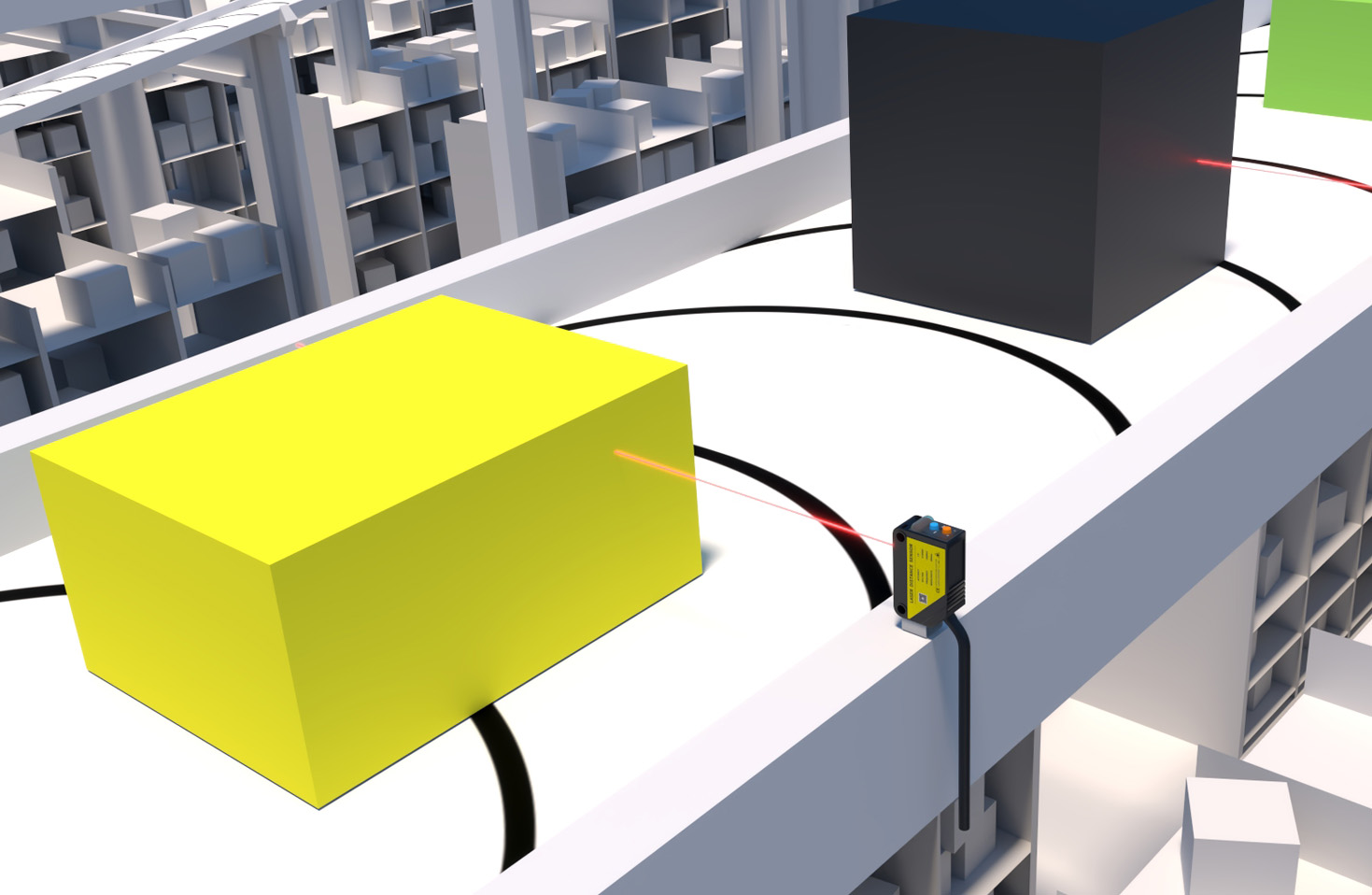
Laser avoidance has critical, non-negotiable failure modes. First, high-absorptivity materials. Black rubber conveyor belts, carbon fiber composites, and certain textured plastics can absorb over 95% of common 905nm laser light. The sensor will not see them at any practical range, creating a deadly blind spot. Second, direct competitive interference. In a field of multiple AGVs using similar sensors, cross-talk is inevitable. Your vehicle may ignore a legitimate obstacle because it mistakenly filters it out as "noise" from another robot's laser. Third, environmental transients. Sudden, localized fog from cooling systems, steam leaks, or heavy rain on a dock door can completely occlude the beam. The sensor doesn't fail gracefully; it either throws a fault or, worse, reports a clear path. Fourth, specular reflection. A polished stainless steel column or a calm puddle can act as a mirror, deflecting the beam away, causing the sensor to map a phantom obstacle elsewhere or miss the real one entirely. In these scenarios, reliance on laser alone is a profound risk. A multi-modal approach (e.g., fused with 3D TOF or carefully positioned ultrasonics) is not an enhancement; it is a necessity.
Counter-Intuitive Conclusions: Data That Defies Dogma
1. More Precision Can Mean Less Safety. An over-reliance on high-fidelity, dense point clouds leads to computational bottlenecks and increased false positives from innocuous features like wire mesh or hanging cables. A slightly noisier, lower-resolution scan processed with a robust, fast statistical filter often yields a *safer* and more deterministic real-time response. Sometimes, seeing less allows you to act faster and more reliably.
2. The "Wider FOV is Better" Fallacy. A 270-degree horizontal FOV seems superior to a 180-degree FOV. However, this spreads the same photon budget thinner, reducing effective range and signal-to-noise ratio at the critical edges. For most forward-moving vehicles, a 180-degree front-facing scan with higher density and longer range is operationally safer than a diluted 270-degree scan. The blind spots behind are better covered by a separate, cheaper sensor.
3. Calibration Stability is a Myth. The assumption that a factory calibration lasts the sensor's lifetime is dangerous. Mechanical shock from daily operation, thermal cycling, and even gradual lens coating degradation from UV exposure induce drift. The most reliable systems schedule a "null-run" calibration in a known empty space weekly, using fixed reference points in the environment to auto-correct. The sensor that never reports needing adjustment is the one you cannot trust.
4. The Performance vs. Wavelength Paradox. While 1550nm lasers offer better eye safety and slightly better performance in fog, their components are more expensive and sensitive. The surprising insight from field data is that in *indoor* environments, a well-designed 905nm system with aggressive filtering often outperforms a 1550nm system on total cost of ownership and mean time between failures, with negligible real-world safety difference. The longer wavelength's advantage is primarily realized outdoors.
The ultimate takeaway is this: A laser obstacle avoidance sensor is not a "set-and-forget" safety bubble. It is a sophisticated but context-blind instrument. Its output is not truth, but data that must be interpreted through a lens of profound skepticism and an intimate understanding of its physical and operational limits. Your system's intelligence must reside not in the sensor's chip, but in the integration layer that knows when to doubt its very eyes.