After two decades on factory floors, in mining pits, and on remote rigs, I can tell you that selecting a right proximity sensor is less about the glossy catalog specs and more about surviving the reality of dirt, vibration, and electromagnetic chaos. Let's cut to the chase.
Experience Corrections: The Gap Between Lab and Field
The advertised sensing distance is the first casualty in real-world applications. For inductive sensors, the nominal Sn rating assumes a standard mild steel target. In practice, a rusty, scaled, or aluminum target can reduce effective range by 40-60%. I've seen systems fail because the designer used the full 10mm rating on a sensor, only to find it unreliable at 4mm when targeting a worn stainless steel actuator. The correction factor isn't a footnote; it's the main event. Temperature rating is another illusion. A sensor rated for -25°C to 70°C might technically function at -20°C, but its housing becomes brittle. A single impact from flying debris at that temperature can shatter it. The real operating window is often 15-20% narrower than stated for long-term reliability. Lastly, ignore the "typical" switching frequency under ideal conditions. In high-vibration environments, like on a hydraulic press or stamping machine, mechanical oscillation of the target or sensor body can cause multiple phantom triggers within a single cycle, effectively doubling or tripling the perceived frequency and crashing your PLC logic. You need a sensor with a hysteresis specification that's explicitly tested under vibrational load, not just in static air.
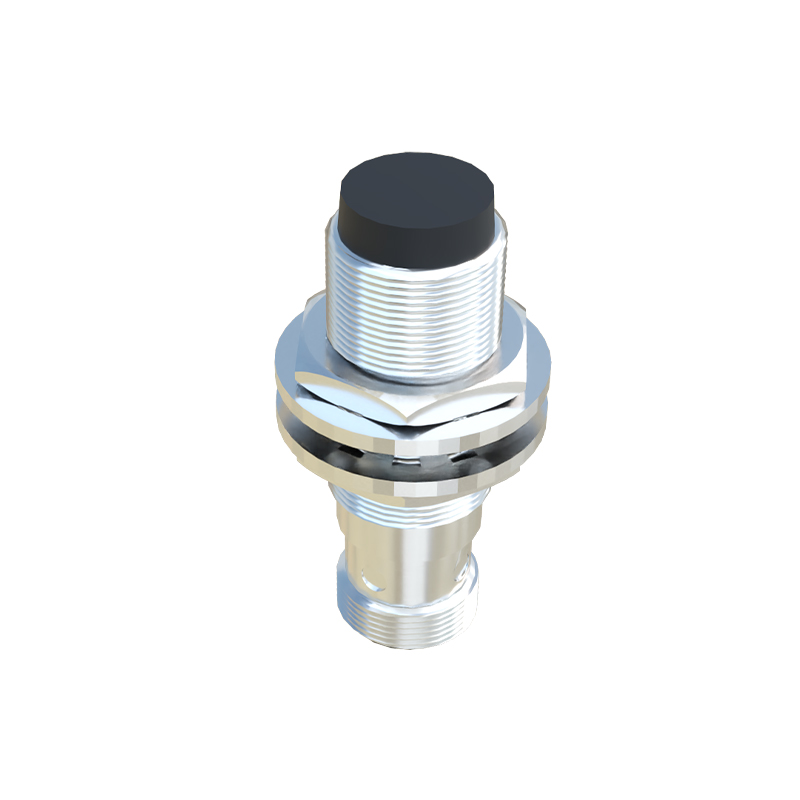
Boundary Conditions: When to Walk Away
Knowing when not to use a technology is more valuable than knowing 100 ways to apply it. Here are the red zones.
1. Inductive Sensors near High dI/dt Loads: Placing a standard inductive sensor within 30cm of variable frequency drives (VFDs) welding equipment, or large contactors is asking for trouble. The rapidly changing magnetic fields induce voltages in the sensor's internal coil, causing false triggering or, worse, latent damage that increases failure rates months later. Ferrous dust accumulation presents a slow death; it can gradually saturate the sensor's magnetic field, causing a creeping reduction in sensing distance until it fails without warning.
2. Capacitive Sensors for Level Detection of Adhesive Materials: While great for granular solids or water, capacitive sensors are a nightmare for sticky, viscous fluids like glues, heavy oils, or food pastes. The material coats the sensing face, becoming part of the dielectric constant. The sensor then "sees" the coating as a permanent target, leading to a stuck-on state. Cleaning cycles are rarely 100% effective.
3. Ultrasonic Sensors in Turbulent Air or Vacuum: Air is the coupling medium. If your application involves compressed air vents, steam, or significant temperature gradients (like near an oven exit), the sound wave path is distorted, leading to erratic readings or complete signal loss. Conversely, in a vacuum or very low-pressure environment, they simply do not work—there's no medium for the wave to travel through. This is a fundamental physical limit, not a solvable flaw.
Counter-Intuitive Conclusions: Data-Driven Heresies
1. Sometimes, a "Less Sensitive" Sensor is the Robust Solution. In environments saturated with metallic dust (e.g., machining centers), using a sensor with a shorter nominal range and a shielded face ("flush-mountable") outperforms a longer-range, unshielded unit. The shielded design restricts the magnetic field to the front face, making it far less likely to be triggered by accumulated swarf, whereas the unshielded sensor's extended field will detect a pile of chips as a target. Sacrificing theoretical range gains immense operational stability.
2. The Dominant Failure Mode is Often Mechanical, Not Electrical. Industry fixation on IP ratings (ingress protection) overlooks IPx9K (high-pressure, high-temperature washdown) which can destroy sensors through repeated thermal shock and seal fatigue. Vibration resistance, specified in g-forces across multiple axes, is a more critical predictor of lifespan in mobile equipment than any electrical parameter. A sensor with a modest 100kHz switching frequency but a 50g vibration rating will outlast a 500kHz sensor rated at 10g on the same vibrating conveyor.
3. Cost Optimization Lies in the Installation, Not the Unit Price. Specifying a $80 sensor with a standard M12 connector over a $50 sensor with hardwired leads seems expensive. Until you calculate the labor for conduit, glanding, and termination. More critically, the plug-and-play connector allows for sub-5-minute swap-out during downtime. The true