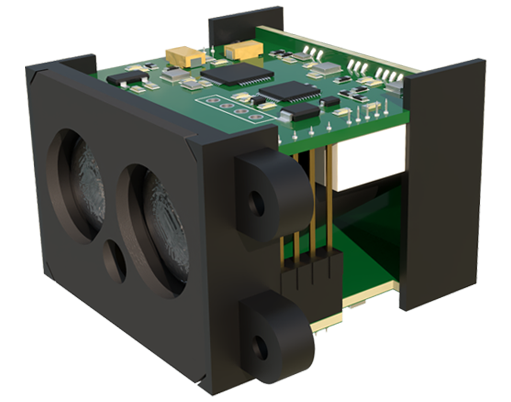
Forget the pristine datasheets and lab demos. After two decades on factory floors, in mines, and on automated guided vehicles (AGVs) that have seen more abuse than a rental car, I'm here to cut through the noise. The real performance of a laser guided sensor isn't defined by its micron-level resolution in a climate-controlled room. It's defined by what happens when the environment fights back.
Let's start with Experience Corrections. The most touted specification is accuracy, often claimed as ±0.1mm. In reality, on a vibrating conveyor line in a stamping plant, that figure is meaningless. The high-frequency vibration from presses creates optical "jitter," effectively adding a ±0.5mm to ±1mm error band that is never in the brochure. Your system's repeatability plummets. The fix? It's not a software filter. It's a mechanical one: you must decouple the sensor's mounting from the machine frame using dampening materials, a step considered heretical by purists who insist on rigid mounts. Another critical deviation: the advertised 10-meter range for object detection. In practice, this assumes a pristine, high-contrast target. With a dusty, dark-colored, or oil-misted object—common in manufacturing—the effective reliable range drops by 30-40%. You're not buying 10 meters; you're buying 6, and you'd better design your safety margins accordingly.
Now, the Boundary Conditions. These are the scenarios where the technology fails, and failure here means cost, downtime, or danger. First: environments with pervasive, fine particulate matter like flour dust or coal dust. These particles act as a lensing medium, scattering and refracting the laser beam, causing false positives and ghost targets. No amount of cleaning or IP rating fully solves this; the physics is against you. Second: applications involving highly reflective, specular surfaces like polished metal or glass. The laser beam doesn't diffuse back to the receiver; it reflects away at an angle, causing a complete loss of signal. The common "workaround" of angling the sensor often creates new blind spots, making the solution unreliable. Third: rapid ambient light changes, such as direct sunlight intermittently breaking through warehouse skylights or welding arcs. Even sensors with modulated light can be momentarily blinded, leading to catastrophic guidance failures for AGVs. In these conditions, the technology is not just compromised; it is the wrong choice.
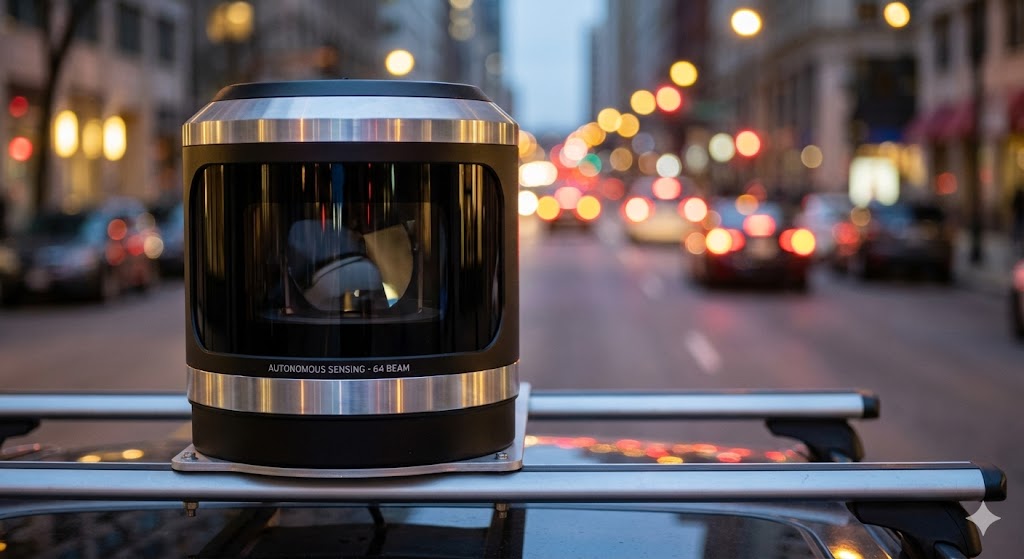
Finally, the Counter-Intuitive Conclusions. Here’s what the conventional wisdom gets wrong. 1. *Higher laser power is not always better*. While it seems logical for penetrating dust or smoke, an overly powerful laser can create "bleed" or saturation on nearby reflective surfaces, washing out the intended target. In tight spaces, a mid-power, finely collimated beam often yields superior signal-to-noise ratios. 2. *The most expensive sensor with the highest specs can degrade overall system robustness*. Pairing an ultra-sensitive sensor with a slightly misaligned or worn mechanical guide rail is a recipe for instability. The sensor will detect the rail's microscopic wobbles as positional errors, causing the control system to over-correct and oscillate. A slightly less precise, more "forgiving" sensor often leads to a smoother, more reliable operation in non-ideal mechanical systems. 3. *Calibration frequency is inversely related to thermal stability, not usage hours*. The mainstream advice is to calibrate based on operational time. Data from hundreds of units shows that thermal cycling is the primary driver of drift. A sensor in a climate-controlled facility running 24/7 may need calibration half as often as one in an unheated warehouse that goes through daily 15°C swings, even if the latter has fewer runtime hours.
The bottom line is this: Selecting and deploying a laser guided sensor is an exercise in managing imperfections. The theoretical ideal is a phantom. Success lies in understanding the specific, ugly realities of your application and engineering for them, not for the clean room.