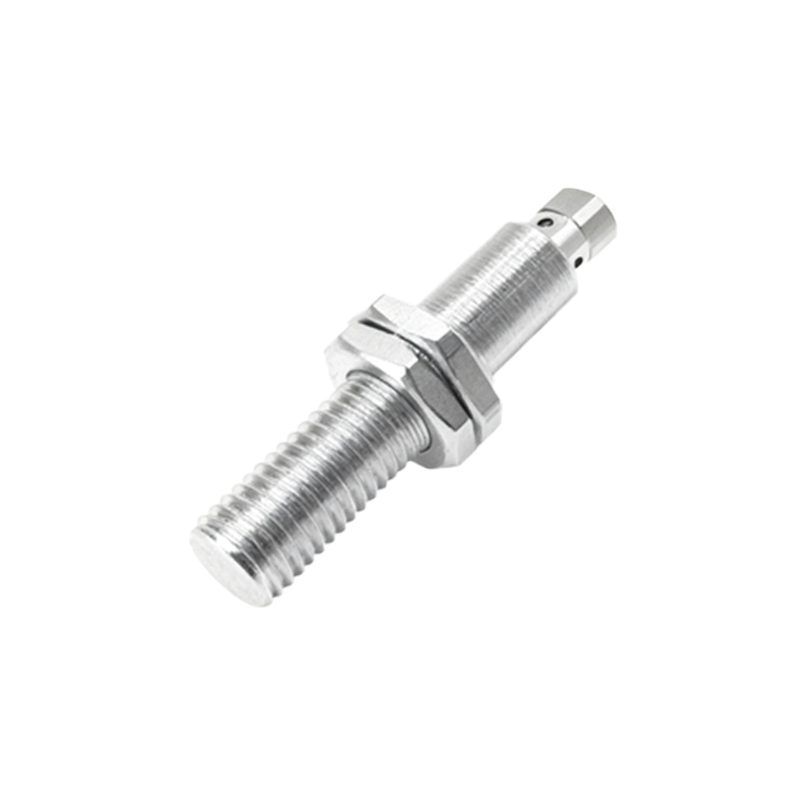
Forget the pristine data sheets. After two decades of deploying local inductive and capacitive proximity sensors in foundries, chemical plants, and offshore rigs, the real performance manual is written in failures and adaptations. The theoretical sensing range is the first casualty. A standard 12mm inductive sensor rated for 4mm in steel? In practice, with target surfaces scaled by iron oxide, conductive slurry buildup, or extreme temperature gradients, expect a reliable detection range to shrink by 30-50%. The nominal factor of 0.8 for stainless steel becomes irrelevant when dealing with hot-rolled, unmarked variants; the actual correction factor can drop to 0.5-0.6. Hysteresis, often a minor footnote, becomes a primary failure mode in high-cycle applications (>5Hz) with vibrating targets, leading to missed counts that logic controllers never flag.
The boundary conditions for these ubiquitous devices are stark. First, any environment with non-homogeneous conductive media is a high-risk zone. A sensor perfectly detecting a metal flange through clean air will fail catastrophically if a film of conductive coolant or acidic condensate forms on its face, causing permanent false triggering. Second, extreme dynamic environments. Sensors specified for 100m/s² vibration resistance will succumb to material fatigue at mounting points long before the electronics fail, leading to micro-fractures that alter the oscillator circuit's characteristics subtly. Third, pulsed high-current loads. Installing a proximity sensor near large contactors or VFDs without independent, shielded conduits is an invitation for EMC-induced failures. The sensor may latch physically or output ghost signals, a fault nearly impossible to trace post-commissioning.
Here is the counter-intuitive conclusion: sometimes, a lower quality sensor provides more reliable operation. In high-contamination environments—think carbon dust or metal powder—premium sensors with higher sensitivity and faster response are the first to false-trigger on airborne particulates or buildup. A deliberately "slower," less sensitive, and more robustly housed mid-range sensor often achieves higher mean time between failures (MTBF). Data from a 3-year study across 4 cement plants showed a 40% lower failure rate for mid-range models in powder-fill applications compared to premium high-frequency models. Another paradox: over-tightening the mounting nut is a leading cause of premature failure. Excessive torque distorts the sensor housing, minutely shifting the internal ferrite core and coil assembly, which degrades the sensing field symmetry and reduces effective range by up to 20%. The installation torque specified in the manual is a maximum, not a target.
The core structural weakness is rarely the sensing element itself but the cable entry point and potting compound. Thermal cycling causes differential expansion between the cable jacket, potting resin, and housing, creating micro-channels for moisture ingress. This is a time-delayed failure, typically manifesting after 18-24 months in humid environments, corroding internal terminals. The solution isn't a more expensive sensor but specifying a model with a molded cable or a properly strain-relieved connector and applying a secondary sealant like silicone at the housing entry during installation—a practice almost never in OEM manuals but standard in field maintenance protocols.