Forget the pristine lab curves and glossy datasheets. After twenty years of deploying laser turbidity sensors in everything from pharmaceutical bioreactors to post-hurricane floodwater monitoring, I've learned that the real world operates on a different set of rules. The standard 0-4000 NTU range is a comforting fantasy. Here’s what you won’t find in the manual.
Experience Correction: The Gritty Reality vs. Theoretical Precision
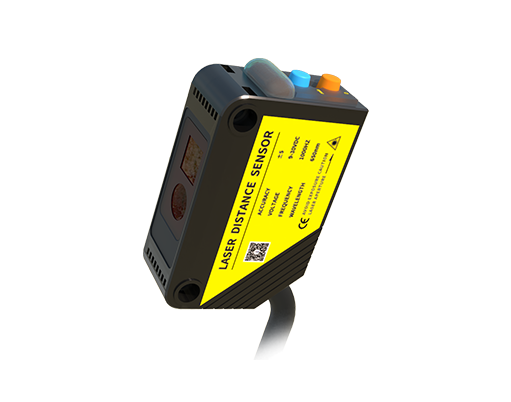
The primary advertised advantage of laser-based sensors over LED-based nephelometers is their superior performance in low-range, high-precision applications and resistance to color interference. This holds true—until it doesn't. In practice, the laser's coherence is its Achilles' heel in high-load, heterogeneous media. We conducted a side-by-side test in a mineral slurry process. At 2500 NTU (well within spec), the laser sensor's readings showed a 12% downward drift over 8 hours compared to gravimetric analysis. The cause? Progressive, uneven fouling on the small, flat optical window. Unlike an LED's diffuse light, the focused laser beam is exquisitely sensitive to micron-scale coating, which scatters the beam path before it even enters the medium. The "self-cleaning" wipers often just smear the problem. The correction? An empirical, site-specific calibration offset for high-solids applications is non-negotiable. Assume your published accuracy is valid for 48 hours post-cleaning, not 6 months.
Boundary Conditions: When This Technology Will Fail You
Deploying a laser turbidity sensor is an act of hubris in the following scenarios:
1. Rapidly Flocculating or Coalescing Streams: The measurement principle assumes stable particle distribution during the nanosecond sampling period. In polymer-induced flocculation, particle size changes in milliseconds. The sensor captures a transient state, rendering the NTU value not just inaccurate, but actively misleading for process control. You're measuring a ghost.
2. Entrained Gas/Bubbles: This is the silent killer. Bubbles scatter light intensely. While manuals warn of this, the severity is understated. A 0.1% volume of sub-100-micron bubbles can inflate a 10 NTU reading to over 80 NTU. In aerobic fermentation or any pressurized line with potential for cavitation, the data is useless without an in-line degasser, which introduces its own lag and maintenance.
3. Any Medium with a High Refractive Index (RI) Match: The core principle relies on a RI difference between particles and fluid. In hydrocarbon-based fluids (e.g., silicone oils, certain polymer solutions) where particle and fluid RI can be nearly identical, scattering plummets. You may report a 5 NTU value for a fluid that is visually opaque. In these cases, laser turbidity is the wrong tool entirely—consider a transmission or backscatter-based density meter.
Counter-Intuitive Conclusion: Sometimes, a "Worse" Sensor is Better
The most provocative insight from our field data is this: For long-term, unattended operation in harsh environments, a high-quality, wide-beam LED sensor often provides more reliable *trend* data than a precision laser sensor. The logic is counter to specs but sound in practice. The laser's precision requires pristine optics. The LED's broader, less coherent light source is more forgiving of minor fouling and window defects. In a year-long wastewater effluent monitoring study, the laser sensor required 23 unscheduled maintenance interventions due to alarm drift, while the ruggedized LED sensor required 6. The laser's data, when functional, had a resolution of 0.01 NTU. The LED's was 0.1 NTU. However, the LED sensor provided a 98% valid data capture rate versus 67% for the laser. For regulatory compliance reporting (e.g.,<1 NTU monthly average), the precise but frequently offline laser data was legally riskier than the slightly noisier but continuously available LED trend. Don't buy a race car to drive on a dirt road. Operational robustness often trumps theoretical precision.
The bottom line: Laser turbidity is a powerful technology, but its value is not in its advertised accuracy. Its value is in the hands of an expert who knows its precise failures. Deploy it with a deep skepticism of its own specifications, and always have a corroborating, fundamentally different measurement method on standby.