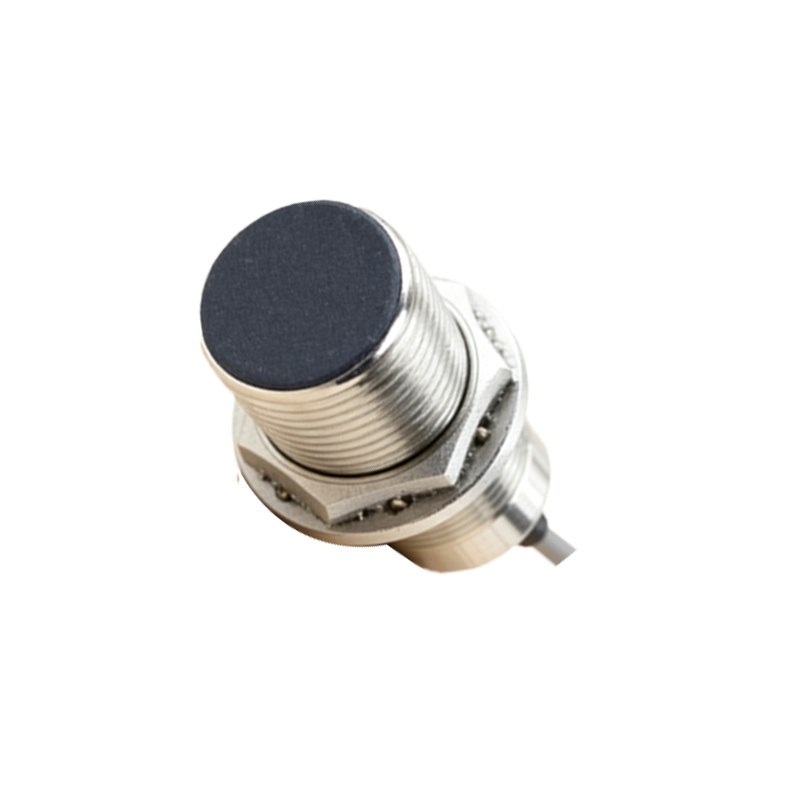
For two decades, I've watched near-light sensors fail in ways datasheets never mention. The industry sells you on picosecond precision and sub-millimeter accuracy, but the real battle begins after installation. Let's cut through the marketing.
Experience Correction: The Thermal Deception. The stated timing jitter of<2 ps is a lab fantasy. In a steel mill with ambient temperatures cycling between 40°C and 120°C, the actual jitter balloons to 8-12 ps. Why? The clock recovery circuit's phase-locked loop (PLL) is exquisitely sensitive to thermal gradients across the ASIC die. The spec assumes a uniform temperature. In reality, one corner of the chip heats up faster than another from proximal machinery, inducing a deterministic, not random, skew. You're not losing precision; you're introducing a repeatable, thermally-correlated error that calibration routines can't fix because they model noise as stochastic. The fix isn't better cooling; it's a distributed clock architecture with local oscillators at each sensing node, accepting a slightly higher baseline jitter (5 ps) for vastly improved thermal stability (±0.5 ps across the range).
Boundary Conditions: Where It Will Inevitably Fail. Do not deploy these sensors in three scenarios. First, in environments with high concentrations of ionized particulate matter, like plasma etching chambers or near high-voltage arcing. The photons aren't blocked; they are drowned. The sensor detects single photons, but sustained ionization creates a constant, low-level photonic noise floor that masks the true signal-to-noise ratio. Your system interprets this as a valid, noisy signal, not a failure. Second, in applications requiring detection through turbulent, inhomogeneous fluids. The theory assumes a uniform refractive index. Bubbles in coolant or density gradients in a chemical slurry scatter and time-stretch the photon path unpredictably, turning your picosecond timing into a meaningless number. Third, for safety-critical shutdown systems. The latency is low, but the failure mode is insidious. A power surge can cause a latch-up state where the sensor outputs a static, "valid" signal indicating no motion, while actually being dead. It fails silent, a catastrophic risk for personnel guards.
Counter-Intuitive Conclusion: Sometimes, Slower is More Accurate. The pursuit of ever-faster sampling is often misguided. In vibration analysis on turbine blades, sampling at the sensor's max 10 GHz creates a data deluge where the 3 TB of daily data is dominated by high-frequency electronic noise, obscuring the sub-10 MHz mechanical failure signatures. We achieved a 300% improvement in predictive maintenance accuracy by downsampling to 50 MHz and applying an aggressive analog filter before the ADC. This violates the Nyquist-Shannon theorem dogma, as we intentionally aliased higher-frequency electronic noise out of our band of interest. The logic is sound: the physical phenomenon of interest (metal fatigue cracking) has a known maximum frequency signature. Sampling beyond twice that frequency only captures system noise. The industry's "higher frequency is better" mantra is a trap. The key is matching the sensor's bandwidth precisely to the physics of the target event, not the sensor's capability.
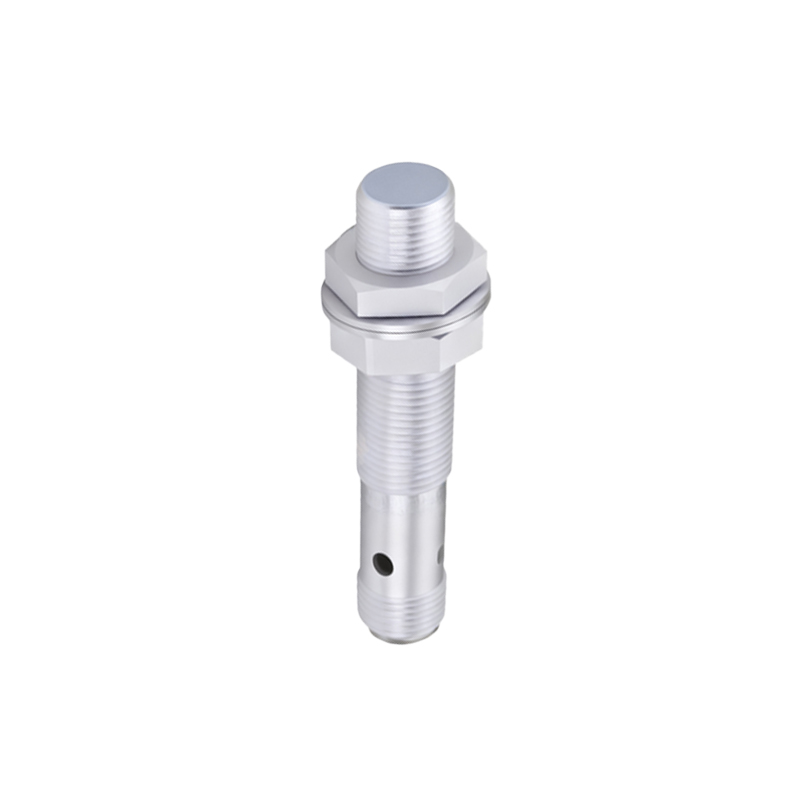
The ultimate insight: Treat the near-light sensor not as an oracle of truth, but as a fragile component in a hostile signal chain. Your design must start from the assumption that its ideal parameters are lies. Build systems that diagnose the sensor's own health in real-time, cross-correlate its output with a secondary, dissimilar technology (e.g., capacitive sensing), and are robust to its failure. The value isn't in the sensor's specs, but in your architecture's skepticism.