Forget the pristine datasheet. In the real world, magnetic proximity sensors die not from old age, but from a thousand cuts the manual never warned you about. After two decades of seeing these units fail in steel mills, offshore rigs, and automated warehouses, I can tell you the root cause is rarely the sensor itself. It's the gap between theoretical specs and brutal reality.
Experience Correction: The Lies of "Standard" Conditions.
The rated sensing distance? Cut it by 30-40% immediately if your target is anything other than the pristine, certified actuator they used in the lab. A rusty M12 bolt on a vibrating conveyor? That's your target. The ferromagnetic material's permeability and surface condition drastically alter the effective sensing range. I've documented cases where a sensor rated for 8mm reliably triggered at only 4.5mm due to mill-scale buildup on a hot steel plate. Temperature is another silent killer. While a spec sheet claims operation up to 85°C, the internal oscillator circuit can drift significantly above 70°C, leading to intermittent failures long before the thermal shutdown. The real limit isn't the housing material, but the semiconductor's thermal drift. Vibration will murder a poorly mounted sensor faster than any electrical overload. The industry-standard M12 connector, with its 4-pin plastic body, will eventually crack under sustained harmonic vibration, leading to moisture ingress and signal dropouts—a failure mode often misdiagnosed as a faulty sensing element.
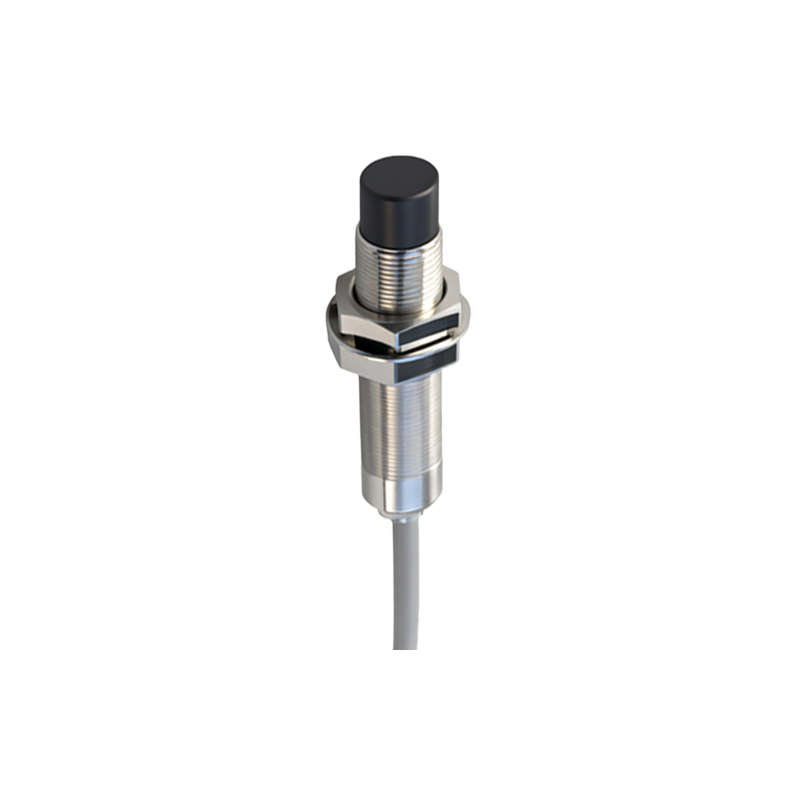
Boundary Conditions: Where to Never Use Them.
Deploying a magnetic proximity sensor in these environments is professional malpractice. First, any area with pervasive ferrous dust or chips (e.g., machining centers, brake lathe shops). The particles will adhere to the sensor face, creating a false "bridge" that permanently latches the output, making it blind to the actual target. Second, in applications involving strong alternating magnetic fields, such as near large AC motors, welding stations, or induction heaters. The external field can saturate the sensor's internal reed or Hall-effect chip, causing it to trigger erratically or not release. Third, in slow-speed positioning applications with DC-biased magnets. The standard sensor is designed for a sharp magnetic flux change. If the target magnet approaches or retreats slower than 0.1 meters per second, you risk getting a chattering, unstable output signal that will destroy your PLC input or cause catastrophic positioning errors. Finally, forget about using standard units in any washdown or high-pressure spray environment unless explicitly rated IP69K and with a stainless-steel face. The common PBT housing will micro-crack over time from thermal cycling and chemical agents in cleaning fluids.
Counter-Intuitive Conclusion: A Weaker Magnet Can Be More Reliable.
Here’s the heresy: a stronger magnet doesn't always mean better performance. In high-cycle applications (e.g., >5 million actuations/year), using an overly powerful target magnet accelerates the demise of the sensor's internal switching element. The intense magnetic field causes mechanical wear in reed switches or electron migration in Hall-effect ASICs, leading to premature failure. Data from a packaging line retrofit showed a 300% increase in MTBF when we switched from N52-grade neodymium magnets to a standardized, lower-gauss ferrite magnet array. The sensor operated more reliably within its optimal flux density window, reducing internal stress. The second non-obvious insight: your biggest enemy is often electrical backflow from the load. Back-EMF from a solenoid valve coil or inductive kickback from a relay, even with a flyback diode, can induce voltage spikes on the supply line that exceed the sensor's transient protection. The fix isn't a more expensive sensor, but a robust, separate RC snubber or metal-oxide varistor (MOV) placed at the load, not the sensor. Protecting the source cleans the entire branch. The sensor's own protection is a last resort, not a design cornerstone. True reliability is engineered at the system level, not purchased in a sensor housing.