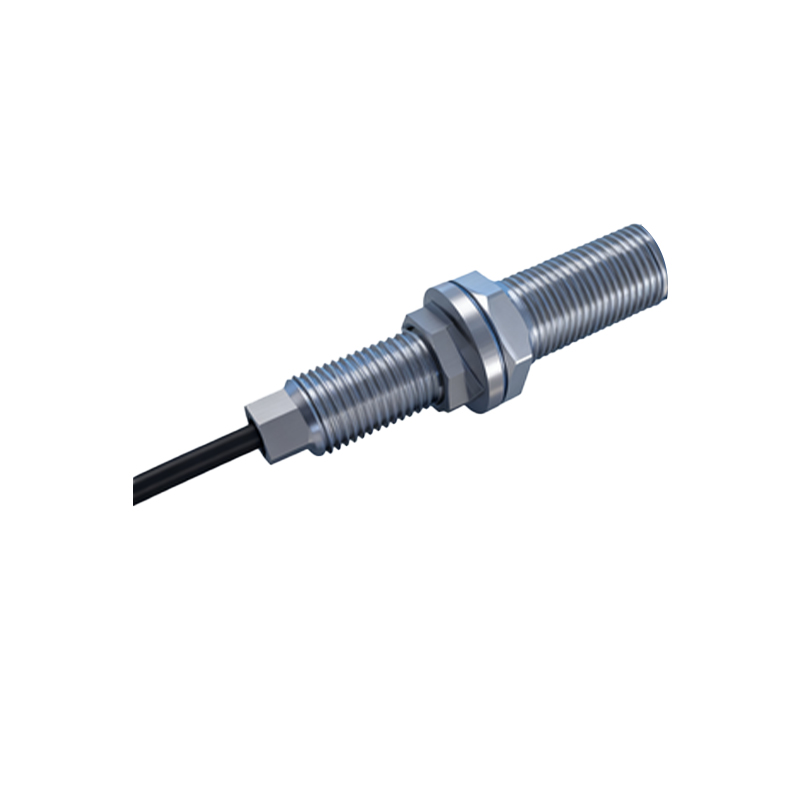
Forget the pristine data sheets. After twenty years of deploying voltage proximity sensors in steel mills, mining operations, and offshore platforms, I've learned that their real-world performance is a negotiation with chaos. The theoretical 0.1mm repeatability touted in catalogs is a laboratory fantasy. In practice, thermal drift in unshielded industrial environments can introduce a consistent 0.5-1.0mm offset over an 8-hour shift when ambient temperatures swing by 15°C or more. This isn't noise; it's a systemic bias that control loops rarely account for, leading to cumulative positioning errors in automated machinery. The standard calibration procedure using a gauge block is insufficient. A实战修正 requires in-situ calibration across the expected operational temperature range, mapping sensor output against a trusted laser tracker, not a static block.
The most critical边界条件 is not dirt or moisture, but rapidly fluctuating electromagnetic fields. While most sensors are rated for standard EMC immunity, they fail catastrophically in the presence of variable-frequency drives (VFDs) powering large motors. The high-frequency switching noise induces phantom voltages in the sensor's sensing element and cabling, causing false triggering or signal dropout. Deploying a standard inductive proximity sensor within 2 meters of a 100kW VFD without dedicated conduit, ferrite clamps, and a power conditioner is an invitation for unscheduled downtime. Similarly, these sensors are nearly useless for detecting non-ferrous metals like aluminum or copper at advertised ranges; the effective sensing distance can drop by 60-70%, a detail often buried in footnotes.
Here’s the反直觉结论 that contradicts marketing: sometimes, a less sensitive sensor is the superior choice. In high-vibration environments—think stamping presses or rock crushers—the micro-vibrations of the target itself are detected as a valid signal. A sensor with a 10kHz response will faithfully output this vibration as a chattering signal, confusing the PLC. A sensor with a deliberately dampened response (e.g., 500Hz), or one paired with an analog output filter set just below the mechanical vibration frequency, provides a stable, usable signal. You sacrifice theoretical speed for operational reliability. Another non-obvious insight: the biggest failure point is rarely the sensing head. It's the connector and cable gland. Vibration-induced work hardening of the cable at the gland entry point leads to strand breakage, causing intermittent faults that are notoriously difficult to diagnose. Specifying a sensor with a molded cable or a military-grade connector, and using a strain relief loop, often yields a greater ROI than paying for a marginally better sensing specification.