Forget the datasheet. After two decades on factory floors, in chemical plants, and on heavy machinery, I can tell you the quoted price per unit for a reed proximity sensor is the smallest part of its total cost. The real expense is hidden in unplanned downtime, misapplication, and the stubborn belief that these components are simple, foolproof switches. Let's cut through the marketing fluff.
Experience Correction: The Myth of "Reliable" Contacts. The theoretical lifetime of a reed switch—often cited as 10^7 operations or more—is a clean-room fantasy. In practice, the decisive factor isn't cycle count, but current and load type. The standard reed contact is rated for a low-power "dry circuit" load. The moment you use it to directly switch a solenoid valve or a small DC motor coil (an inductive load) without robust protection, you initiate a death spiral. Each interruption of an inductive load generates a voltage spike that arcs across the reed contacts, even with a basic flyback diode. This arc slowly vaporizes the rhodium plating on the reed blades. I've seen sensors rated for millions of cycles fail in under 50,000 cycles when switching a 24V/0.5A solenoid. The correction? If your load is inductive, you must derate the sensor's published switching current by at least 50% or insist on models with integrated, heavy-duty transient suppression, not just a simple diode. The price premium for such a model is insurance, not an option.
Boundary Conditions: Where Reed Sensors Become a Liability. Reed sensors are not general-purpose devices. Deploy them outside their narrow lane, and they will fail, catastrophically.
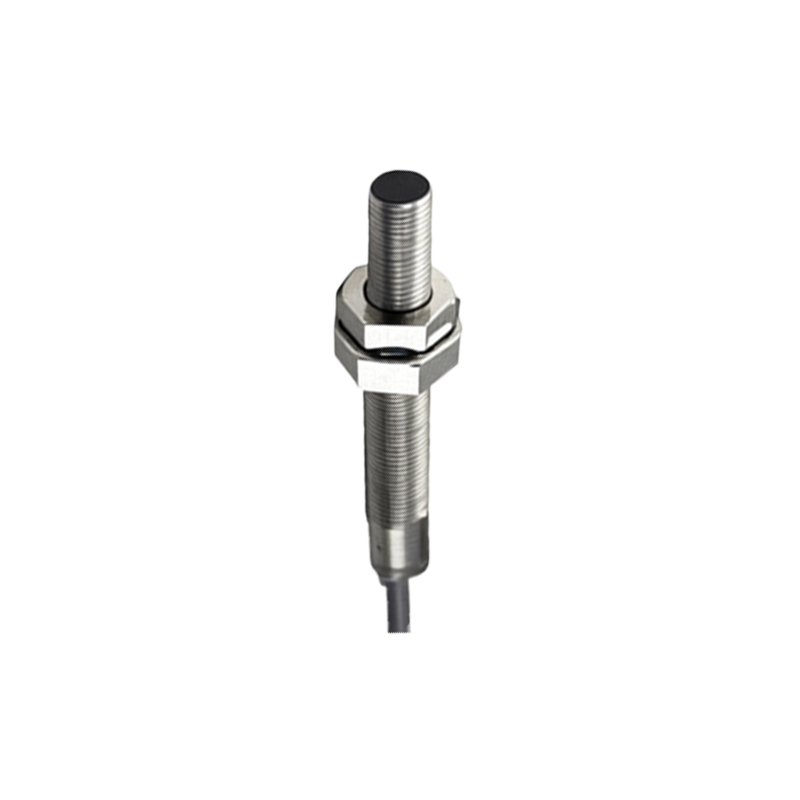
1. High-Speed Vibration Environments: This is a critical failure mode. The natural frequency of the thin reed blades can resonate with machine vibration (common in presses, stamping machines, or near large motors). This resonance can cause the contacts to chatter or even close falsely without a magnet present, leading to ghost signals and potentially dangerous machine behavior. If your environment exceeds 30 g's of vibration above 100 Hz, reed sensors are a hard "no."
2. Strong External Magnetic Fields: It seems obvious, but it's often overlooked near large DC motors, welding equipment, or MRI machinery. An external field can bias the reed switch, either holding it closed when it shouldn't be or increasing its actuation distance unpredictably. In such environments, even shielded housings have limits. The alternative is optical or inductive sensing.
3. Rapid Temperature Cycling: While reed sensors handle stable high or low temperatures well, rapid thermal cycling (e.g., on an injection molding machine door) causes mechanical stress on the glass-to-metal seal. Over time, this can compromise the hermetic seal, allowing atmosphere in and leading to contact oxidation and failure. For cyclic thermal shock, a solid-state sensor is superior.
Counterintuitive Conclusion: A Higher Price Point Can Signal Lower Quality. This is the paradox that costs engineers dearly. You might assume a sensor with a longer stated sensing distance (e.g., 25mm vs. 15mm for a standard barrel sensor) is "better" and worth a higher price. Often, the opposite is true. To achieve that extra distance, manufacturers use reed blades that are thinner or have a lower spring constant. These blades are more sensitive to vibration, have a lower current-carrying capacity, and wear out faster from arcing. That "premium" long-range sensor you bought for convenience might be the most fragile component in your cabinet. In reed sensor selection, optimal performance usually lies in the mid-range of published sensing distances, where robustness and magnetic sensitivity are balanced. Never specify for maximum distance; always specify for the minimum required distance plus a 30-50% safety margin. The cheaper, shorter-range sensor is frequently the more reliable workhorse.
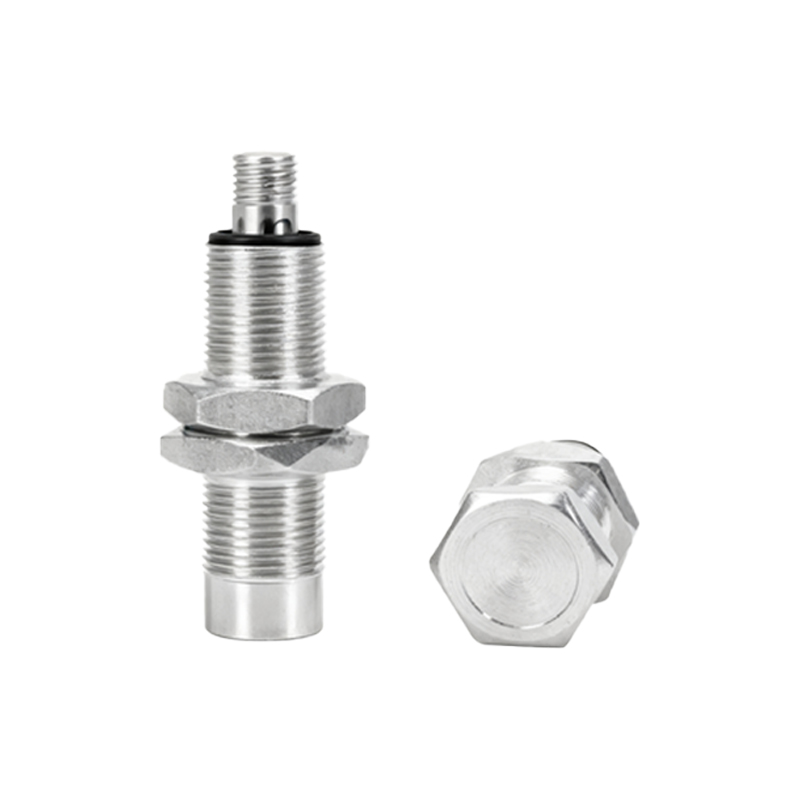
The final calculation is this: A $15 reed sensor that fails in 6 months and causes 4 hours of downtime at $500/hour has a true cost of $2,015. A $45 hardened sensor that lasts 5 years in the same spot costs $45. Choose based on total cost of ownership, not unit price. Your bill of materials is a lie; your maintenance log tells the truth.