For two decades, I've watched proximity sensors fail not in the lab, but in the slurry, vibration, and electromagnetic chaos of real production floors. Forget the datasheet platitudes. Here’s what you won’t read in the brochure.
Experience Correction: The Data Sheet is a Polite Fiction.
The advertised sensing distance? Assume a 25-40% derating in the presence of metallic dust, conductive coolant mists, or heavy non-ferrous swarf. An inductive sensor rated for 15mm on mild steel might reliably trigger at only 9mm when coated in a thin, consistent layer of aluminum powder. The critical factor isn't just the IP rating; it's the conductive nature of the contaminant. A "sealed" IP67 sensor can be blinded by a film of ferrous dust clinging to its face, effectively changing the permeability of the air gap. Temperature compensation circuits often fail to account for rapid thermal cycling near forging presses or welding cells. I've logged cases where a 150°C rated sensor developed a 12% reduction in hysteresis after three months of 30-second heat cycles from 50°C to 130°C, leading to inconsistent trip points. Rely on continuous duty ratings, not peak survivability numbers.
Boundary Conditions: Where This Tool Becomes a Liability.
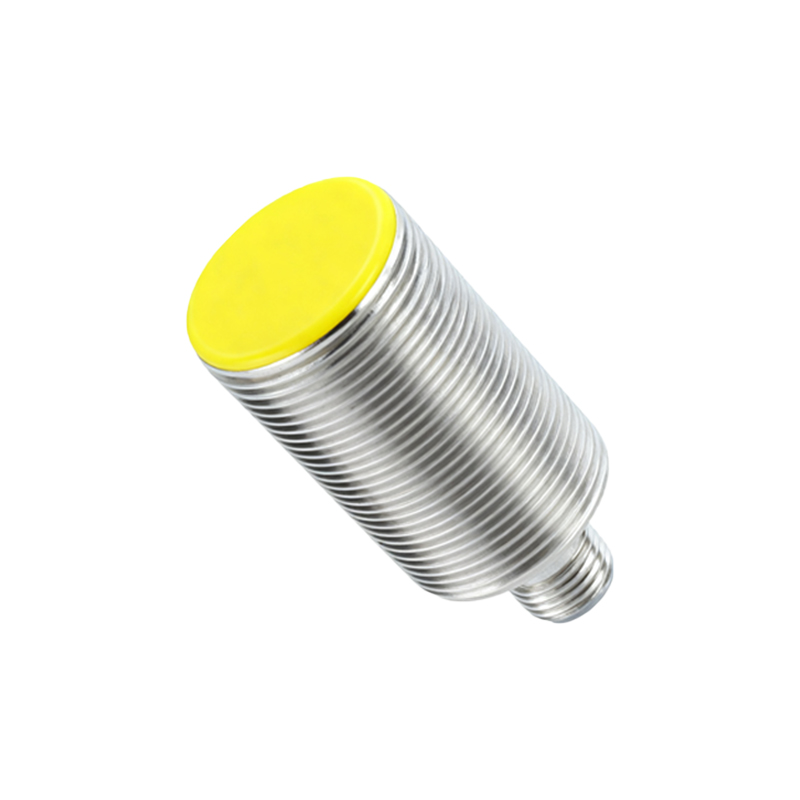
Deploying standard inductive proximity sensors near high-frequency VFDs (Variable Frequency Drives) or plasma arcs is an exercise in frustration. The radiated EMI can induce phantom signals or, more dangerously, latch the output in a permanent "on" or "off" state. In such environments, even shielded models have limits. The solution often isn't a "better" sensor, but a complete technology shift to fiber-optic or pressure-based detection. Another fatal zone: ultra-slow-speed detection. A sensor checking for the presence of a gear tooth on a shaft rotating at 2 RPM may fail due to internal DC leakage currents holding the output transistor active, missing an absence. This isn't a sensor failure; it's a fundamental mismatch. For detecting non-ferrous metals like aluminum or copper, "factor-1" inductive sensors are a poor choice in high-speed applications. The drastically reduced sensing distance requires near-perfect alignment, turning minor mechanical drift into catastrophic missed counts. Here, capacitive or ultrasonic sensors are superior, despite their other compromises.
Counter-Intuitive Conclusion: Sometimes, Less Sensing is More.
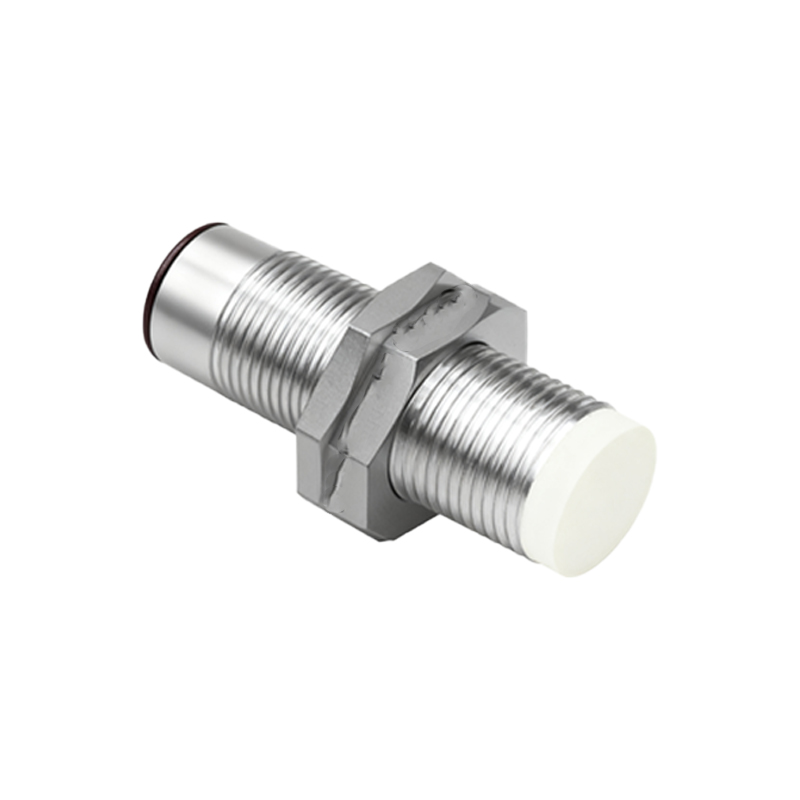
The industry pushes for longer ranges and smaller housings. This is often wrong. A sensor with an excessively long range for its application becomes a nuisance, detecting the wrong target—the passing forklift, the tooling in the next station, the support beam. I systematically specify sensors with a just-sufficient range and, where possible, mechanically recess them. This increases reliability more than any circuitry upgrade. Secondly, the obsession with "fast response time" is frequently misguided. A 0.1ms response might be necessary for a 10,000-part-per-minute bottling line, but on a heavy-stamping press, that hyper-sensitivity makes the sensor vulnerable to vibration-induced chatter. A deliberately damped sensor or one with a programmable delay (often a cheaper feature) provides a rock-solid signal by ignoring the mechanical "noise." Finally, the most reliable sensor in a high-impact environment is sometimes the most expensive one. But the cost isn't in the unit price; it's in the custom-machined alloy guard and the redundant mounting scheme that allows a standard sensor to survive. The ROI isn't on the component BOM; it's in the 3 years of uptime without a changeout.
The goal is not to select a sensor. It is to engineer a detection system that acknowledges the brutal reality of the plant floor. Your failure modes will be mechanical, environmental, and electrical—in that order. Plan for it.