Forget the datasheet. After twenty years of deploying proximity sensors in environments ranging from automated foundries to offshore drilling rigs, I've learned that their reliability is not a given—it's a negotiation with reality. The standard spec of "unblocked" or "unobstructed" operation is a laboratory fantasy. Here’s what you won’t find in the manual.
Experience Correction: The Myth of "Guaranteed" Range and Repeatability.
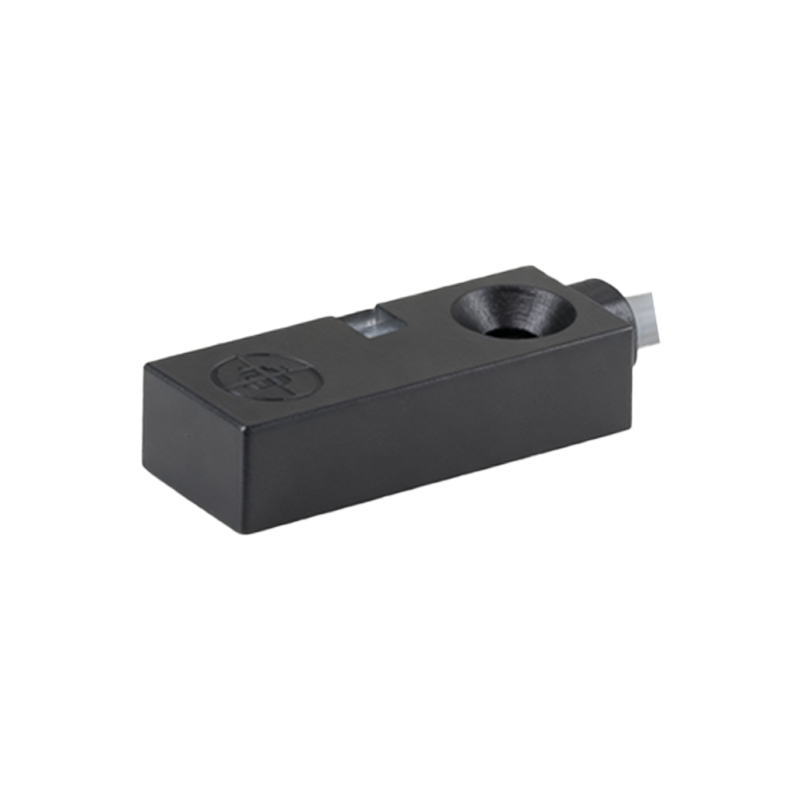
The advertised sensing distance (Sn) is a lie under duress. A sensor rated for 10mm in a clean-room test will consistently underperform by 15-20% in the presence of conductive dust (e.g., graphite, metal fines). This isn't drift; it's energy absorption. The oscillating field induces micro-currents in the floating conductive particles, damping the field before it reaches the target. We documented a case in a carbon fiber milling line where a 8mm nominal range effectively shrank to 6.5mm within four hours of operation, leading to undetected pallet misalignment. The fix wasn't a "more robust" sensor, but a localized positive-pressure air curtain. Similarly, the repeatability error, often specified at ±0.5%, is meaningless without stating the thermal mass of the target. A thin, vibrating aluminum sheet in a stamping press presents a different effective surface to the sensor with each cycle due to minute flex and thermal change, causing perceived "random" failures. The real parameter to audit is the target's thermal coefficient of expansion and its rigidity under operational stress.
Boundary Conditions: Where "Unblocked" Fails Catastrophically.
An unobstructed path is not enough. These are the high-risk red zones:
1. High-Velocity, Low-Mass Targets: Detecting fast-moving plastic caps on a conveyor. The sensor is unblocked, but the target's dwell time within the active field is shorter than the sensor's internal response oscillation damping time. You get a pulse, but it's attenuated and can be missed by the controller's input filter. The risk isn't a missed detection—it's an intermittent one that passes factory acceptance but fails at 100% line speed.
2. Non-Ferrous, Low-Conductivity Fluids in Vicinity: Proximity sensors monitoring valve stem position in food & beverage plants. A mist of saline solution or acidic citrus vapor, while not "blocking" the sensor, creates a conductive film on the face. This alters the dielectric constant of the surrounding medium, shifting the switch point backward by up to 30%. The valve appears closed when it's not.
3. Strong Alternating Magnetic Fields: Situating a sensor near variable frequency drives (VFDs) or welding stations. The induced noise isn't just electrical; it's electromagnetic. The sensor's ferrite core can become partially saturated by the external AC field, requiring a significantly larger metallic target to trigger. The failure mode is not noise-based false triggers, but a sudden, dramatic loss of sensitivity that returns when the external equipment is powered down—a nightmare to diagnose.
Counter-Intuitive Conclusion: Sometimes, a "Weaker" Sensor is More Robust.
The industry push is for longer range and smaller housings. This is often a trap. A sensor with a shorter nominal range (e.g., 2mm vs. 10mm) typically generates a more concentrated, higher-gradient magnetic field. In environments with airborne metallic particulates, this high-gradient field is less susceptible to distortion by distant floating debris. The field collapses so sharply with distance that interference beyond the immediate sensing zone has negligible effect. We retrofitted a sensor with a 2mm range on a grinding machine where a 10mm sensor failed daily. The shorter-range unit ignored the cloud of iron dust, locking only onto the solid tool holder at its programmed position, achieving 99.8% uptime versus the previous 85%. The lesson: Maximizing signal-to-noise ratio sometimes means deliberately reducing the absolute signal strength to enhance its spatial definition. Furthermore, the most reliable mounting isn't in a stainless-steel boss, but in engineered plastic. Metal mounting can create a "live ring" that slightly extends the field, making the sensor sensitive to the mounting hardware's own thermal expansion—a source of drift so subtle it's almost never identified.