For two decades, I've watched laser distance sensors fail in ways the glossy brochures never mention. The spec sheet promises micron-level precision and 200-meter range, but reality on the factory floor, construction site, or offshore platform delivers a different curriculum. Forget the basics; let's talk about what happens when theory meets grit, steam, and vibration.
Experience Correction: The Gaps Between Lab and Reality
The most glaring deviation lies in stated accuracy and repeatability. Manufacturers quote figures under ideal conditions: 20°C, clean air, and a static, high-reflectivity target. In practice, thermal drift is a silent killer. A sensor rated at ±0.1mm accuracy can drift by 0.5mm or more with a 40°C ambient swing, a common occurrence near furnaces or in unshielded outdoor applications. The internal laser diode and optics expand and contract, skewing the reference point. Compensating requires not just a "wide operating temperature" spec, but understanding the sensor's *thermal coefficient of measurement*—a datum rarely published.
Then there's the myth of range. A 150m sensor might reliably detect a pristine white wall at that distance. But aim it at weathered concrete, dark asphalt, or a wet surface, and the effective range can halve. The practical maximum range is not a function of the laser alone but of the received signal strength. In dusty environments like cement plants or sawmills, particulate scatter attenuates the beam dramatically. I've documented a 60% reduction in usable range in high-concentration wood dust, turning a long-range sensor into a mid-range liability.
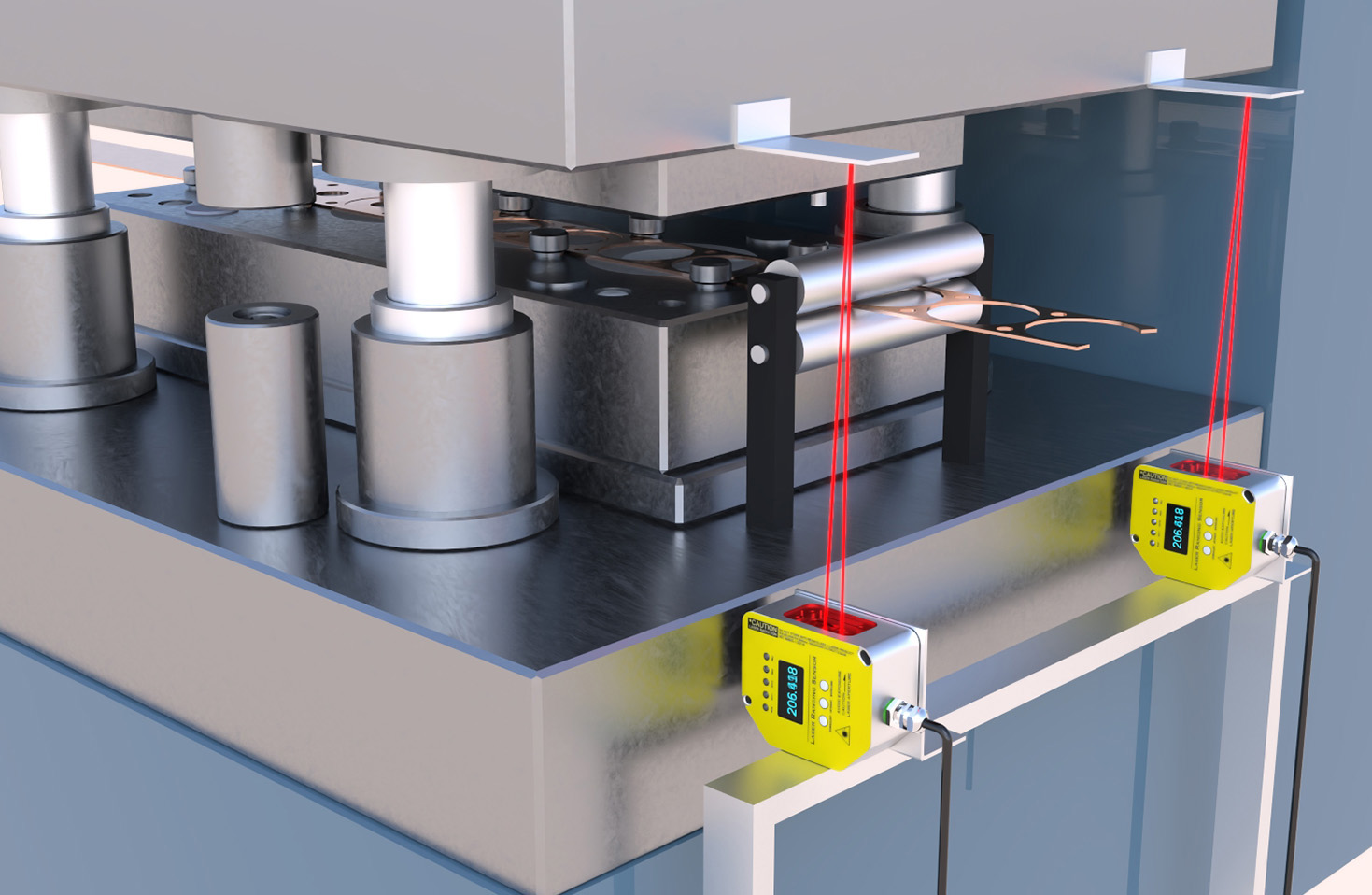
Boundary Conditions: When to Walk Away
Laser triangulation sensors, the workhorses for short to medium ranges, fail catastrophically with specular (mirror-like) or transparent surfaces. Attempting to measure glass, polished metal, or liquid surfaces leads to wild errors or loss of signal as the beam reflects away or penetrates the material. This is not a minor limitation; it's a fundamental physics constraint. Similarly, environments with intense ambient light—direct sunlight or arc welding—can saturate the receiver, rendering the sensor blind. No amount of filtering can overcome a welding arc's intensity.

Another high-risk zone is high-vibration environments. While many sensors boast high vibration resistance, sustained harmonic vibration at certain frequencies can induce optical misalignment or loosen internal components, causing a gradual, undetected calibration shift. This is insidious in applications like monitoring turbine blade clearance or rolling mill gaps, where a slow drift can lead to catastrophic failure. If your mounting point vibrates above 5g RMS, think twice, regardless of the IP rating.
Counter-Intuitive Conclusions: Data-Driven Insights That Defy Common Sense
1. Higher Power Isn't Always Better: A more powerful Class 2 or 3R laser seems like a panacea for poor reflectivity. However, on matte, dark, or absorbent surfaces, increasing laser power can actually worsen performance. The reason is the "speckle effect." The rough surface creates a random interference pattern at the receiver. Boosting power intensifies this speckle noise, increasing measurement jitter and reducing effective resolution. Sometimes, a lower-power, better-focused beam with optimized receiver gain yields a more stable signal.
2. Faster Update Rate Degrades Stability: The push for 10kHz update rates is often marketing overkill. At these extreme speeds, the sensor has less time to integrate the return signal, increasing susceptibility to electrical noise and ambient light interference. For most industrial positioning or monitoring tasks, a 1kHz update rate with superior signal processing provides far better stability and noise immunity. The quest for speed can ironically make the measurement noisier and less reliable.
3. The "Sealed" Sensor Myth: An IP67 rating implies dust and water immersion protection. Yet, I've witnessed countless IP67-rated sensor failures in chemical or saline atmospheres. The issue is not liquid ingress but *condensation* inside the front window or on the lens. A sensor moving from a cold storage area to a warm, humid process line can fog internally, scattering the laser beam. This condensation can persist long enough to cause extended downtime. The solution isn't a higher IP rating, but internal desiccant, active purging, or a controlled thermal mass.
The ultimate takeaway is this: selecting a laser distance sensor is an exercise in defining failure modes. Interrogate the environmental stressors more than the headline specifications. Pressure-test the supplier's claims against your worst-case scenario, not their best-case demo. The true cost is never in the purchase order, but in the unplanned downtime caused by a sensor operating silently outside its genuine, unadvertised boundaries.