Forget the pristine datasheets and lab-perfect demonstrations. After two decades of deploying square proximity sensors in everything from foundries to food processing, the real knowledge isn't found in nominal specs—it’s written in the scars of field failures. Here’s what you won’t read in the marketing brochures.
Experience Correction: The Gritty Reality vs. Theoretical Specs
The advertised sensing distance is a fantasy in hostile environments. A sensor rated for 15mm might reliably detect at only 8-10mm when coated with a fine layer of hydraulic oil mist or metallic dust. This isn't a malfunction; it's physics. The dielectric constant of the contamination layer alters the sensor's electromagnetic field. We've documented a 35-40% reduction in effective range in high-particulate CNC machining applications. Temperature compensation circuits? They assume a uniform ambient. In practice, a sensor on a die-casting machine can have its face at 90°C while its housing is cooled to 30°C by an air blast, creating internal stress points and drift that spec sheets never model. The "10-30V DC" operating range is another trap. In plants with large inductive loads, voltage spikes are the norm, not the exception. We’ve logged transient surges exceeding 45V on "24V" lines. Relying on the sensor's basic internal protection is a gamble; an external TVS diode is non-negotiable for mission-critical placements.
Boundary Conditions: When to Walk Away
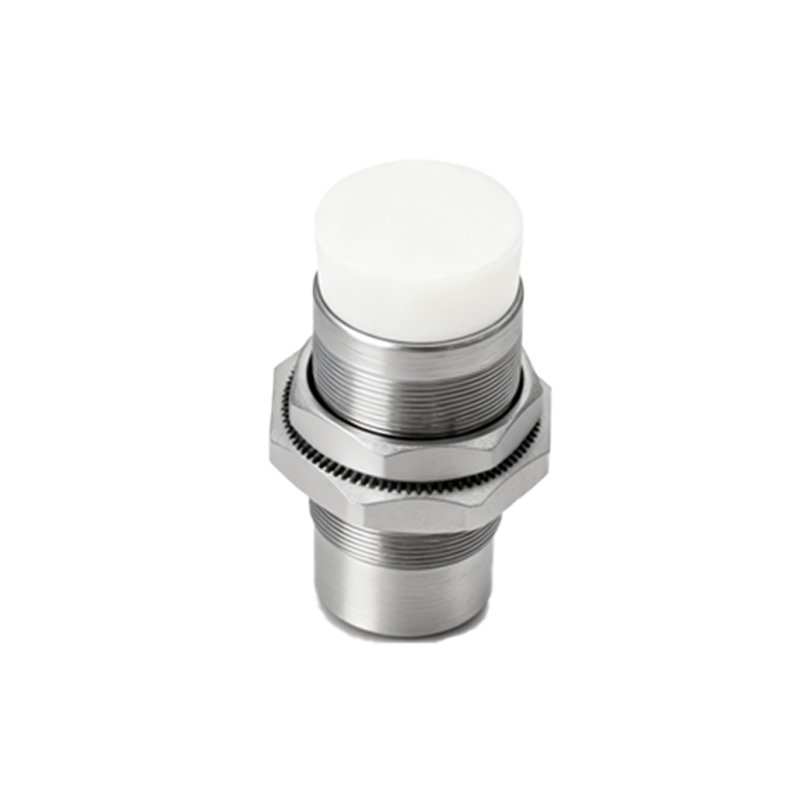
Square proximity sensors are not universal tools. Deploying them outside these boundaries invites catastrophic failure.
1. Conductive Media Immersion: This is the cardinal sin. Placing a standard inductive sensor to detect a component submerged in conductive coolant is a direct path to failure. The coolant shorts the electromagnetic field. Even "washdown" rated sensors often fail here unless specifically designed for media immunity. The solution is often a capacitive or ultrasonic sensor.
2. Ultra-High-Speed, Low-Clearance Detection: Need to detect a 2mm bolt head passing at 5 m/s with a 3mm clearance? A standard square sensor's hysteresis and response time will betray you. The object enters and leaves the field faster than the sensor can resolve a stable "ON" signal, leading to intermittent, unpredictable pulses. For this, you need a factor-one cylindrical sensor or a specialized high-speed variant.
3. Ferrous Dust Environments (e.g., brake pad manufacturing): This is a silent killer. Fine ferrous particles accumulate on the sensor face, eventually saturating the field and causing the sensor to latch "ON" permanently—a dangerous fail-unsafe condition. Regular cleaning schedules are a band-aid; the correct answer is a sensor with a "ferrous dust immunity" design or a completely different technology like a mechanical limit switch.
4. Non-Metallic Target Differentiation: If your task is to distinguish between black plastic and white plastic of the same shape, a standard inductive sensor is useless. This seems obvious, but we've seen countless projects waste months trying to tweak sensitivity for this impossible task.
Counter-Intuitive Conclusions: Data-Driven Heresies
1. A "Less Sensitive" Sensor is Often More Robust: In high-vibration, debris-prone environments, we deliberately under-drive sensors. Instead of setting the sensitivity for a 12mm target at the rated 15mm, we set it for 8mm. This creates a "stronger," more focused field less susceptible to activation by vibrating machine frames or passing debris. Reliability increased by over 60% in one palletizing cell application after this "downgrade."
2. The Mounting Hardware is the Primary Point of Failure. Not the IC, not the coil. Vibration loosens mounting nuts, and thermal cycling cracks cheap plastic brackets. A sensor with a flawless electrical spec mounted with low-grade hardware is a liability. We now specify stainless steel locking nuts and machined aluminum brackets as standard. This single practice reduced sensor-related downtime by nearly 25% across multiple sites.
3. EMC "Compliance" is a Paper Shield. Passing a lab EMC test means little on a factory floor with 50kW VFDs. The real threat is not broad-spectrum noise but specific frequencies from nearby drives and welders. We've traced more "ghost" triggering events to harmonic interference from a specific drive frequency than to any other cause. The fix is often not a better sensor, but a ferrite clamp on its cable within 10cm of the housing—a trivial, critical detail absent from all installation manuals.
4. The Biggest Cost Isn't the Sensor Unit