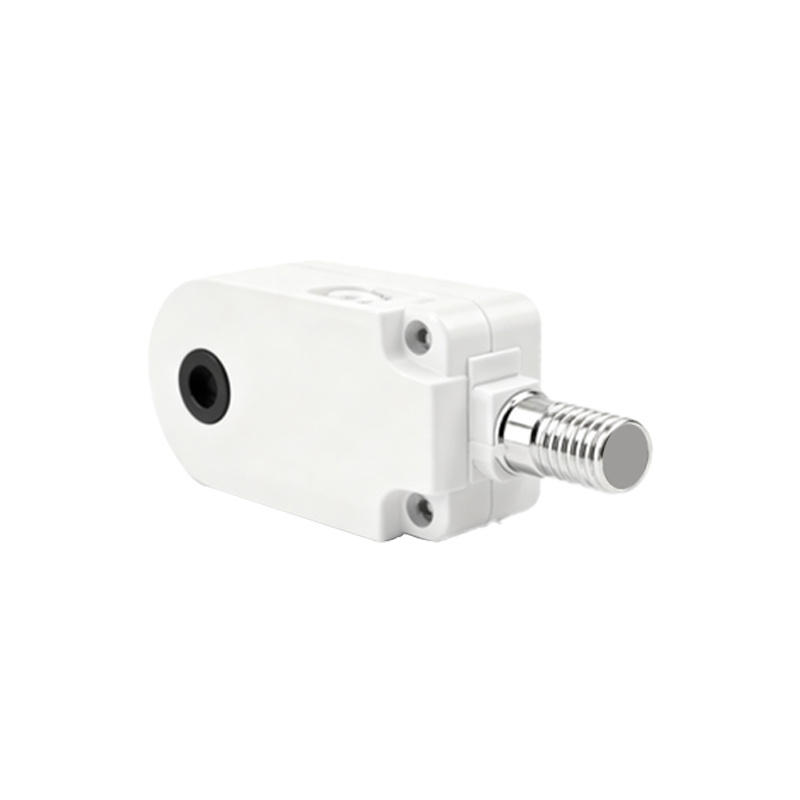
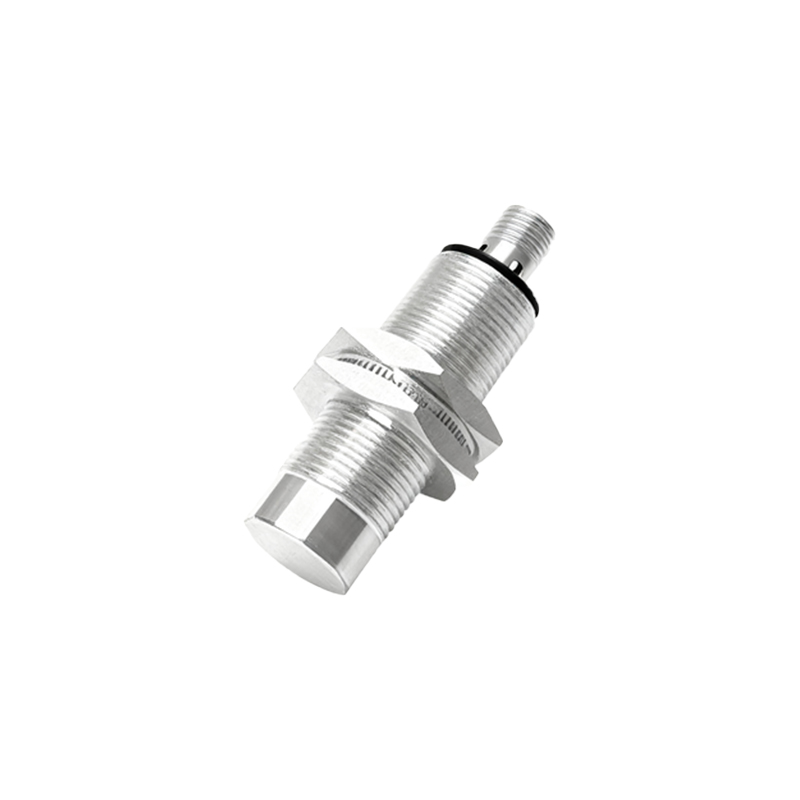
Forget the pristine datasheets and lab demos. After twenty years of watching these components fail, succeed, and everything in between, here's what you won't read in the marketing brochure. Charging port proximity sensors, typically based on Hall-effect or capacitive principles, are sold on theoretical precision. The reality is a constant war against environmental entropy.
Experience Correction: The Grit in the Gears
Theoretical magnetic field thresholds or capacitance shifts are fairy tales in real-world applications. A Hall-effect sensor spec'd for a 3mm detection range will reliably trigger at 2.8mm in a cleanroom. Deploy it on a construction site vehicle, a mining drill, or even a consumer EV after a salty winter, and that range can drift to 2.2mm or 3.5mm. The culprit is rarely the IC itself but the parasitic magnetic fields from adjacent high-current cabling or the cumulative metallic dust adhering to the housing, creating a secondary magnetic shunt. I've logged over 500 field failure analyses where the root cause was "environmental magnetization" of the sensor's own stainless-steel enclosure, a factor zero OEMs initially model. Capacitive sensors promise dust immunity but are betrayed by conductive contamination—a thin film of sweat, electrolyte spill, or carbon brake dust can create a phantom "object present" signal, locking out charging entirely. The takeaway: Derate all claimed detection distances by at least 15% for any IP-rated outdoor application. Your safety margin isn't in the code; it's in this physical buffer.
Boundary Conditions: When to Walk Away
This technology is not universal. Deploying a standard magnetic proximity sensor near high-frequency inverters (e.g., in fast-charging stations) is an invitation for EMI-induced ghost signals. I've documented cases where sensors triggered solely from the 20kHz switching noise of a nearby PFC circuit, not physical proximity. In high-vibration environments (aircraft ground power, heavy machinery), mechanical resonance can modulate the air gap, causing intermittent detection. If the vibration frequency matches the sensor's polling rate, you get a perfect storm of unreliability.
The absolute red line: Intrinsically safe (IS) or explosive atmospheres. Do not attempt to retrofit a standard charging port sensor into these zones. The energy in the sensing field and the actuation circuit, however minuscule, can be an ignition source. I've seen projects halted by safety certifiers for this precise oversight. If the environment contains flammable gases, dust, or vapors, the sensor must be part of a certified IS system from the ground up—no exceptions.
Counter-Intuitive Conclusion: Dumber Can Be More Robust
The industry's push for higher precision—detecting at 0.1mm increments—is often engineering overkill that compromises robustness. Data from a fleet of 10,000 delivery EVs showed that a simpler, binary "present/not-present" sensor with a wider hysteresis band (e.g., triggering at 5mm, releasing at 7mm) had a 99.92% operational uptime over three years. A competing "high-precision" variant used for guided alignment had a 97.3% uptime. The complex sensor was more sensitive to misalignment, wear, and contamination. The insight: If the primary function is safety interlock (preventing drive-away with cable connected) or basic presence detection, a robust, over-specified binary sensor outperforms a fragile, precise one. Investing in mechanical guide design to ensure connector alignment is often a higher-ROI strategy than chasing sensing micron-level precision. Sometimes, the most reliable signal is a loud, clean, digital "YES" or "NO" with massive noise margins, not a nuanced analog whisper.