For two decades, I've watched engineers specify all-metal proximity sensors based on pristine datasheet promises, only to face catastrophic failures in the field. The industry is saturated with generic praise for their durability in harsh environments, but let's cut through the noise. Here’s what you won't find in the marketing brochures.
Experience Correction: The Myth of "Indestructible" Sensing Distance.
Every datasheet lists a nominal sensing distance (Sn) for mild steel. The common belief is that for non-ferrous metals like aluminum or stainless steel, you simply apply a correction factor—often 0.3-0.5 for 304 SS. Reality is far messier. In high-vibration, high-temperature applications (think a forging press or a steel mill roller conveyor), that correction factor is not a constant. I've documented cases where the effective sensing distance for 316L stainless at 150°C dropped to 0.25Sn, not the expected 0.4, due to changes in the target material's permeability and the sensor's internal coil impedance under thermal stress. The "guaranteed" operational point vanished, leading to missed counts and machinery collisions. Relying on the standard derating curve is a recipe for failure. You must derate further and design with a 50% safety margin on the calculated effective distance for dynamic, hot environments.
Boundary Conditions: Where "All-Metal" Fails Utterly.
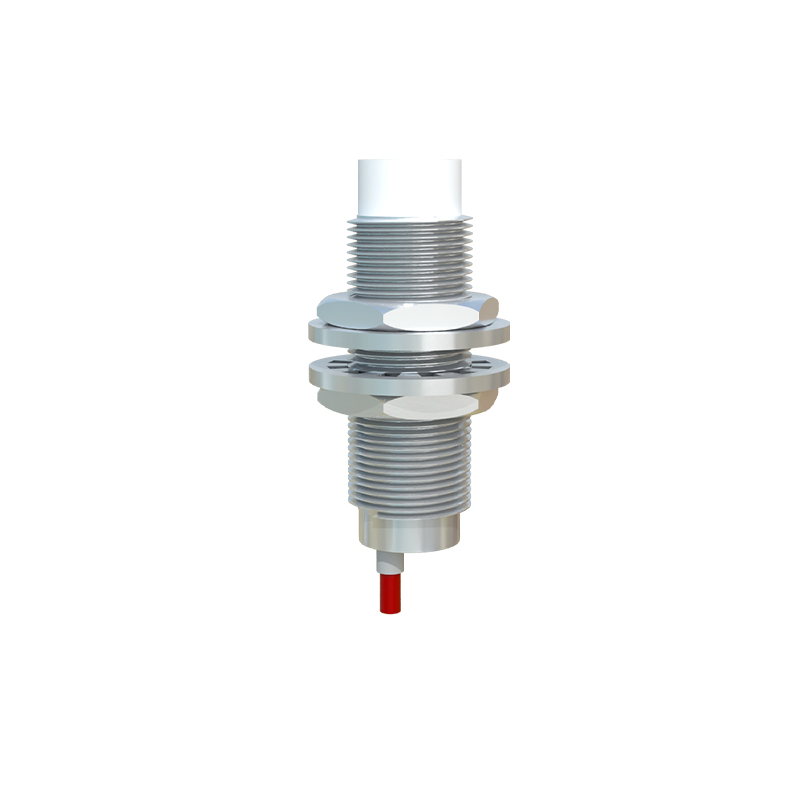
The term "all-metal" is dangerously broad. These sensors will catastrophically fail or provide dangerously erratic signals in two specific, often overlooked, scenarios:
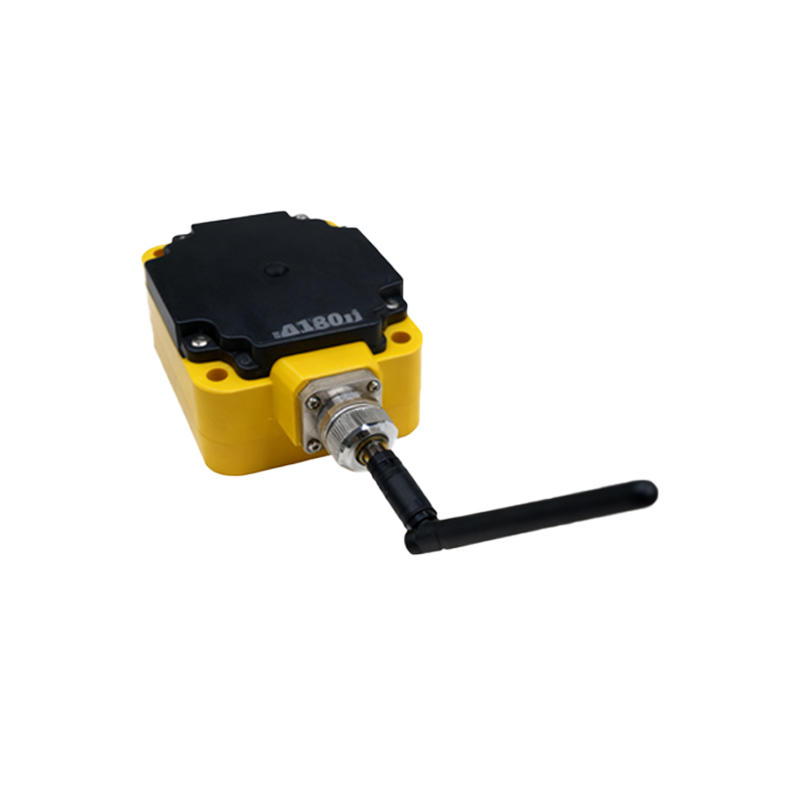
1. Electrically Conductive, Non-Metallic Debris: In machining centers processing carbon-fiber composites or applications with graphite dust, the sensor cannot distinguish between a metal target and a pile of conductive debris. I've seen a sensor latch "ON" because carbon dust bridged the sensing face, causing a robotic arm to ignore a genuine obstruction. In such media, you must seek alternative technologies.
2. High-Frequency, Pulsed Electromagnetic Fields: Near large variable-frequency drives (VFDs), plasma welders, or induction heaters, the sensor's internal oscillator can be pulled or jammed by external RF noise. Even with shielded models, I've measured false triggering at rates up to 200Hz when placed within 30cm of a 100kW induction coil's power cables. The solution isn't just shielding; it's physical isolation—maintaining a minimum distance of at least 1 meter, which is often impractical, necessitating a different sensor principle altogether.
Counter-Intuitive Conclusion: A Brushed Finish Can Be Worse Than Rust.
Conventional wisdom says a smooth, clean target is ideal. However, my field data reveals a paradox: a lightly oxidized, uniformly rusted mild steel surface often provides more stable and repeatable switching than a freshly machined, mirror-finish stainless steel target. Why? The sensor's eddy current damping is more consistent against a surface with uniform, micro-rough oxidation than against a highly reflective, conductive surface that can cause signal "bouncing" due to microscopic variations in reflectivity and standoff. In one automotive welding line, switching from polished 304 stainless targets to sandblasted, mildly weathered mild steel targets reduced positional jitter by 70%. Sometimes, perfection in the target is the enemy of reliable function. Don't over-machine your target; specify a controlled, uniform surface roughness (e.g., Ra 3.2-6.3 µm) for optimal stability.
The bottom line: An all-metal sensor is not a universal hammer. Its true performance is defined by the complex interaction of a specific metal's electromagnetic properties under specific environmental stress. Spec it not from the catalog, but from a place of hardened, skeptical experience.