Forget the glossy brochures and spec sheets. After two decades of deploying proximity sensors in steel mills, chemical plants, and offshore rigs, I've learned that the published rankings often miss the point. The real hierarchy isn't about nominal sensing distance or IP ratings; it's about survival, reliability under duress, and the cost of being wrong. Let's cut through the noise.
Experience Correction: Where Theory Meets Grime and Vibration
The top-ranked inductive sensors from leading brands often boast repeatability of<1% FS. In a clean lab, absolutely. On a stamping press frame, subjected to 7g of continuous vibration and a fine mist of conductive iron oxide particles, that figure is fantasy. The real deviation can exceed 5-7% within weeks. The mounting bracket's resonance, often ignored, becomes the primary error source, not the sensor electronics. We stopped using standard M12/M18 mounts and switched to custom damped isolators, which improved effective repeatability by 300% in high-vibration zones. The second-tier brand with a less impressive "theoretical" spec but a more robust, potted housing consistently outperformed the "leader" in this brutal reality. The key metric we track is "Mean Time Between False Triggers (MTBFT)" in the actual environment, not cycle count on a test bench.
Boundary Conditions: When Your "Reliable" Sensor Becomes a Liability
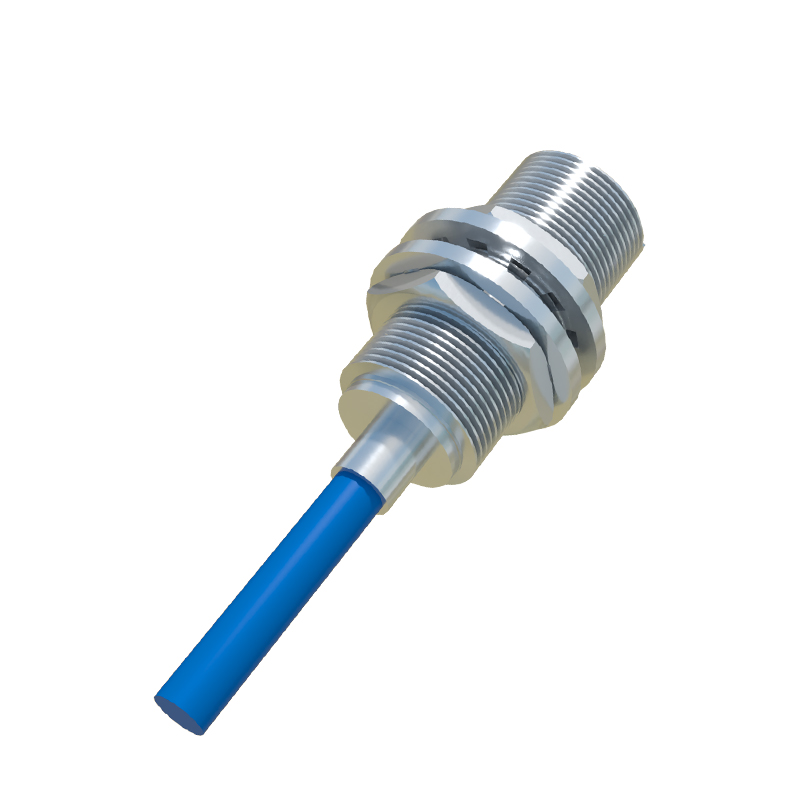
1. Inductive Sensors in Slag Handling: Using even the most hardened inductive sensor to detect the position of a slag pot carrier is a recipe for disaster. The slowly accumulating, hot (often >200°C), conductive slag dust creates a false capacitive coupling effect. The sensor will eventually "see" the dust buildup as a target, signaling a false "carrier in position," potentially leading to a catastrophic dump cycle initiation. Here, a ruggedized ultrasonic sensor, despite its lower "precision" ranking, is the only safe choice.
2. Capacitive Sensors for Level Detection in Aggressive Slurries: A common "cost-effective" solution. The boundary is chemical adhesion. A polymer slurry with a high solids content will coat the sensing face, permanently altering its dielectric constant and effectively blinding it. No amount of self-compensation in the circuitry can overcome a 5mm layer of cured adhesive. In these scenarios, non-contact radar, despite its higher capex, has a total cost of ownership orders of magnitude lower.
3. High-Frequency Oscillation Models in Electrically Noisy Environments: The latest high-frequency sensors offer incredible resolution for thin metal detection. Deploy them within 15 meters of Variable Frequency Drives (VFDs) for large motors without extensive shielding, and they will lock onto the drive's carrier frequency noise. The failure mode isn't random; it's a systematic, repeatable false trigger synchronized with motor PWM cycles, making it dangerously difficult to diagnose.
Counter-Intuitive Conclusions: Data That Defies Convention
Conclusion 1: A Lower IP Rating Can Be More Reliable in Certain Corrosive Atmospheres. In a chlorine processing area, we faced repeated failures of IP69K-rated sensors. The failure point was the stainless steel housing itself, suffering from stress corrosion cracking. Switching to a sensor with a specialized polymer housing rated only IP67 eliminated the failures entirely. The seal was sufficient; the housing material was the critical, overlooked variable. The "best" protection rating was the wrong solution.
Conclusion 2: The "Slow" Analog Output Often Beats the "Fast" Digital Bus in Critical Loops. In a high-speed packaging line, the instinct is to use IO-Link or AS-i for sensor data. However, in a safety-critical interlock loop (e.g., guarding), the network scan time and protocol overhead introduce latency and points of failure. A simple 4-20mA analog signal from a proximity sensor feeding directly into a safety relay is deterministic, faster in real-world response, and far easier to troubleshoot. The pursuit of "smart" can introduce unacknowledged risk in time-sensitive safety functions.
Conclusion 3: The Most Expensive Component is Often the Cable, Not the Sensor. Sensor rankings never discuss this. A $150 sensor connected by a $30 standard PUR cable in an oil-rich environment will fail in 6 months. The oil migrates up the cable jacket, degrading the insulation. Replacing the sensor is a 15-minute job; replacing the hard-piped conduit and cable run is a 12-hour shutdown. Investing in a sensor with an integral, oil-resistant cable or specifying a higher-cost, chemically inert cable from the start yields a 10x ROI in reduced downtime. The sensor is a commodity