Forget the spec sheets and marketing gloss. After twenty years deploying radar sensors and laser scanners in mines, ports, steel mills, and on autonomous machinery, the real knowledge comes from failures analyzed and problems solved under duress. Here’s what you won’t find in the manuals.
Experience Corrections: Where Theory Meets Mud, Dust, and Chaos
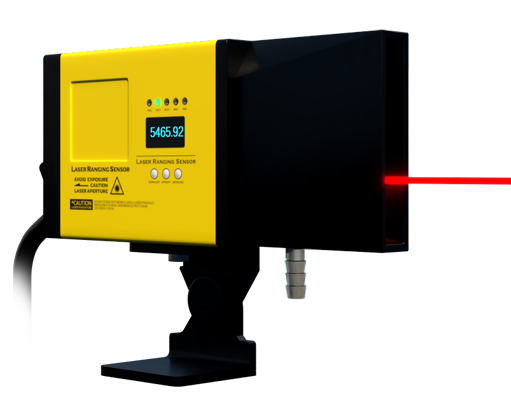
* Radar's Deceptive "Robustness": The industry touts radar's immunity to weather. In practice, heavy rain or wet snow creates a significant signal attenuation, easily reducing effective range by 30-50%. More critically, in environments with dense, moving metallic clutter—like a scrap yard or a busy container terminal—the Doppler "speed filter" is useless. Stationary cranes become invisible, but a vibrating metal sheet can create a persistent false dynamic target. Your "all-weather" sensor is now blind to critical static obstacles.
* Laser Scanner's Calibration Myth: The stated angular resolution and accuracy assume a perfectly stable, vibration-free mount. On a moving forklift or excavator, structural harmonics and shock can distort the point cloud, causing millimeter-waveform shifts that translate to centimeter-level errors in object detection. We've seen "stable" installations where thermal expansion of the mounting bracket over a day shifts the detection zone by 15 cm, enough to cause a false emergency stop. You're not measuring the environment; you're measuring the vibration of your own vehicle.
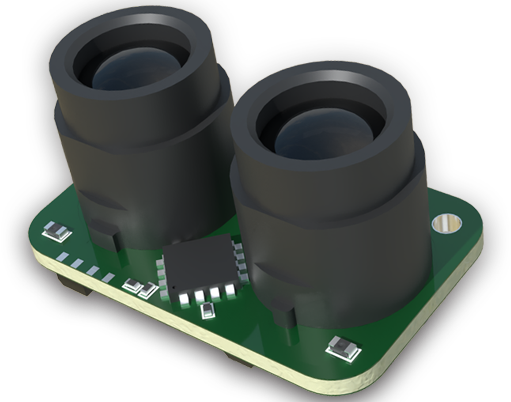
* Update Rate vs. Decision Latency: A 50Hz scanner doesn't mean a 20ms reaction time. The processing pipeline—point cloud aggregation, filtering, object segmentation, tracking, and finally triggering an output—can add 80-150ms. In high-speed intralogistics, a person stepping into a lane at 6 m/s travels nearly a meter in that latency. Your safety curtain has a hidden, variable delay.
Boundary Conditions: When to Walk Away
Do not use pulse-coherent radar (e.g., 24 GHz) in environments with:
1. Falling or Blowing Particulate: Grain silos, coal handling plants, cement factories. The particulate cloud creates a volumetric return that saturates the receiver, masking all true targets. It's not "noise"; it's a signal the radar faithfully interprets as a solid wall.
2. Highly Corrugated Surfaces: Corrugated metal walls, radiator fins. These act as retro-reflectors, creating massive, persistent ghost targets at fixed distances that overload tracking algorithms.
3. Precise Positioning Under 1 Meter: Forget it. Radar's spatial resolution is poor at short range. For pallet picking or docking, it's the wrong tool.
Do not use laser scanners (LiDAR) in environments with:
1. Persistent Airborne Obscurants: Fog, steam, industrial smoke, dust storms. 905nm or 1550nm light is scattered and absorbed. In a paper mill's steam leak, effective range dropped from 80m to under 3m in our logs.
2. High-Ambient Light Interference: Direct sunlight into the receiver optics can blind it. Worse is artificial: we've seen high-frequency, flickering LED lights in warehouses create stroboscopic effects that generate phantom points at fixed angles, mimicking a permanent obstacle.
3. Specular or Absorptive Surfaces: A clean, wet floor can act as a mirror, creating a perfect duplicate of the world upside down in the point cloud. Black rubber conveyor belts or velour surfaces can absorb over 99% of IR light, rendering them invisible. Your safety scanner cannot see the most common trip hazard.
Counter-Intuitive Conclusions: Data-Driven Heresies
1. "Higher Resolution" Can Mean Worse Performance. Increasing a laser scanner's angular resolution in a dusty environment doesn't give you better detail; it gives you more noise points from dust particles. The object detection algorithm's clustering parameters become unstable, causing either missed detections (over-filtering) or false positives (under-filtering). Sometimes, a "dumber," lower-resolution point cloud with robust echo processing yields higher system reliability.
2. Radar is Better at Detecting "Nothing" Than "Something." This is profound for safety. In a defined warning zone, a laser scanner confirms an object's presence. A well-configured FMCW radar can more reliably confirm the *absence* of an object, because it's sensitive to minute changes in a complex RF fingerprint of an empty zone. An intruder disrupts that fingerprint. This makes radar superior for guarding large, open, but cluttered perimeters where defining a specific object shape is impossible.
3. The Fusion Fallacy. Simply fusing radar and LiDAR data streams at the input level often degrades performance. Their failure modes are not complementary; they are often concurrent (e.g., fog and rain). True robustness comes from *independent*, parallel perception chains with a meta-logic layer that weights the credibility of each sensor's output based on real-time environmental classifiers (e.g., an optical camera for visibility score, humidity sensor). The sensor doesn't tell you when it's lying; the context does.
The ultimate insight? The environment is part of the sensor. Choosing between radar and laser isn't about the technology; it's about rigorously defining the physical and electromagnetic conditions of your specific hellscape and knowing which sensor's failure mode you can tolerate, detect, and mitigate. There are no universal solutions, only informed compromises.