Forget the pristine data sheets. After twenty years of deploying inductive and capacitive proximity sensors in steel mills, chemical plants, and automated warehouses, I’ve learned that their real-world performance is a negotiation with chaos. The theoretical specifications are a starting point, not a guarantee. Let's cut to the chase.
Experience Corrections: Where Theory Meets Grit
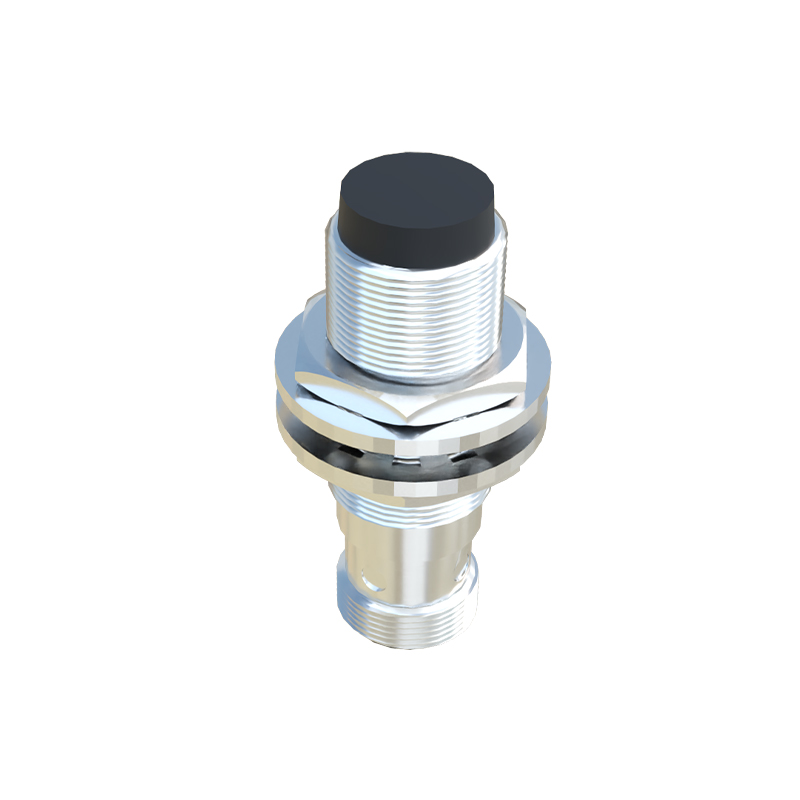
The advertised sensing distance (Sn) is a fantasy in hostile environments. A sensor rated for 8mm on mild steel will underperform by up to 40% when targeting a rusty, pitted surface or hot-rolled steel with a scaly oxide layer. The eddy currents simply cannot form as modeled. Temperature compensation circuits fail in cyclic thermal shock. A sensor surviving a steady 80°C ambient will crack internally when repeatedly splashed by 25°C coolant, causing eventual seal failure and drift. The claimed IP67 rating means nothing if the housing is mounted where it collects conductive abrasive dust (like graphite or metal powder), which bridges terminals and creates leakage paths. Vibration resistance specs ignore resonant frequencies common in punch presses or forging hammers, leading to internal component fracture long before the housing fails. Your MTTF (Mean Time to Failure) calculations are irrelevant if you don't factor in the real-world electrical noise from variable frequency drives (VFDs). I’ve seen sensors latch on or false-trigger due to induced voltages from parallel cable runs, a problem never mentioned in manuals.
Boundary Conditions: When to Walk Away
Proximity sensors are not universal solutions. Deploying them in these scenarios is professional malpractice. First, any application involving non-ferrous metals with high electrical conductivity, like aluminum or copper, at high speeds. Capacitive sensors might seem the answer, but they become wildly unreliable with minute changes in material alloy, moisture, or contaminant film, causing catastrophic timing errors in sorting systems. Second, environments with plasma or intense ionizing radiation (e.g., near certain welding processes or in nuclear facilities). The ionization can trigger the sensor’s oscillator as effectively as a metal target. Third, applications requiring detection of ultra-thin materials (foils< 0.1mm). The hysteresis (difference between switch-on and switch-off point) will be greater than the target's presence, making consistent detection impossible. Fourth, in presence of strong alternating magnetic fields from heavy equipment. Inductive sensors can demodulate these fields and output a false DC signal. Finally, for critical safety functions (e.g., light curtains or door interlocks). Proximity sensors are never safety-rated devices for personnel protection. Using them as such is a profound liability.
Counter-Intuitive Conclusions: Data That Defies Dogma
1. A "Faster" Sensor Can Slow Down Your System. A sensor with a 5kHz switching frequency (0.2ms response) seems superior to a 1kHz (1ms) model. However, the ultra-fast sensor is more susceptible to electrical noise, leading to sporadic errors that require downstream PLC logic for debouncing. This software filter adds latency, often netting a slower system response than the "slower," more robust sensor. Speed on paper is not throughput on the line.
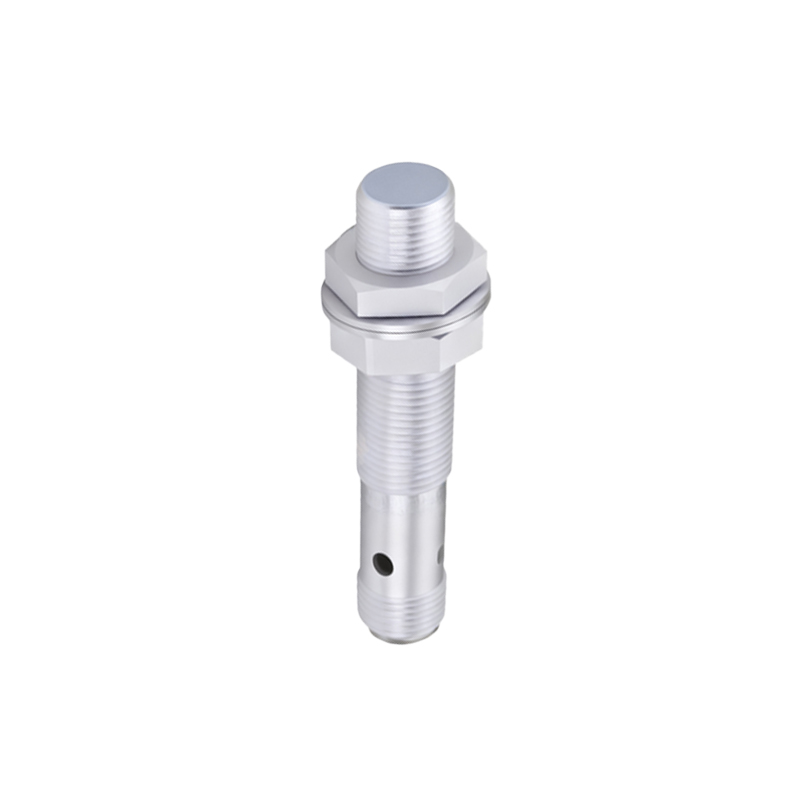
2. Shielding Can Reduce Performance. The dogma is always to use shielded sensors in tight spaces. True, they prevent side-activation. But the metal shield creates a "dead zone" at the active face, effectively reducing the usable sensing distance by up to 15% compared to an unshielded model. In cramped but non-interfering setups, an unshielded sensor may provide the needed extra millimeter of reliable detection.
3. The Most Expensive Factor Isn't the Sensor. It's the downtime and the labor to replace it. A sensor costing $200 mounted in a location requiring a 2-hour production halt and a certified electrician for hot swap has a true cost exceeding $2000 per failure. Therefore, the optimal choice is often the sensor with the most robust housing and connector system, not the one with the highest technical specs. Reliability engineering trumps component specification.
4. Analog Outputs Are More Reliable Than Discrete for Positioning. Conventional wisdom says use analog (4-20mA/0-10V) for distance and discrete (on/off) for presence. Paradoxically, in high-vibration environments, a discrete sensor's chatter (rapid on/off cycling) destroys contacts and PLC input modules. An analog sensor's continuous signal, when averaged by the controller, provides a more stable and reliable indication of a target's stable presence near the setpoint, with fewer hardware failures.
The takeaway is brutal: sensor selection is a systems engineering challenge dominated by edge cases. Your most valuable