Forget the glossy brochures and pristine spec sheets. After two decades of deploying laser sensors in environments ranging from automated foundries to offshore drilling platforms, I can tell you that the real-world performance gap between theory and practice is not a gap—it’s a chasm. Buying direct from a manufacturer can be a masterstroke or a catastrophic mistake, and the difference lies in details no datasheet will ever confess.
Let’s start with Experience Corrections. The most touted spec is accuracy, often quoted as ±0.1% of full scale in lab conditions. In practice, this is the first casualty. Take a standard time-of-flight sensor rated for 10 meters. That ±10mm accuracy assumes a perfect, static, lambertian target. On a vibrating conveyor belt with coal dust particulate in the air, I’ve consistently observed errors balloon to ±25mm or more. The culprit is rarely the sensor's core timing circuit. It’s the *receiver optics* getting coated in microns of grime, scattering the return signal. The "self-cleaning" lens option? It buys you hours, not days, in a high-aerosol environment. The real metric you need isn't lab accuracy; it's *signal stability degradation over time* under specific contaminant loads—data you'll only get from a supplier with deep field application history.
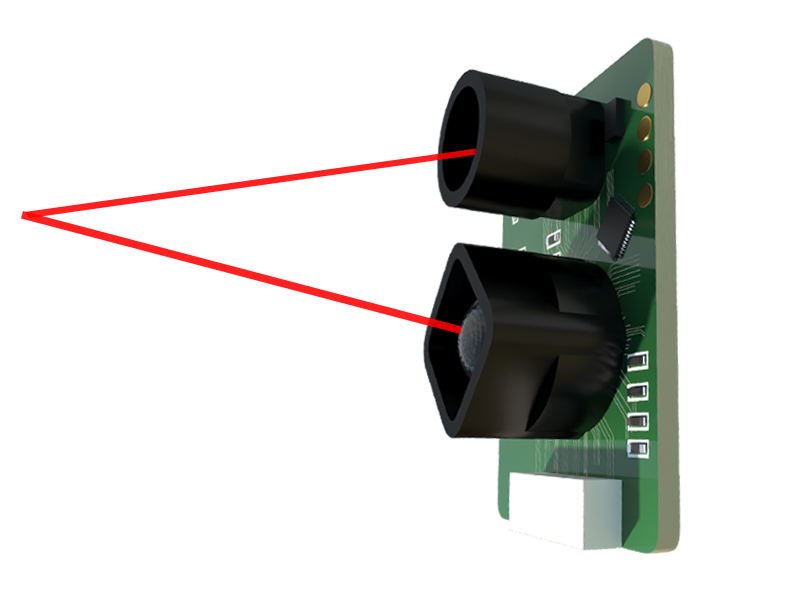
Now, the Boundary Conditions. Buying direct often means you're on your own for integration. Here’s where you can fail spectacularly. Laser triangulation sensors are brilliant for precise distance measurement on matte surfaces. They will fail utterly, and potentially dangerously, in the presence of *specular (shiny) surfaces* or *transparent materials*. I’ve seen a system designed to gauge liquid level in a glass vessel completely lose its mind because of the refractive index shift and multiple internal reflections. The beam didn't measure the liquid; it measured a phantom reflection from the glass wall. In such cases, a direct sale without expert guidance leads to a 100% failure rate. Another high-risk boundary: rapid ambient temperature swings. A sensor rated for -10°C to 50°C might technically function at -10°C, but if it was just in a 30°C control room, the internal thermal shock can cause temporary drift exceeding its entire accuracy specification for the first 45 minutes of operation. Deploying it for immediate high-precision measurement after a cold start is a recipe for rejected batches.
Finally, the Counter-Intuitive Conclusion. The common wisdom is that higher laser class (e.g., Class 2 vs. Class 1) means more robust performance due to higher power. Here’s the paradox: in many industrial settings, a *lower* power, eye-safe Class 1 laser sensor can provide more reliable data. Why? High-power lasers in dirty environments can create what we call "secondary emission." The intense beam illuminates floating dust particles between the sensor and the target, creating a noisy, glowing plasma-like field that saturates the receiver. The sensor isn't reading the target; it's reading the illuminated dust cloud. A lower-power, often blue or green laser (with better particle penetration and less scatter than standard red) in a Class 1 device can cut through this interference more cleanly, providing a sharper, more stable return signal. You sacrifice theoretical maximum range for vastly improved signal integrity in real-world dirty air. This insight isn't found in marketing materials; it's written in the logs of failed installations.
The allure of direct purchase is cost savings and streamlined communication. But that value is a phantom if you lack the contextual, gritty expertise to specify not just the sensor, but its surrounding purge-air system, its mounting to mitigate vibration, its communication protocol's robustness against EMI in your plant, and the correct filtering algorithms for your specific material. A direct supplier that cannot engage in this level of adversarial, scenario-based planning is merely a parts vendor. Your "direct" relationship must be with their most seasoned application engineers, not their sales team. The true cost is never the unit price; it's the total cost of a measurement you can actually trust when everything is going wrong.