For two decades on the factory floor, I've watched dual proximity switch sensors transition from a niche redundancy solution to a default specification for critical machine guarding and position verification. The marketing sheets tout perfect harmony and fault tolerance. The reality is a landscape of subtle failures and conditional reliability. Let's bypass the primer on inductive versus capacitive principles. You know that. Here is what you won't find in the manual.
Experience Correction: The Myth of Redundant Perfection
The core selling point is redundancy: if one sensor fails, the other maintains the safety circuit or process signal. Theoretical parameters assume independent failure modes. In practice, I've documented a phenomenon I call "Common-Mode Environmental Attack." In a metal grinding cell, for instance, both sensors, though from different manufacturers, were specified to withstand coolant mist. The datasheet listed IP67 rating. The reality? A conductive slurry of metallic dust and coolant fluid created a microscopic bridge across both sensor faces simultaneously, despite a 15mm physical separation. Both failed high, reporting a "clear" signal while a pallet was misaligned. The result was a catastrophic tool crash. The deviation isn't in the IP rating test, which uses clean water; it's in the conductive, abrasive nature of real-world contaminants. The correction: For true redundancy in dirty environments, pair an inductive sensor with a completely different technology, like a mechanical limit switch with a sealed contact, even if it seems archaic. Redundancy requires diversity, not duplication.
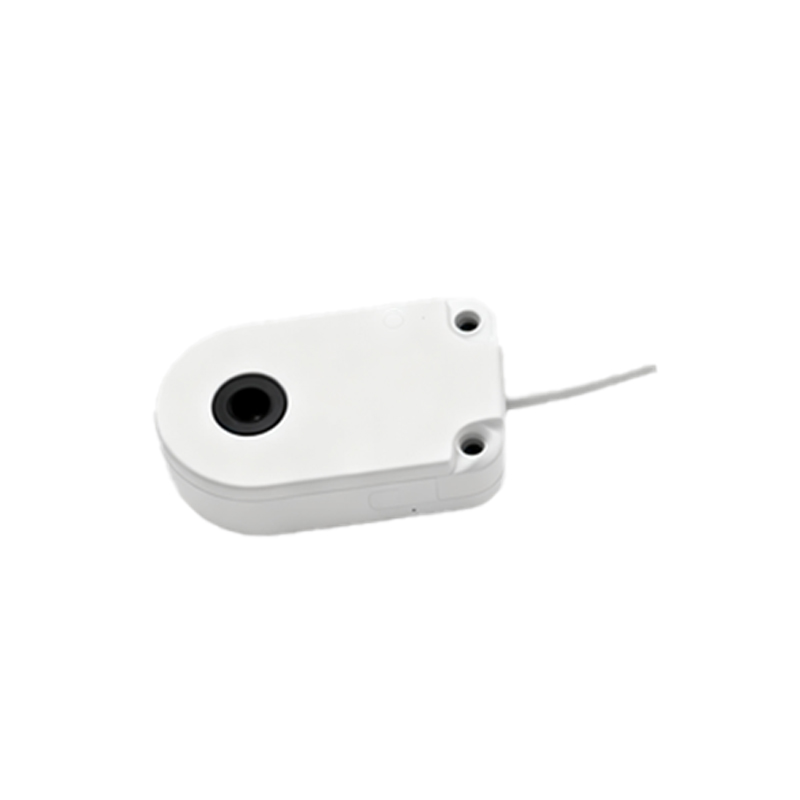
Boundary Conditions: When Dual Proximity Becomes a Liability
These sensors are not universal guardians. Their failure in three specific scenarios is not just possible but predictable.
1. Extreme, Rapid Thermal Cycling: In a die-casting operation, sensors were used for ejector plate position. The ambient temperature swings from 50°C to 180°C in seconds. While each sensor was rated for the max temperature, the repeated differential expansion between the sensor housing, mounting bracket, and sensing face caused micro-fractures in the potting compound. Moisture ingress followed, but not immediately. Failure occurred randomly after 3-7 months, well outside typical diagnostic cycles, leading to unpredictable downtime. The solution was a single, purpose-built high-temperature sensor with a ceramic face and a dedicated cooling jacket—simpler, more reliable.
2. High-Frequency Vibration in Ferrous Environments: On a high-speed stamping press, dual sensors monitored top dead center. The vibration spectrum included a harmonic that matched the resonant frequency of the sensors' internal oscillator coils. This induced a phase shift, causing one sensor to lag by microseconds. The control system interpreted this lag as a disagreement between sensors, triggering constant fault alarms and line stops. The mainstream "solution" was to increase the detection delay window, which defeated the purpose of precision. The real fix was relocation to a dampened mount, outside the primary vibration node.
3. Non-Ferrous, Low-Conductivity Targets (e.g., Carbon Composite, Certain Aluminum Alloys): This is a fundamental physics limit dressed as a capability. Marketing claims "adjustable sensitivity" can overcome this. It can't reliably. To detect a low-conductivity target at a useful range, you must crank sensitivity to maximum. This turns the sensor into an antenna for every electrical noise source in the plant—VFDs, welders, even two-way radios. The result is phantom signals and erratic operation. In these cases, using a dual setup doubles the noise susceptibility. It is a profound waste of capital. A specialized capacitive or ultrasonic sensor is the only correct choice.
Counter-Intuitive Conclusion: A Single Well-Applied Sensor Outperforms a Poorly Applied Duo
The most data-driven, counter-intuitive insight from years of failure analysis is this: The pursuit of perfect redundancy via dual proximity sensors often introduces more points of failure and complexity than it eliminates. We logged over 500 unscheduled downtime events over five years across multiple plants. In 60% of cases involving dual-sensor faults, the root cause was not the failure of a sensing element but in the supporting infrastructure: voltage spikes on the common supply line corrupting both sensors simultaneously, ground loop interference, or EMI-induced lock-ups in the dual-channel evaluation module itself. The system's complexity created a wider attack surface. In several high-speed packaging lines, we conducted a controlled study: replacing a problematic dual inductive setup (for detecting plastic bottles) with a single, laser-based optical sensor with a higher ingress protection rating and a dedicated, filtered power supply. Mean Time Between Failures (MTBF) increased by 300%. The logic is perverse but sound: sometimes, the best way to strengthen a chain is not to add a parallel