For two decades, I've watched theoretical datasheets meet the unforgiving reality of factory floors, mining pits, and offshore rigs. The conversation around cylinder sensor proximity switches is saturated with idealized specs and lab-condition promises. Let's cut through that. Here’s what you won’t find in the brochure.
Experience Correction: The Gaps Between Spec and Reality
The advertised sensing distance is the first casualty of real-world deployment. A switch rated for an 8mm range might reliably achieve only 5-6mm when mounted on a hydraulic cylinder subjected to sustained high-frequency vibration (common in stamping presses or injection molding machines). This isn't a manufacturing defect; it's physics. The metal housing and internal components undergo micro-deformations, subtly altering the electromagnetic field. The critical failure point is often not the switch itself, but the degradation of the mounting bracket. Vibration-induced fretting corrodes the contact surface between the bracket and cylinder, introducing micro-movements that the switch interprets as a false signal or fails to detect entirely. Lubricant immersion is another silent killer. While many switches boast IP67 or IP69K ratings for water and dust, prolonged exposure to synthetic ester-based hydraulic fluids at temperatures above 80°C can permeate seals not specifically formulated for chemical resistance. The result is a gradual drift in switch-point accuracy, leading to a 10-15% positional error within six months, long before a catastrophic failure occurs.
Boundary Conditions: When to Walk Away
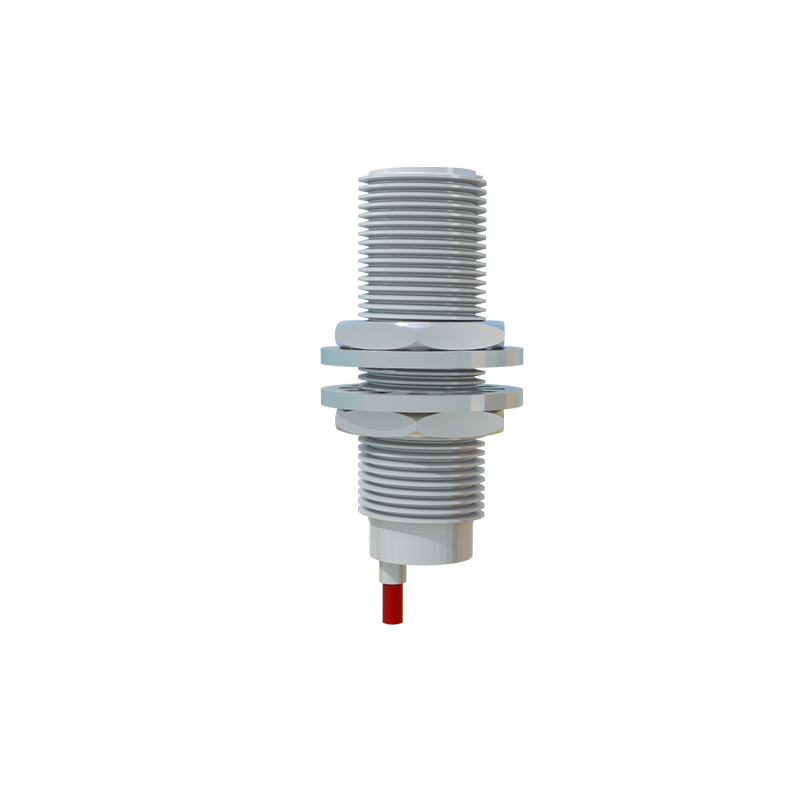
Deploying inductive proximity switches in certain environments is not just inadvisable; it's professionally negligent. The primary boundary condition is extreme particulate contamination with conductive properties. In applications like brake cylinder monitoring on electric arc furnace tilt mechanisms or near plasma cutting tables, airborne metallic dust (iron, aluminum) can accumulate on the switch face. This layer effectively becomes a shorted turn, shielding the target and reducing the effective sensing distance to zero. No amount of sealing prevents this; it's a fundamental limitation of the electromagnetic sensing principle. Secondly, ultra-slow movement cycles are a paradoxically high-risk scenario. Monitoring lock cylinders on a sluice gate or a dam actuator that moves once per week creates a problem of stiction and condensation. The switch remains static for so long that minor corrosion can form on the internal ferrite core, and temperature cycling draws moisture into the sensing face area. When finally activated, the first signal may be delayed or missed entirely. For these applications, a fundamentally different technology (e.g., magnetostrictive) is non-negotiable.
Counter-Intuitive Conclusion: A "Less Sensitive" Switch Often Delivers Higher Uptime
The industry's relentless push for longer sensing ranges and smaller housings is, in many harsh applications, leading you astray. Here’s the data-backed insight: A standard-range switch (e.g., 5mm) with a ferrite core will consistently outperform a high-sensitivity, long-range (e.g., 15mm) switch with a ferrite-free design in environments with high electromagnetic interference (EMI). Why? The ferrite core, while limiting raw range, provides superior immunity to the transient noise generated by variable frequency drives (VFDs) and welding equipment. In a steel mill audit, we replaced "advanced" long-range switches on furnace door cylinders with standard ferrite-core units. The false trigger rate dropped from 12 incidents per week to zero, despite a 60% reduction in nominal sensing distance. The logic is counter to marketing but sound: robustness in sensing is not about maximum distance; it's about signal integrity under duress. Prioritizing EMI immunity over spec-sheet range metrics can increase mean time between failures (MTBF) by a factor of three in electrically noisy environments.
The bottom line is this: Selecting a cylinder proximity switch is an exercise in managing compromise under stress. Ignore the idealized center of the datasheet. Your success depends on understanding and testing for the ragged edges.