For two decades, I've witnessed laser-based gas sensors, particularly Tunable Diode Laser Absorption Spectroscopy (TDLAS) units, transition from lab curiosities to industrial mainstays. The marketing promises are alluring: unparalleled selectivity, near-zero drift, and immunity to poisoning. The reality, honed in refineries, semiconductor fabs, and Arctic pipelines, is far more nuanced. Let's cut through the brochureware.
Experience Correction: The Myth of "Install and Forget"
Theoretical specs tout ppm or even ppb-level detection with laser stability measured in years. In practice, alignment is everything, and it's fragile. A common failure point the datasheet omits is *microphonic noise* and *thermal lensing*. In a compressor station, low-frequency vibration (6-120 Hz) can induce etalon effects in the optical path, causing signal fluctuations that mimic concentration spikes. We've recorded false alarms equivalent to 15% LEL methane readings from vibration alone, not gas. The fix isn't in software; it requires proprietary, damped kinematic mounts for the laser and detector, a feature rarely highlighted in spec comparisons.
Similarly, the celebrated "no cross-sensitivity" claim hits a wall with *broadband absorption overlap* in wet, high-temperature stacks. While the laser targets a specific water-insensitive line for, say, CO, at 160°C with 30% vol. H2O, the absorption line width broadens due to pressure and Doppler effects. This can cause the laser's narrow line to partially interact with a nearby, unexpected water transition line, leading to a 2-5% positive bias in readings. This isn't a calibration issue; it's a fundamental spectroscopic challenge under non-ideal conditions that requires active, heated sample cells to control.

Boundary Conditions: Where This Technology Reaches Its Limits
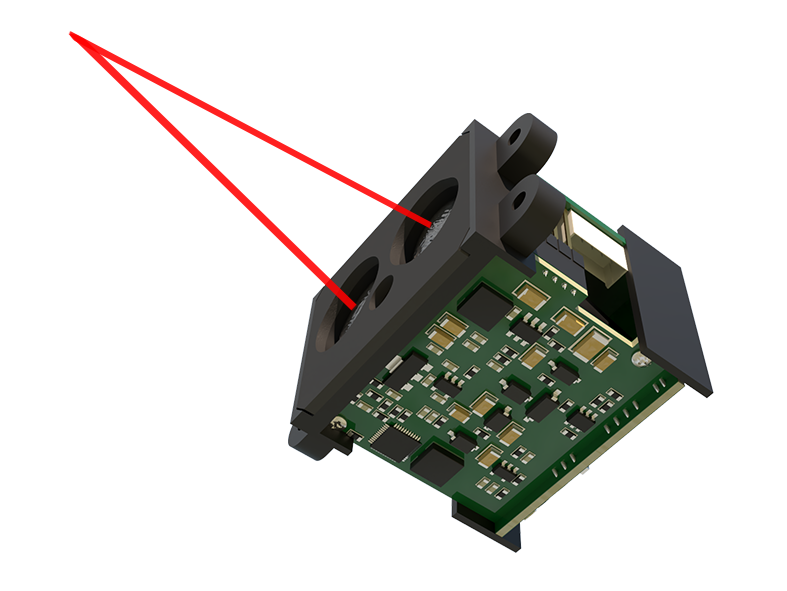
Laser gas sensors are not universal tools. Deploying them in these scenarios is a recipe for failure or dangerous oversight:
1. Condensing or Particulate-Laden Streams: Any TDLAS system measuring in *extractive* mode is vulnerable. Sub-micron oil aerosols or amine carryover from scrubbers will coat the optical windows in a thin, diffuse film. This attenuates the signal not linearly, but exponentially, leading to a *negative drift that appears as improving safety conditions*. The sensor might read zero in a hazardous environment. Direct-in situ probes in flue gases fail within weeks without continuous, high-purity purge air—a significant auxiliary cost.

2. Rapidly Changing Gas Matrices with Unknown Backgrounds: The technology's strength is targeting a known gas. In a chemical leak emergency with an unknown plume composition, broad-spectrum IR or even catalytic beads might provide faster, more reliable initial hazard identification. A TDLAS unit tuned for H2S will remain silent as a deadly phosgene cloud passes by.
3. Low-Pressure Applications (< 0.3 atm): Absorption signal strength is directly proportional to molecular density. At high altitudes or in vacuum processes, the signal-to-noise ratio collapses. Attempting to measure trace CO2 at 0.2 atm for plant growth chambers, for instance, pushes detection limits into the percentage range, rendering it useless. Electrochemical cells outperform here.
Counterintuitive Conclusion: Sometimes, Simpler is Smarter and Safer
The most provocative insight from the field is this: In many stable, well-characterized processes, the superior accuracy of a laser sensor provides diminishing returns on safety, while increasing systemic risk. Here's why: A traditional NDIR or catalytic bead sensor might drift 2-3% per month, a well-understood behavior compensated by robust, frequent bump testing and calibration routines. This enforced human interaction is a safety feature. The "maintenance-free" promise of laser sensors can breed complacency. I've audited sites where a 5-year-old TDLAS unit had never been touched, with complete faith in its readings. However, its single-point failure—a laser diode degraded by ten thousand thermal cycles—went undetected. Its output had slowly drifted to a fixed, plausible value, providing a fatally false sense of security. The less "accurate" but routinely verified sensor, with its known failure modes, often creates a more resilient safety system. The highest-risk application for a laser sensor is often a complacent team that believes its own marketing.
The takeaway is not to avoid laser technology, but to deploy it with cynical expertise. Its value peaks in applications where its unique advantages are non-negotiable: monitoring ppm-level oxygen in inert gas blankets for explosion prevention, or measuring HCN in complex incinerator streams where cross-sensitivity is unacceptable. For general hydrocarbon leak detection in a noisy, vibrating, dirty plant? A well-maintained network of lower-tech sensors, paired with rigorous operational discipline, is frequently the wiser capital and safety investment. True expertise lies not in choosing the most advanced tool, but in matching the tool—and its full lifecycle of hidden failures—to the brutal honesty of the real world.