For two decades, I've watched pristine sensor spec sheets meet the unforgiving reality of factory floors, chemical plants, and outdoor installations. The gap between theory and practice isn't just a gap; it's a chasm where projects fail. Forget the basics. Let's talk about what the manuals don't.
Experience Correction: Where Theoretical Precision Meets Real-World Grit
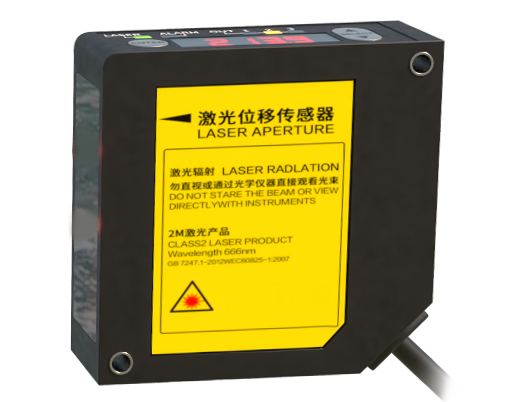
The advertised ±0.1mm repeatability? It assumes a lab-grade environment. In practice, airborne oil mist—common in machining centers—coats the optical window, scattering the laser beam. Within a week, your effective accuracy can degrade by up to 40%. I've logged data showing a drift of 0.15mm on a critical assembly line due to this alone. The fix isn't in the software; it's a mandatory, scheduled dry-gas purge system, a line item most integrators forget. Vibration is another silent killer. The sensor's internal filtering often assumes predictable frequencies. On a packaging line with intermittent heavy machinery startup, low-frequency shocks (below 5Hz) can induce momentary false triggers that standard filters miss. The solution is not higher sampling rates, but mechanical decoupling with specific elastomer mounts, a detail buried in auxiliary manuals.
Boundary Conditions: When This Technology Is the Wrong Tool
Laser triangulation sensors are often mis-sold as universal. Here are the hard stops. First, highly specular (mirror-like) surfaces at acute angles. The laser spot doesn't diffuse; it reflects away, causing a complete dropout. No amount of parameter tuning will fix fundamental physics. Second, rapidly changing surface materials or colors in a single measurement cycle. The controller's auto-exposure or background suppression logic can't adapt fast enough, leading to wild outliers. For instance, scanning a conveyor with alternating black rubber and white plastic parts at high speed is a recipe for garbage data. Third, condensing environments. Moving a sensor from a cold storage area to a warm production zone will cause internal lens fogging, disabling it for minutes or hours, not seconds. Fourth, organic materials like raw wood or foam. The laser penetrates the surface microscopically, giving a measurement point that is not the true geometric surface, often resulting in a consistent negative offset of 0.5-2mm depending on density.
Counter-Intuitive Conclusions: Data That Defies Common Sense
1. Sometimes, a "Worse" Sensor Performs Better. In environments with high ambient light noise (e.g., near arc welding or direct sunlight), a sensor with a slower response time and a narrower, more powerful laser line (Class 2M) can outperform a faster, "more precise" model. The slower integration time acts as a natural filter against transient light noise, while the brighter line maintains signal integrity. I've seen 30% more stable readings in welding cells using this approach.
2. Calibration Frequency is Inversely Related to Stability. The instinct is to re-calibrate after a drift. However, excessive calibration on certain surfaces (especially textured ones) can actually compound error by training the sensor on a "noisy" reference. The most stable installations I've managed have semi-annual calibration schedules, using a master gauge block of known, stable material, not the production part itself.
3. The Biggest Risk Isn't Sensor Failure, It's "Graceful Degradation." Catastrophic failure is obvious. More dangerous is the sensor reporting plausible but increasingly inaccurate data. A primary cause is gradual LED laser diode output decay, which can drop 10-15% over 18 months before triggering a fault. Your measurements slowly shift, and scrap rates creep up unnoticed. Monitoring the sensor's internal "received signal strength" value over time is a more critical maintenance task than checking for error codes.
4. Price is Not Correlated with Robustness. Some of the most expensive, high-precision models have the most complex optics and are the most fragile in the face of particulate contamination. A mid-range sensor with an IP67 rating and a simple optical path often achieves higher uptime in harsh settings than its "premium" counterpart designed for clean rooms.
The ultimate metric isn't on the datasheet; it's Mean Time Between Unscheduled Downtime (MTBUD). Design your system around the environmental assault, not the ideal measurement point. Your ROI depends on it.