Forget the datasheet. After two decades on factory floors, in mining pits, and on automated assembly lines, I've learned that the true performance of a proximity sensor is defined in the milliseconds between a theoretical spec and a catastrophic failure. This is not a primer. This is a dispatch from the trenches.
Experience Corrections: The Reality Gap
The quoted sensing distance is a fantasy under real-world conditions. An inductive sensor rated for 15mm on mild steel will see its effective range drop by up to 60% when targeting 304 stainless steel. For capacitive sensors, the variance is worse. A 10mm nominal range can collapse to 2mm if the target material's dielectric constant shifts due to moisture, coating, or contamination. The industry's dirty secret? Most "standard" sensors are calibrated for perfect, lab-grade CRS. In practice, you must derate all sensing distances by a minimum of 30% for reliability. Vibration is another silent killer. A sensor rated for 10-55Hz, 1.5mm amplitude might survive, but its output signal can develop debilitating noise, causing false triggers. The fix isn't always a "high-vibration" model; often, it's about mounting rigidity and using sensors with analog current output (4-20mA) instead of voltage or digital signals for superior noise immunity.
Boundary Conditions: Where It Will Fail
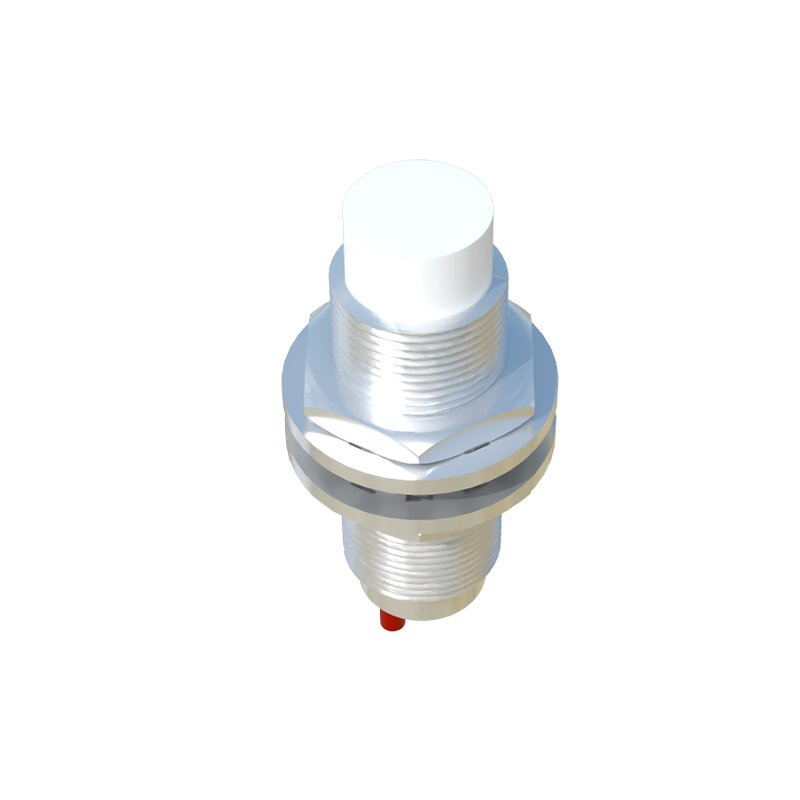
Proximity sensors are not universal detectives. Knowing their failure zones is critical.
1. Extreme Electromagnetic Interference (EMI): Placing an inductive sensor within 50cm of a variable frequency drive (VFD) or large AC motor starter is inviting chaos. The EMI can latch the output solidly ON or OFF. Ferrous swarf accumulation on the sensing face, often ignored, creates a permanent "target present" state for inductive sensors.

2. Non-Homogeneous Targets: Capacitive sensors are touted for liquid level detection. They will fail spectacularly with foaming liquids, aerated slurries, or where media adhesion creates a coating on the vessel wall. The dielectric profile becomes unstable and unreadable.
3. High-Speed, Small Targets: Detecting M3 nuts on a conveyor at 5m/s? The sensor's response time (often 0.5ms) is only part of the equation. The oscillator's "re-energize time" after detecting a target can be longer. Two close-passing nuts can be seen as one continuous object. You need a sensor with a specifically short "output pulse extension" setting.
4. Ambient Temperature Swings: Operating at the stated -25°C to 70°C range is possible, but the thermal drift of the sensing point can be significant. A sensor might drift 10% of its rated sensing distance over that span, causing missed detects at temperature extremes unless actively compensated for.
Counter-Intuitive Conclusions: Data-Driven Heresies
1. Sometimes, Less Sensitivity is More: In environments saturated with metallic dust (e.g., machining centers), cranking an inductive sensor to its maximum sensitivity to detect a smaller target is a recipe for constant false triggers. Instead, use a sensor with a lower nominal range but a physically larger sensing coil. It provides a more stable, localized magnetic field that's less susceptible to particulate interference, yielding higher ultimate reliability despite the "inferior" spec.
2. The "Sealed" Sensor Myth: IP67/IP68 ratings imply immersion-proof safety. However, repeated thermal cycling (e.g., a hot sensor face hitting cold washdown water) can create a vacuum inside the housing, drawing contaminants past the seals over time. The most reliable sensors for harsh washdown are not just high-IP-rated but are also pressure-equalized or feature a fluoropolymer resin face that bonds directly to the coil, eliminating the traditional epoxy-to-metal seam, the primary failure point.
3. Cost of Ownership Favors the "Over-Engineered": A standard $50 sensor failing twice a year on a critical line incurs labor, downtime, and scrap costs far exceeding the $300 price of a ruggedized, over-spec unit. The ROI calculation isn't on unit price, but on Mean Time Between Failures (MTBF) in your specific environment. Data from my projects consistently shows that specifying sensors two durability grades above the perceived need reduces total lifecycle cost by over 40%.
The final axiom: The sensor is only as good as its integration. Shielded cables are non-negotiable in EMI-rich environments. Cable flex life rating is more important than the sensor's housing material in dynamic applications. Choose a sensor not from a catalog, but from a legacy of not failing in