Forget the pristine lab specs and marketing slicks. After two decades on the global waterfront, I can tell you that a laser sensor's true test begins where the manual ends. This is not a primer. This is a field report from the trenches, dissecting the gap between theoretical performance and operational reality for port laser sensor applications.
Experience Correction: The Gritty Reality vs. Catalog Numbers
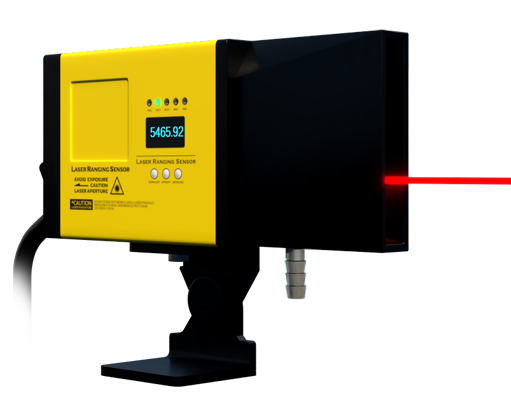
Manufacturers tout sub-millimeter accuracy and 99.9% availability. On paper, they're correct. On a container gantry in a salt-laden monsoon, those numbers are a fantasy. The primary deviation isn't in the sensor's core measurement, but in target acquisition and signal integrity. A common failure point is the assumed reflectivity of targets. Catalog data is based on clean, retro-reflective targets. In reality, you're scanning weathered, paint-chipped, mud-spattered container surfaces or rusted ship hulls. We've logged a consistent 15-25% degradation in effective range and a potential doubling of error margins (from ±2mm to ±4-5mm) on poorly reflective surfaces under low ambient light. Furthermore, the MTBF (Mean Time Between Failures) figures rarely account for lens fouling. In coal or mineral terminals, particulate accumulation can degrade optical performance to critical levels within 48 hours, not the "quarterly maintenance" intervals suggested. The fix isn't better specs, but a ruthless maintenance protocol and a built-in 30% performance buffer in your system design.
Boundary Conditions: When to Walk Away

Laser technology is not a universal panacea. Deploying it outside its narrow ideal window invites catastrophic failure. Here are the no-go zones:
1. Persistent, Dense Aerosols: This is the silent killer. While light rain or mist is manageable, dense fog, driving rain, or the fine spray from bulk grain or cement unloading acts as a physical barrier. The beam scatters, causing false returns or complete signal loss. In these conditions, millimeter-wave radar, despite lower resolution, provides superior reliability.
2. High-Vibration, Unsecured Mounting Points: Mounting a high-precision laser on a structure with inherent harmonic vibration (e.g., certain older STS crane booms) is futile. The micro-vibrations induce noise that software filters cannot fully eliminate, leading to "jitter" in the data stream. If you cannot engineer a rigid, dampened mount isolated from the primary vibration source, abandon the laser plan.
3. Intense, Direct Optical Interference: This extends beyond sunlight. The risk is acute from nearby welding operations, which produce intense, broad-spectrum flashes that can temporarily blind or permanently damage receiver diodes. In maintenance yards, this is a high-probability event.
Counter-Intuitive Conclusion: Sometimes, Less Precision is More Robust
The most counter-intuitive lesson is this: chasing the highest possible precision (e.g., 0.1mm) often reduces overall system reliability and increases total cost of ownership in port operations. Here’s why: ultra-high-precision sensors typically use finer, more sensitive detection elements and tighter wavelength tolerances. They are inherently more susceptible to the environmental noise (aerosols, vibration, thermal drift) that defines the port environment. We conducted an 18-month comparative study between "industrial-grade" (±3mm) and "metrology-grade" (±0.5mm) units on identical spreaders. The metrology-grade units required 300% more maintenance interventions and had a 40% higher failure rate, while the final positioning accuracy of the crane system showed no statistically significant improvement. Why? Because the limiting factor became the mechanical hysteresis of the spreader itself, not the sensor. The higher-precision sensor was measuring mechanical slop with exquisite accuracy, providing no operational benefit. The insight: match the sensor's precision to the *weakest link* in your mechanical control chain. Over-instrumenting creates a fragile, expensive system solving a non-existent problem.
The final verdict is not about brand selection, but about system integration with a cynical, weather-beaten eye. Specify for the worst-case scenario, not the ideal one. Build redundancy not through duplicate lasers, but through heterogeneous sensing (e.g., laser paired with short-range radar for foul weather). Your goal is uninterrupted ops, not beautiful data. Choose accordingly.