In the realm of industrial automation and machine control, the ability to detect the presence or absence of an object without physical contact is fundamental. Among the various technologies enabling this, DC 2-wire proximity sensors stand out for their simplicity, reliability, and cost-effectiveness. Unlike their 3-wire or 4-wire counterparts, these sensors integrate directly into the control circuit with just two connection points, streamlining installation and reducing wiring complexity.
The core operating principle of a DC 2-wire proximity sensor is based on electromagnetic induction for inductive types, which are the most common. The sensor's active face contains an oscillator coil that generates a high-frequency electromagnetic field. When a metallic target enters this field, eddy currents are induced in the target, causing a change in the oscillation amplitude. An evaluation circuit within the sensor detects this change and triggers a switching action. Crucially, in a 2-wire DC configuration, the sensor itself acts as a switching element in series with the load (e.g., a PLC input, relay, or indicator lamp). It requires a continuous minimum operating current (leakage current) to power its internal electronics, even in its "off" state. When the target is detected, the sensor switches on, allowing the full circuit current to flow to the load.
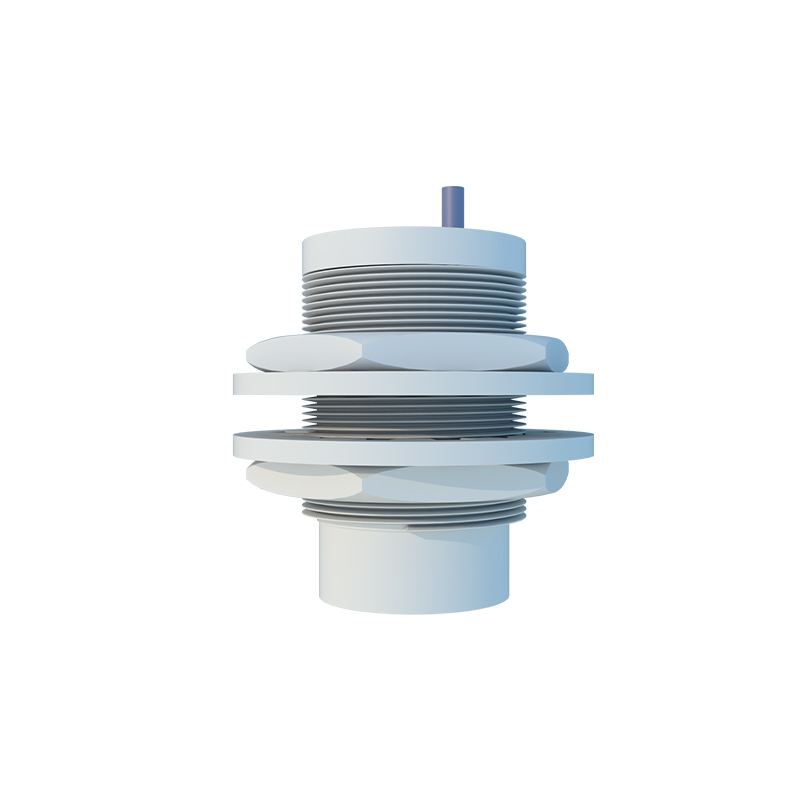
This architecture leads to distinct advantages. The primary benefit is simplified installation: with only two wires, there is no need to separate power supply and signal cables, reducing potential wiring errors and material costs. They are often easier to replace and integrate into existing 2-wire systems designed for mechanical limit switches. Furthermore, the absence of a separate output wire can enhance reliability in harsh environments by minimizing connection points.
However, certain operational characteristics must be carefully considered. The inherent leakage current, typically between 1 to 3 mA, is a defining trait. While necessary for the sensor's operation, it can sometimes prevent very low-power loads from fully turning off, potentially causing a faint glow in an LED or preventing a high-impedance PLC input from registering a reliable "OFF" signal. Designers must ensure the connected load has a low enough impedance to shunt this leakage current, often specified as a minimum load current. Voltage drop is another factor; since the sensor is in series with the load, the voltage available to the load is the supply voltage minus the voltage drop across the sensor. This must be accounted for to ensure the load operates correctly. Additionally, most 2-wire sensors are polarity-sensitive and require correct connection to the positive and negative DC supply lines.
The applications for DC 2-wire proximity sensors are vast across manufacturing, packaging, material handling, and automotive industries. They are extensively used for position detection of machine parts, end-of-travel sensing, counting objects on a conveyor, and verifying the presence of components in an assembly fixture. Their robust, typically potted construction makes them suitable for environments with vibration, moisture, and dust. Non-ferrous versions (sensing aluminum, copper, etc.) and capacitive versions (for detecting non-metals like plastics, wood, or liquids) are also available in 2-wire DC designs, broadening their utility.
When selecting a DC 2-wire sensor, key specifications to evaluate include: sensing distance (rated and effective), supply voltage range, switching current capacity, leakage current, voltage drop, switching frequency, housing material (e.g., brass, stainless steel, PBT plastic), and environmental protection ratings like IP67 or IP69K. Proper installation is critical; sensors should be mounted securely with adequate clearance from surrounding metal to avoid false triggering, and cables should be routed away from high-voltage power lines to prevent electrical interference.
In summary, DC 2-wire proximity sensors offer a streamlined and robust solution for non-contact detection in countless automation scenarios. Their design elegance lies in combining sensing and switching in one simple package. By understanding their operating principles, particularly the implications of leakage current and voltage drop, engineers and technicians can deploy them effectively to create more efficient, reliable, and maintainable control systems. Their continued evolution ensures they remain a cornerstone component in the toolkit of industrial automation.