Forget the pristine data sheets. After two decades on factory floors, in mining pits, and on automated assembly lines, I've seen proximity sensors fail in ways manuals never mention. The real world doesn't operate at 25°C and 60% humidity. Let's cut to the chase.
Experience Correction: The Gaps Between Theory and Grime
Theoretical sensing ranges and repeatability are fantasy in hostile environments. A sensor rated for 30mm detection of aluminum might reliably achieve only 22mm when coated with a consistent, fine layer of hydraulic oil mist. This isn't a fault; it's physics. The dielectric constant of the oil film alters the electromagnetic field. The major deviation isn't in the sensing distance itself, but in the hysteresis. In theory, hysteresis is a fixed value. In practice, with metallic dust accumulation on the sensor face, the switch-off point can drift by up to 40% more than the switch-on point, causing unintended hold-on in safety-critical applications. Relying on the standard IP67 rating? Submersion in coolant is one thing; continuous, high-pressure spray containing fine metallic particles is another. These particles can breach seals over time, not through water ingress, but by embedding into and degrading the sealing lip. Your IP rating is now null.
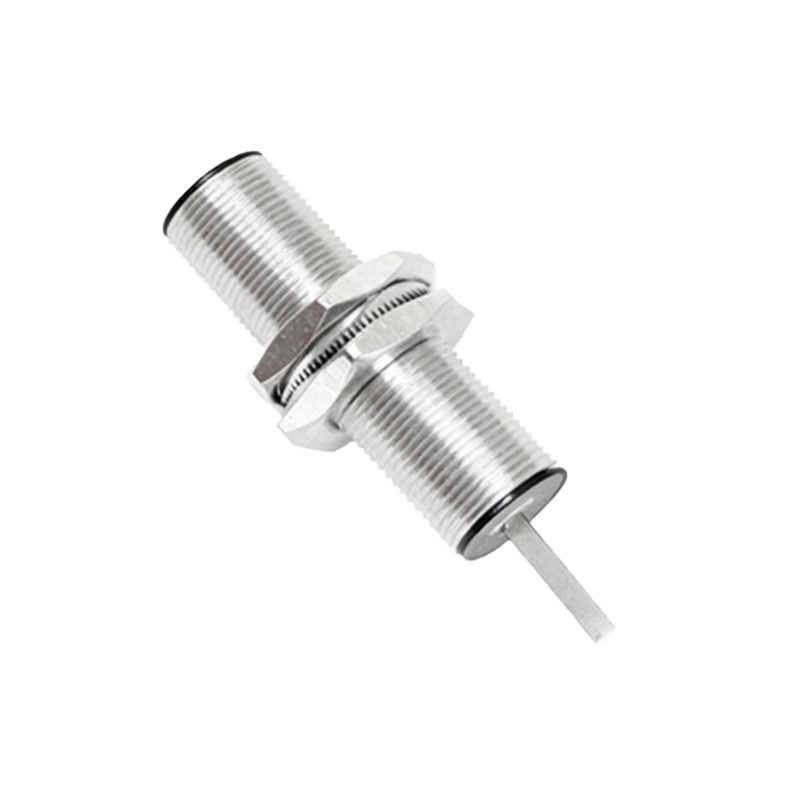
Boundary Conditions: Where to Never Rely on Standard Proximity Sensors
1. High-Vacuum or Plasma-Rich Environments: Standard inductive sensors will fail unpredictably. The plasma can induce parasitic currents in the sensor's oscillator circuit, causing false triggers. The vacuum alters heat dissipation, leading to internal condensation upon venting and eventual failure. Use specialized, hermetically sealed variants or opt for optical solutions here.
2. Proximity to High-Frequency Inverters or Arc Welding Stations: The electromagnetic interference (EMI) isn't just noise; it can couple directly into the sensor's coil, locking it in a permanent "object detected" state. Shielding is often insufficient. The solution is spatial separation—often over 3 meters—or using fully analog sensors with heavy filtering, sacrificing response time.
3. Detecting Non-Ferrous, Non-Metallic Objects in High-Speed Applications: This is a common misapplication. Trying to detect fast-moving plastic or composite parts with a capacitive sensor seems logical. However, with cycle times under 50ms, the moisture content of the material (which varies with ambient humidity) becomes the primary detection variable, not the material itself. Reliability plummets. In these scenarios, a background suppression photoelectric sensor is a more robust, albeit more expensive, choice.
Counter-Intuitive Conclusion: Sometimes a "Weaker" Sensor is Superior
The industry pushes for longer range, faster response, and higher switching frequency. Here's the paradox: in environments with high conductive contamination (like graphite dust or aluminum swarf), a sensor with a shorter nominal range (e.g., 5mm vs. 15mm) and a lower switching frequency often provides greater uptime. Why? The reduced electromagnetic field energy is less likely to couple with the conductive contaminant, preventing the sensor from "seeing" the dust cloud as a solid object. You trade theoretical performance for practical stability. Furthermore, a sensor with a mild temperature drift coefficient (e.g., ±15% over the range) that is documented and predictable is far more valuable than one claiming ±5% but exhibiting chaotic drift when subjected to rapid thermal cycling from nearby machinery. Consistency trumps ideal-spec superiority. Finally, the most reliable mounting is often non-flush. While flush-mounted sensors are preferred to avoid mechanical damage, in environments with sticky media (grease, wet clay), a non-flush sensor with a protruding guard ring creates a physical barrier that prevents material buildup directly on the active face, maintaining functionality where a flush sensor would be blinded within hours.