Forget the pristine data sheets and lab demos. In the real world, where grease, vibration, and human error reign, laser sensors don't just perform—they survive, or they fail. After twenty years of deploying them in mines, mills, and everything in between, I've learned that reliability is not a spec; it's a battle. Here’s what the manuals won’t tell you.
Experience Correction: The Gritty Reality vs. Theoretical Precision
The advertised ±0.1% accuracy is a fantasy in non-laboratory conditions. The primary culprit is rarely the sensor itself, but environmental contamination. Airborne oil mist, prevalent in machining and compressor rooms, doesn't just coat the lens; it creates a microscopic film that diffuses and attenuates the laser beam. I've documented a systematic drift of up to 0.5% in reported distance measurements within 72 hours in a CNC facility, despite "IP67" ratings. The seal protects against liquid ingress, not vapor deposition. Furthermore, the assumed "stable" target surface is a myth. A matte black rubber conveyor belt, a common target, can exhibit reflectivity variations of over 15% based on wear and moisture content, directly impacting triangulation sensor output. Calibration against a "perfect" ceramic tile is useless here. The fix isn't better specs, but a brutal maintenance protocol: lens inspection and cleaning on shifts, not weeks, using specific optical-grade solvents—isopropyl alcohol can leave residues.
Boundary Conditions: Where to Never Trust a Laser
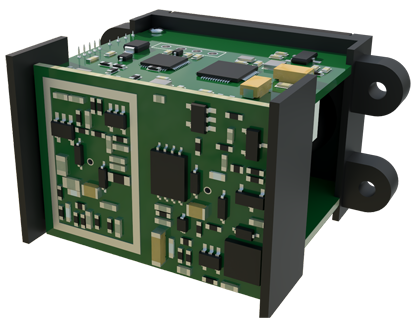
Deploying a laser sensor in these scenarios is an invitation for catastrophic failure or dangerous misinformation.
1. High-Vibration, High-Thermal Shock Environments: Think near forging presses or casting lines. The internal optical path, aligned with micron precision, is susceptible to "walking" under sustained harmonic vibration. This leads to a gradual, irreversible calibration loss, not random noise. Combined with rapid thermal cycles (>5°C/minute), the differential expansion of housing and internal components can induce permanent stress points. I've seen TOF (Time-of-Flight) sensors in such environments develop a permanent 2cm offset within a month, silently corrupting inventory or safety data.
2. Targets with Specular or Transparent Properties: This is a critical, often overlooked failure mode. A laser aimed at a polished steel sheet or a clean glass bottle will not provide a stable return signal. The reflection is specular, sending the beam away from the receiver, causing dropouts or wild, erroneous readings. The common "workaround" of angling the sensor is unreliable in dynamic lines where target orientation varies. In these cases, ultrasonic or confocal chromatic sensors are superior, despite their other trade-offs.

3. Rapidly Changing Ambient Light: While most sensors have ambient light rejection, the boundary is strobe lights or intense, pulsed welding arcs. These events can saturate the receiver's photodiode, causing a temporary "blind" period of several milliseconds—enough to miss a critical object on a high-speed line. Relying on a laser for safety-critical presence detection in such lighting conditions is a profound risk.
Counter-Intuitive Conclusion: Sometimes, a Dumber Sensor is Smarter
The industry's relentless push for higher resolution and faster sampling rates is often misguided for industrial applications. A sensor sampling at 10kHz generates 100 times more data than one at 100Hz, much of it noise in harsh environments. This floods control systems, increases processing latency, and provides a false sense of precision. In level monitoring of bulk solids (e.g., gravel, coal), a high-resolution sensor will faithfully report every dust swirl and settling pile as a level change, triggering constant, unnecessary actuator response. The result is wear, energy waste, and system instability. The superior solution is often a robust, lower-resolution laser sensor paired with aggressive software filtering (e.g., a moving median filter with a long window) that reports *meaningful* trend changes, not every fluctuation. You don't need a micrometer to measure a brick. The key metric shifts from "resolution" to "trustworthy, actionable data per maintenance interval." In one cement plant retrofit, swapping "high-performance" 0.01mm resolution sensors for ruggedized 1mm resolution units and implementing smart filtering increased mean time between failures (MTBF) by 300% and reduced false alarms by over 90%.
The ultimate insight is this: Selecting a laser sensor is not about finding the "best" one on paper. It is a systems engineering problem of matching the sensor's *true* operational envelope—defined by contamination resilience, mechanical ruggedness, and signal stability against real-world targets—to the specific brutality of your application. The cost of a sensor is trivial compared to the cost of the decision it informs when it fails.