For two decades on the factory floor, I've watched proximity sensors fail in ways the manuals never mention. The industry obsesses over sensing distances and repeatability under lab conditions, but real-world performance hinges on factors buried in footnotes or ignored entirely. Let's cut through the noise.
Experience Correction: The Dirty Truth About "Standard" Conditions.
The rated sensing distance (Sn) is a fantasy in hostile environments. A sensor rated for 15mm on mild steel will see its effective range collapse by 40-50% when targeting a rusty, pitted surface or hot-rolled steel with mill scale. The electromagnetic field interacts with the oxide layer, not the base metal. Similarly, the touted temperature compensation? It assumes a stable ambient. In a stamping press enclosure, where oil mist and metal particulate are aerosolized, a 5°C thermal gradient across the sensor face can induce a 0.5mm signal drift—enough to cause a misfeed or crash. We've logged failures where the core issue wasn't the sensor but the target's surface RF "signature," altered by a new batch of conductive paint or even a different phosphate coating. The fix is never in the catalog: you derate the nominal sensing distance by at least 30% for critical applications and specify a target material sample for vendor calibration.
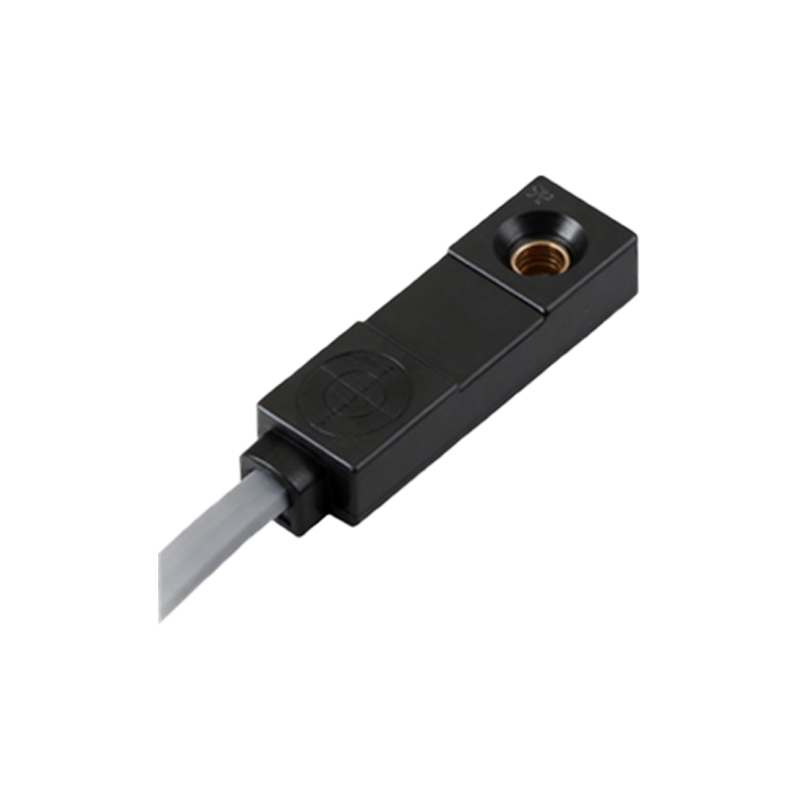
Boundary Conditions: Where Proximity Sensors Become a Liability.
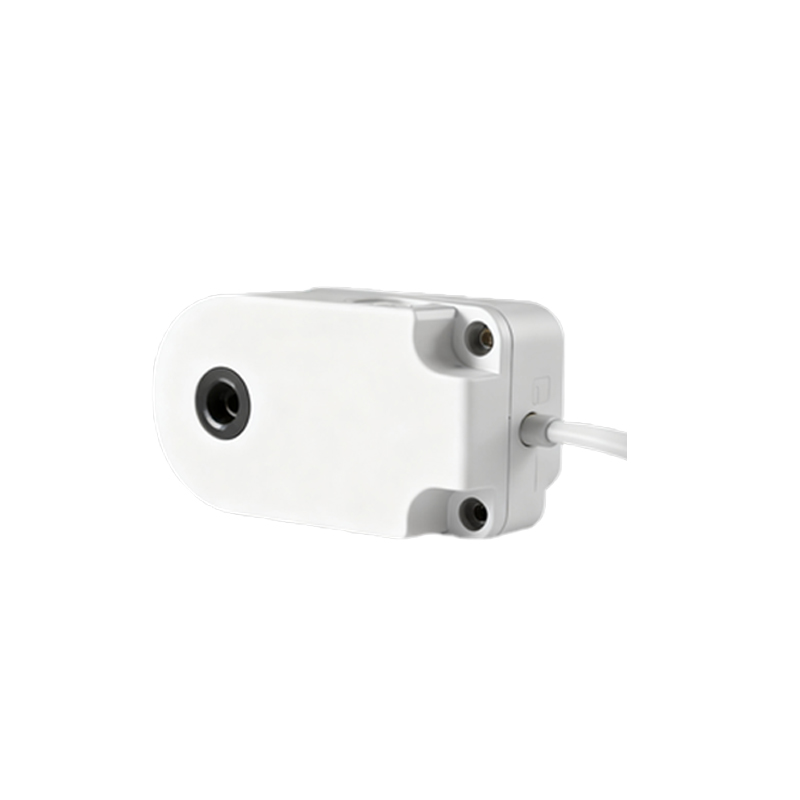
Inductive sensors are not universal detectors. Their failure modes are specific and dangerous. First, the "non-ferrous" blind spot. An aluminum can moving at 3 m/s on a conveyor will be reliably detected. That same sensor will completely miss a fragmented aluminum sliver or a thin foil wrapper, leading to potential downstream equipment damage. Second, high-vibration environments with frequencies above 1 kHz. The internal ferrite core can develop micro-fractures, causing intermittent failure that diagnostics will flag as "electrical noise." Third, and most critical, is the presence of alternating magnetic fields. Installing a standard inductive sensor within 30 cm of a variable-frequency drive (VFD) or welding equipment is a recipe for phantom signals. The sensor picks up the external field, not the target. In these scenarios, you must switch to a fully-shielded (flush-mountable) design or abandon inductive for a capacitive or ultrasonic principle. Using a standard unshielded sensor near moving ferrous machinery (like gears) is another common error—it will sense the passing gear tooth, not your target workpiece.
Counter-Intuitive Conclusion: Sometimes, a "Worse" Sensor is the Better Solution.
The pursuit of millimeter precision and long-range sensing is often misguided. Data shows that in high-speed counting or presence detection (e.g., detecting bottles on a line), a sensor with a shorter, more diffuse field performs more reliably than a high-precision one. Why? The diffuse field is less susceptible to minor target position variations, vibration, and buildup of dust or coolant film. We achieved a 300% improvement in mean time between failures (MTBF) in a machining center by replacing "high-performance" 20mm-range sensors with ruggedized 8mm-range models with a wider beam angle. The "inferior" sensor's field overlap created a more robust detection zone. Another paradox: increasing the supply voltage within the sensor's range (e.g., from 12V to 24V DC) does not linearly increase stability. It can increase internal heating and noise susceptibility. The sweet spot is often 10-15% above the minimum operating voltage. Finally, the most reliable mounting is often not the recommended one. Angling the sensor 15-20 degrees off perpendicular to the target path can mitigate the effects of conductive debris accumulation on the face, a leading cause of failure in metalworking that no IP rating can prevent.
The takeaway is this: sensor selection is a systems engineering problem, not a component specification. The data sheet is the starting point for a conversation that must include the target's material history, the environmental soup it lives in, and the acceptable failure mode. Choose based on the worst day on your line, not the ideal day in the lab.