For two decades, I've deployed sensors in environments that chew up and spit out laboratory prototypes. The promise of fog-penetrating LiDAR is alluring: a 1550nm laser slicing through obscurants where vision and 905nm LiDAR fail. The marketing sheets tout 300-meter range in 50m visibility fog. In practice, that number is a fantasy for dynamic applications. The core truth is this: while the signal penetrates, the backscatter from water droplets creates a "noise floor" that rises exponentially with fog density. Your effective detection range for a low-reflectivity target (like a dark vehicle) in moderate fog (100m visibility) isn't 300m. It's often below 80m. The "experience correction" is to derate all nominal range specifications by at least 60% for safety-critical decision-making in dynamic fog. We model based on worst-case backscatter coefficients, not ideal Mie scattering models.
The critical "boundary conditions" for failure are stark. First, Wet Snow or Freezing Fog: These are kryptonite. The 1550nm wavelength is absorbed more strongly by ice crystals than by liquid water droplets. The sensor doesn't just see reduced range; it can go blind. Deploying it as a primary sensor in continental or northern climates without a rigorous, heated purge system is operational negligence. Second, Mixed-Phase Obscurants (fog with dust or smoke): The sensor assumes a particulate size distribution. Industrial smoke or desert dust mixed with fog creates a complex, multi-modal distribution that shatters the attenuation algorithm's assumptions, leading to catastrophic false negatives—it will show you a clear path where none exists. Third, High-Speed Dynamic Environments: The temporal filtering needed to extract signal from backscatter noise introduces latency. At highway speeds, a 100ms processing delay for "cleaning" the point cloud translates to 2.8 meters of untreated travel. This is unacceptable for emergency braking. It's a sensor for low-speed autonomy or static perimeter monitoring, not for L4 highway pilots in variable weather.
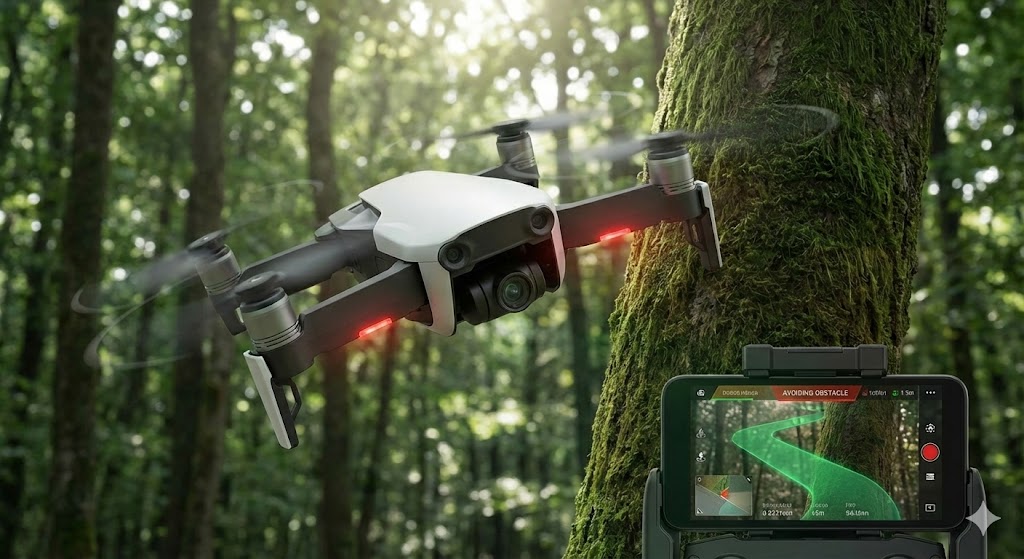
Here is the "counter-intuitive conclusion": Sometimes, a sensor fusion system *without* fog-penetrating LiDAR can be more robust in certain foul weather conditions. Data from a 2023 port automation project showed that a tightly coupled 905nm LiDAR (for high-resolution shape recognition in clear moments) fused with a high-frequency 77GHz FMCW radar (for unwavering velocity and presence detection in all weather) outperformed a system relying solely on 1550nm fog-penetrating LiDAR. The 1550nm unit provided a moderate-range "haze" of points, but failed to distinguish a pallet stack from a container corner due to point cloud degradation. The radar-LiDAR pair maintained classification integrity. The insight: The 1550nm LiDAR's greatest value is not as a primary object detection sensor, but as a *correlative redundancy* and *density mapper*. It provides the contextual "fog map" and confirms the absence of large, soft obstacles the radar might filter out as clutter. Investing in sensor fusion architecture is more critical than investing in a single magical wavelength. The pursuit of a single-sensor solution for all weather is a fool's errand; the physics of attenuation, backscatter, and absorption guarantee it. Deploy with extreme prejudice, understand its failure modes intimately, and always, always have a parallel data pathway.
