After two decades of field deployments from automotive assembly lines to offshore drilling rigs, I've compiled a dossier of realities you won't find in datasheets. Forget the pristine lab curves; let's talk about what happens when theory meets a grimy, vibrating, electrically noisy world.
Experience Corrections: The Gap Between Datasheet and Dirt
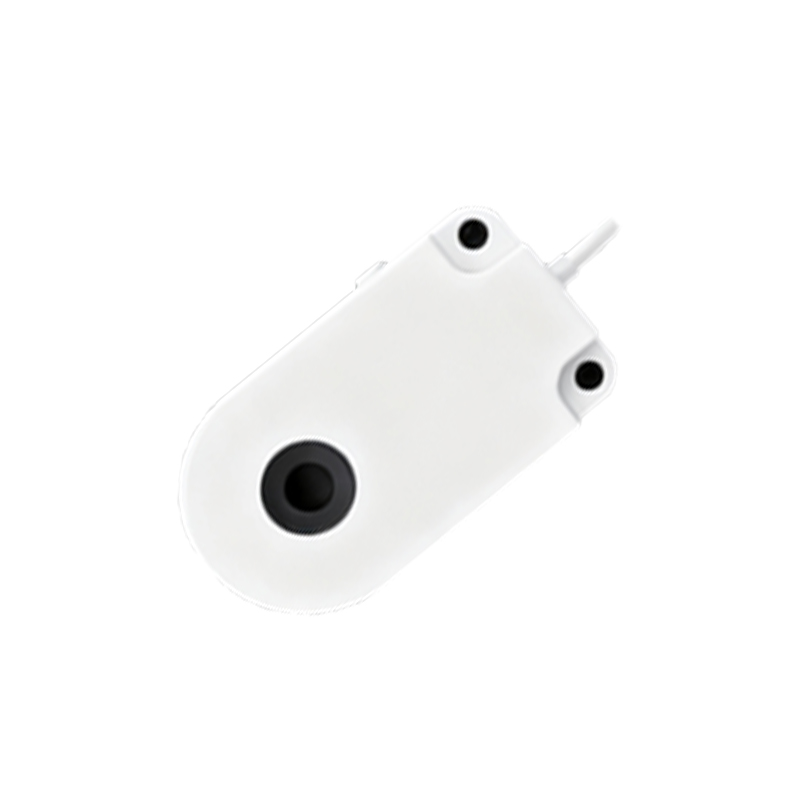
The advertised 20mm detection range for a standard inductive sensor? In practice, with a carbon-steel target, you might get 18mm. Switch to 304 stainless steel, and that plummets to 14-15mm due to lower permeability. Temperature derating is another silent killer. A sensor rated for -25°C to 70°C might see its response time slow by 30% at the extremes, causing missed counts on a high-speed packaging line. The "standard" 100Hz switching frequency assumes a perfect square wave input. Introduce typical industrial cable run capacitance over 50 meters, and the effective frequency can drop to 80Hz, risking aliasing with fast-moving objects. EMI immunity ratings (like 10V/m) are measured in anechoic chambers. On a factory floor with variable-frequency drives, real-world transients can spike to 50V/m, causing phantom triggers. The fix isn't always a better sensor; often, it's a ferrite clip on the cable 5cm from the connector.
Boundary Conditions: When to Walk Away
Proximity sensors are not universal solutions. Knowing their failure zones is critical.
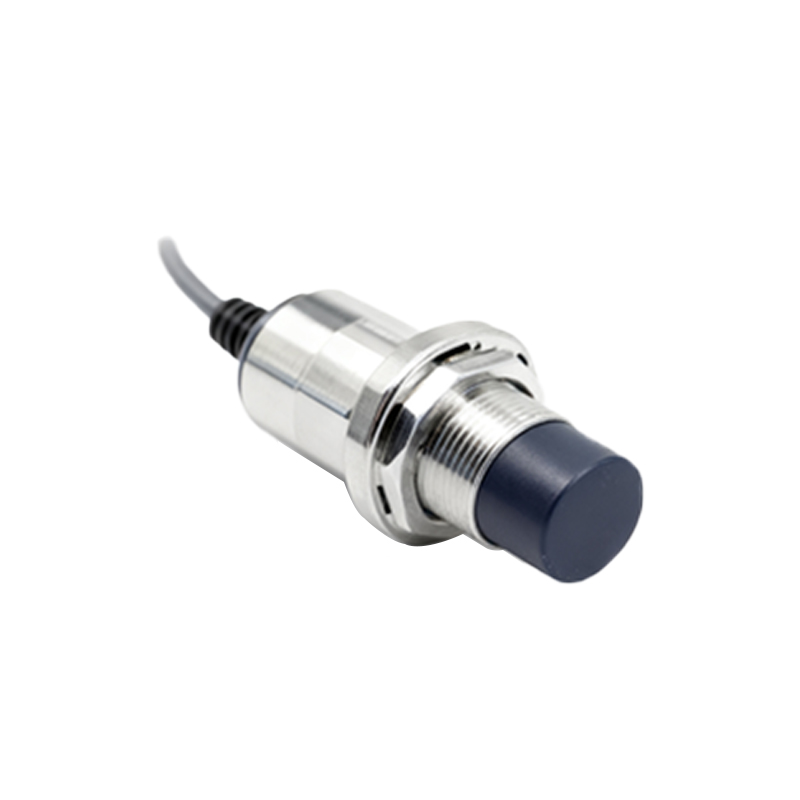
1. Conductive Dust Environments (e.g., graphite, metal powder): Capacitive and ultrasonic sensors will fail. Fine conductive dust settles on the face, altering the dielectric constant or damping oscillations, leading to permanent false triggering or dead zones. Inductive sensors fare slightly better but require daily air-blast cleaning.
2. Extreme Rate-of-Approach Scenarios: A sensor with a 1ms response time seems fast. But an object approaching at 40 m/s (144 km/h) travels 40mm in that millisecond. If you need detection within a 2mm window for precision braking, this sensor is useless. You're in the realm of specialized laser triangulation.
3. Non-Homogeneous Target Materials: Inductive sensors calibrated for steel will wildly miscalculate the distance to a composite brake pad (metallic fibers in resin). The eddy current distribution is chaotic, causing detection variance of up to ±50% across identical parts.
4. High-Pressure Washdown with Caustic Cleaners: An IP69K rating guarantees sealing against steam, but it says nothing about chemical resistance. A common failure point is the epoxy potting between the sensing face and housing. Prolonged exposure to chlorinated cleaners creates micro-fractures, allowing humidity ingress and eventual failure within 6 months. Specify sensors with documented chemical compatibility for the specific cleaner.
Counter-Intuitive Conclusions: Data-Driven Heresies
1. Sometimes, Less Sensitivity is More: On a vibrating conveyor, engineers often max out sensor sensitivity to detect small parts. This is a mistake. The vibration itself can modulate the coupling with a metal bed, creating a signal. Turning sensitivity down to achieve a stable, 20% lower signal from the actual part dramatically increases reliability. A stable 8V output is better than a fluctuating 10V output.
2. The "Weakest" Sensing Technology Can Be the Most Robust for Certain Tasks: For detecting the fill level of viscous glue in a non-metallic container, a simple, low-frequency capacitive sensor often outperforms advanced laser or ultrasonic units. The glue's high dielectric constant provides a strong signal, and the sensor is immune to the optical opacity and surface foam that baffles other technologies. Its simplicity means fewer components to fail.
3. A Failed Sensor Often Points to a Perfectly Healthy Machine: I've diagnosed countless "faulty sensor" tickets. In one case, a capacitive sensor detecting plastic bottles randomly failed. Replacing it didn't help. The root cause was electrostatic discharge from the fast-moving PET bottles. The sensor was fine; it was accurately detecting the charge buildup. The solution was a grounded, anti-static brush upstream. The sensor was the canary in the coal mine.
4. Investment in Installation Labor Exceeds Sensor Cost: A $150 sensor installed incorrectly is a $0 asset. The critical factor is alignment. A 10-degree angular misalignment for a diffuse-reflective photoelectric sensor can reduce the effective sensing range by 60%. The ROI on using a laser alignment tool and a quality mounting bracket dwarfs the ROI on buying a "premium" sensor slapped onto a bent piece of sheet metal.
The core of robust design