Forget the pristine data sheets. After twenty years of deploying vibration sensors in refineries, mining pits, and offshore platforms, I operate on a different set of rules. The gap between catalog specifications and field performance isn't a gap—it's a chasm. Let's cut to the chase.
Experience Correction: Where Theory Meets the Grime
The advertised ±5g range and 10 kHz frequency response are laboratory fantasies. In reality, high-frequency spikes from gear meshing in a slurry pump, caked with abrasive material, will saturate your sensor's front end long before the theoretical limit. The real constraint isn't the sensor's range, but the signal-to-noise ratio after six months of exposure to 120°C ambient heat and hydrocarbon mist. I've seen piezoelectric ICP sensors, lauded for their high-frequency response, fail not electronically, but mechanically. Their hermetic seals, guaranteed by theory, succumb to "thermal cycling fatigue" in environments where temperatures swing 80°C daily. The failure mode isn't a drift; it's a sudden, catastrophic loss of signal. Your predictive maintenance algorithm is now blind. The critical parameter to scrutinize is not the temperature rating, but the rate of change of temperature the housing and seals can endure repeatedly.
Boundary Conditions: When to Walk Away
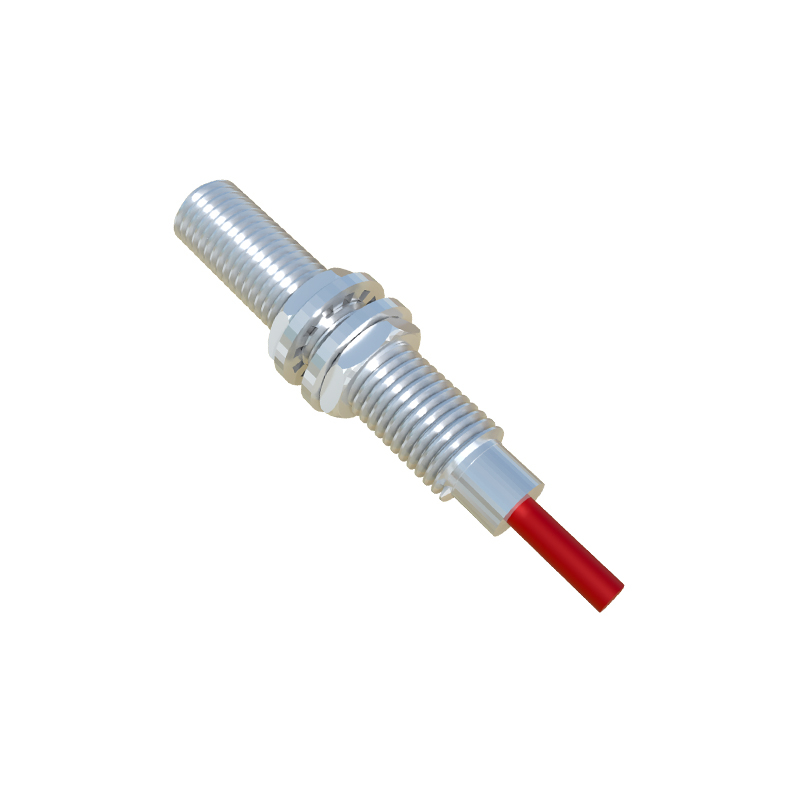
This technology is not a panacea. Deploying a standard industrial accelerometer on low-speed, high-torque applications like a ball mill or a kiln is an expensive way to generate useless data. Below 5 RPM, the vibration signature is often buried in structural resonances and environmental noise. You're measuring the building, not the bearing. Similarly, in applications with high levels of electrostatic discharge or electromagnetic interference—think mining conveyors or large variable-frequency drive rooms—unless you've invested in fully integrated, internally isolated sensors with dedicated shielded conduit, your data stream will be poetic fiction. The most perilous boundary is cavitation in centrifugal pumps. A sensor will detect the violent vibration, but by then, the impeller is already being eaten alive. Relying on vibration alone here is a recipe for unexpected failure; it must be correlated with differential pressure and NPSH (Net Positive Suction Head) calculations.
Counter-Intuitive Conclusion: Less Sensitivity Can Be Safer
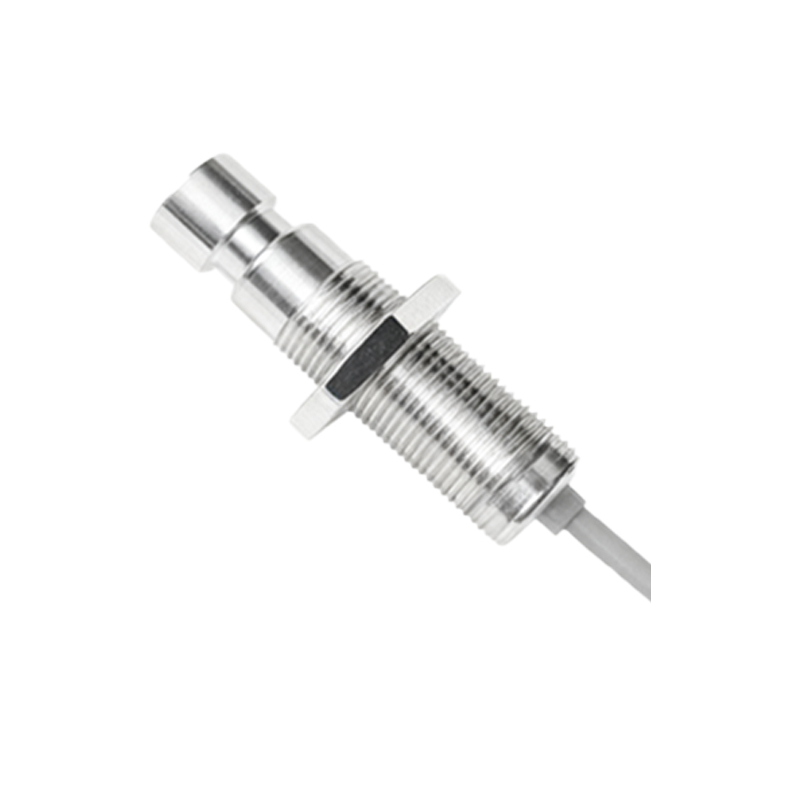
Here’s the heresy: In highly unstable, high-amplitude environments—like a crusher in a mineral processing plant—a sensor with lower sensitivity and a clipped output can provide more reliable trend data. Why? A high-sensitivity sensor in such conditions is perpetually in overload, producing non-linear, garbage data. A purposefully limited sensor avoids this saturation, providing a clean, if attenuated, signal that accurately reflects the trend of degradation. You sacrifice absolute amplitude accuracy for the fidelity of the trend line, which is what truly matters for condition monitoring. Another non-obvious insight: Sometimes, the most valuable data point isn't from the primary bearing housing. It's from a sensor placed on the supporting baseplate or foundation. An increase in vibration here, while the machine sensor readings remain stable, is an early and definitive warning of impending foundation settlement or structural loosening—a failure mode that machine-mounted sensors miss entirely until it's too late.
The bottom line is this: Sensor selection is not a checkbox exercise from a catalog. It is a risk assessment. It requires mapping the sensor's failure modes against your process's failure consequences. The expensive part isn't the sensor; it's the false sense of security it provides when deployed against its hidden boundaries.