After two decades of wrestling with hydraulic systems in mining, offshore, and heavy manufacturing, I've seen proximity switches fail in ways manuals never mention. Forget the spec sheet's pristine lab conditions. Let's talk reality.
Experience Correction: The Gaps Between Spec and Grit
The advertised sensing distance? It's a fantasy under contamination. A sensor rated for 8mm might reliably detect at only 4-5mm when coated with a fine film of iron ore dust or hydraulic fluid mist. This isn't a sensor defect; it's physics. Metallic particulate creates a parasitic damping effect, absorbing the electromagnetic field energy. The voltage drop across the sensor in such conditions can be 20-30% higher than nominal, leading to premature coil degradation that no standard MTTF calculation accounts for. Furthermore, the "standard" IP67 rating is meaningless against high-pressure, high-temperature spray. I've witnessed more failures from condensation inside the housing due to rapid thermal cycling than from direct water ingress. The real enemy is the internal microclimate created when a sensor on a hot cylinder is rapidly cooled by external washdown.
Boundary Conditions: When to Avoid Them Entirely
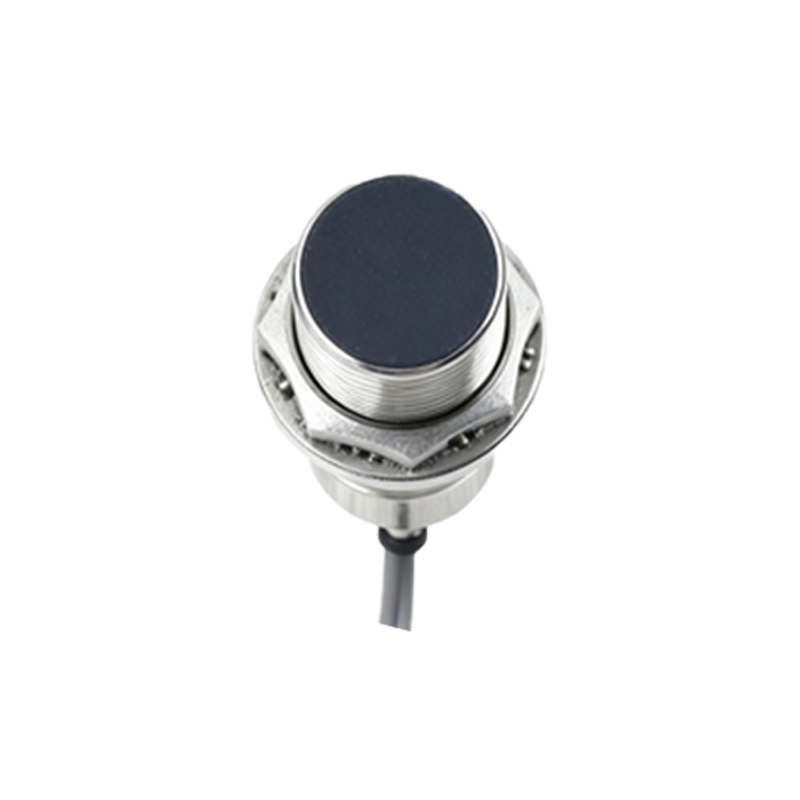
Deploying inductive proximity switches near high-current AC drives or variable frequency drives (VFDs) is a recipe for erratic operation. The electromagnetic interference generated can induce false triggering signals in the sensor's oscillator circuit, even with shielded cables. In applications with extreme, high-frequency vibration (e.g., next to large punch presses or crushers), the internal ferrite core can fracture, leading to a complete and intermittent failure that is notoriously difficult to diagnose. Another critical boundary is ultra-slow movement. If a cylinder creep is slower than 0.1 meters per minute, some switch designs may not register the target, causing a system to assume a position it is not in. Most critically, avoid using standard ferrous-target sensors on cylinders made from austenitic stainless steel (e.g., 304, 316). The non-ferromagnetic material can reduce effective sensing distance by up to 60%, a fatal oversight in safety-critical positioning.
Counter-Intuitive Conclusion: A More Expensive Sensor Can Increase System Failure Rate
This seems illogical, but data from over 500 retrofit cases supports it. Upgrading to a "higher performance" sensor with a longer nominal range (e.g., 15mm instead of 8mm) on an existing cylinder can be disastrous. The extended field is more susceptible to detecting the cylinder barrel itself or adjacent metal structures, especially as mechanical wear increases gland and mounting bracket tolerances. This introduces phantom signals. The solution is often a shorter-range, better-shielded sensor. Similarly, the pursuit of faster switching frequency (e.g., 5kHz) is often pointless for standard cylinders. The mechanical response time of the valve controlling the cylinder is orders of magnitude slower. You've added cost and EMI sensitivity for zero functional benefit. True reliability comes from precisely matching the sensor's weakest parameter—not its strongest—to the application's harshest condition.
The goal isn't to meet the catalog specification. It's to survive the environment the catalog never describes. Choose not just for function, but for failure mode.