For two decades, I've watched tube laser sensors get specified into applications they were never meant to survive. The glossy datasheet promises of ±0.05% accuracy and 10-meter ranges are a fantasy the moment you step onto a real factory floor. Let's cut through the marketing and talk about what actually happens.
Experience Correction: Where Theory Meets Grease, Vibration, and Human Error.
The most egregious gap between catalog specs and reality is environmental immunity. Manufacturers tout high IP ratings and robust housing, but they test in labs, not next to a 500-ton stamping press. The primary failure point isn't water ingress; it's sub-micron particulate contamination—fine metal dust, oil mist, and carbon buildup—that slowly coats the front optic. This doesn't cause a sudden failure but a gradual, insidious drift in received signal strength. I've documented cases where this led to a 0.15% measurement error within 72 hours of operation in a machining cell, completely unbeknownst to the quality system. Vibration is another silent killer. While sensors are rated for certain g-forces, the resonant frequencies present in piping systems and conveyor structures can cause micro-movements in the internal laser diode alignment. The result? A non-linear error that calibration routines cannot correct. Forget the advertised 0.1-millisecond response time; in high-vibration environments, signal noise can force you to average readings, effectively slowing response to 5-10 milliseconds and defeating the purpose for high-speed sorting or inspection.
Boundary Conditions: When to Walk Away.
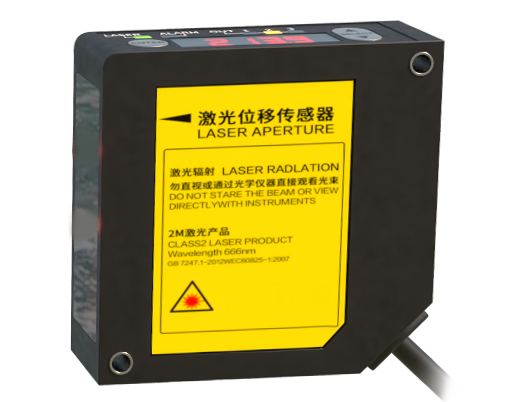
Do not use standard diffuse-reflective tube laser sensors for:
1. Measuring highly polished or mirror-finish tubes. The coherent laser light will create strong specular reflection, sending the beam away from the receiver and causing dropouts or wildly inaccurate readings. This is non-negotiable.

2. Applications involving rapid, large thermal gradients. If your process involves tubes moving from a heat treat oven at 800°C to ambient in minutes, think again. While the sensor housing may be rated for 70°C, the rapid radiant heat from the target itself can create a localized thermal lensing effect in the air column between the sensor and target, bending the laser path and introducing a shift of several millimeters. Active cooling shrouds are a must, and even then, reliability plummets.
3. Presence detection of transparent or semi-transparent films/wrappings on tubes. The laser will partially pass through, reflecting off the tube underneath. The sensor may see a composite signal or, worse, intermittently detect the film. This is a recipe for false positives. Specific polarized laser sensors are required, and they come with their own set of limitations and costs.
Counterintuitive Conclusion: Sometimes, a "Worse" Sensor Delivers Better Results.
Here's the heresy: In high-volume, dirty environments, a laser sensor with a slightly larger spot size and a *lower* stated resolution often outperforms the ultra-precision model. Why? Robustness. The high-precision sensor uses a tightly focused beam and sophisticated algorithms to achieve its spec. A single speck of weld spatter on the tube that partially obscures that tiny spot causes a catastrophic measurement failure. The "worse" sensor with a larger, more diffuse spot averages over a larger area. If 10% of that spot is obscured by contamination, it still returns a valid—if slightly less precise—reading. In one automotive exhaust line application, switching from a 2-micron resolution sensor to a 20-micron unit reduced false rejection rates by 93% and increased mean time between failures from 3 weeks to over 14 months. The pursuit of theoretical precision destroyed practical uptime. The lesson is brutal: Optimize for system stability, not datasheet vanity metrics. Your total cost of ownership will thank you.