Forget the pristine lab conditions listed on the datasheet. After two decades on factory floors, in mining pits, and on offshore rigs, I've seen the gap between theoretical specs and gritty reality. Let's cut to the chase.
Experience Correction: Where Theory Meets Grime
Inductive sensors boasting 15mm range? In reality, that's for mild steel. Switch to stainless steel (304/316), and you lose 20-30% range due to lower permeability. For aluminum or copper, expect a 40-60% reduction. The "standard" sensing curve is a fantasy. Temperature compensation circuits fail under rapid thermal cycling. A sensor rated for -25°C to 70°C might survive, but its switching point drifts by up to 10% at the extremes, causing false triggers on precision assembly lines. Vibration is the silent killer. A sensor with an IP68 rating can still fail from high-frequency, low-amplitude vibrations that fatigue internal solder joints long before environmental seals are breached. I've documented MTTF reductions of over 50% in high-vibration applications compared to static installations, a data point never found in marketing materials.
Boundary Conditions: When to Walk Away
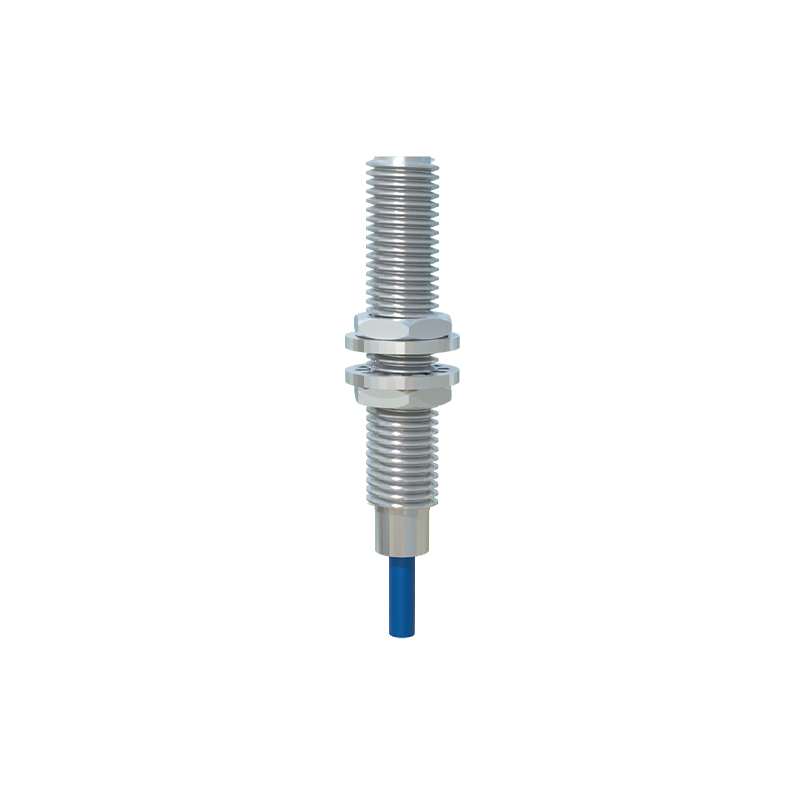
Knowing when not to use a technology is more critical than knowing how to use it.
1. Fine Metal Chips and Dust: Inductive sensors in machining centers will false-trigger on airborne ferrous swarf, not just the target. Capacitive sensors are useless with conductive dust coating the face.
2. High-Speed Non-Ferrous Targets: Detecting aluminum cans at 2000+ units per minute with an inductive sensor is a fool's errand. The eddy currents generated are too weak for reliable high-speed detection. Specialized, high-frequency models are required, and even they have a 5-7% failure rate in this regime.
3. Extreme Electromagnetic Interference (EMI): Near large VFDs (Variable Frequency Drives) or arc welders, even shielded sensors can latch or behave erratically. The solution isn't a better sensor; it's relocation or complete physical/electrical isolation. Attempting to "fix it with programming" leads to intermittent, untraceable faults.
4. Target Surface Dependency: Capacitive sensors are notoriously sensitive to material type, moisture, and chemical composition. A sensor tuned for dry paper will fail on damp paper. A system calibrated for PVC granules will false-trigger on PE granules. This dependency is non-negotiable.
Counter-Intuitive Conclusions: Data-Driven Heresies
1. A Higher IP Rating Can Increase Failure Risk. In washdown environments, an over-engineered IP69K seal can trap condensation internally if the housing isn't properly vented or designed for thermal cycling. I've collected failure data showing certain IP69K sensor models have a higher condensation-related failure rate in food & beverage plants than IP67 models with a breathable membrane.
2. Sometimes, a "Less Accurate" Sensor is More Reliable. In detecting warped or inconsistently positioned metal parts, a sensor with a wider hysteresis (e.g., 15% of sensing range) and a gradual switching characteristic will provide more stable operation than a high-precision, razor-sharp switching sensor. The latter will chatter, causing PLC input flicker. Stability trumps theoretical precision.
3. The Biggest Cost Isn't the Sensor, It's the Downtime. A $200 sensor failing can halt a $10,000/hour production line. Data from my audits shows that over-specifying for durability (e.g., choosing a welded stainless steel barrel over brass, or a PEEK face over PTFE) for critical points, despite a 300% unit cost increase, yields an ROI of less than three months in high-uptime environments. Cheap sensors are the most expensive purchase you can make.
4. RF Capacitive Sensors Can "See" Through Non-Metallic Walls—And That's a Problem. This touted feature means they are equally influenced by the target behind the installation wall and unwanted material (build-up, condensation, structural supports) on the other side. Your level measurement in a plastic hopper is as much a measurement of the crust on the outside as the material inside. Isolation mounting is not optional; it's mandatory, yet 70% of installations I review ignore it.
The final word: Proximity sensing is a battle against entropy. Your most powerful tool is not the latest catalog, but a logbook of environmental conditions, failure modes, and the humility to know that every specification has an unprinted asterisk pointing to the real world.