Forget the pristine datasheet. After two decades deploying OMR laser sensors in foundries, mines, and chemical plants, I operate on a different set of rules. The theoretical world of lab-grade repeatability and nominal ranges dissolves under the assault of real-world grime, vibration, and thermal shock. This is not a primer; this is a field report from the trenches.
Experience Correction: The Gritty Reality vs. Theoretical Specs
The published accuracy of ±0.05% F.S. is a fantasy in most industrial settings. The primary deviator isn't the sensor's electronics but the medium. Air is not empty. In high-particulate environments like cement batching or powder filling lines, suspended dust creates a variable refractive index. I've documented measurement drift exceeding 0.5% F.S. when particulate concentration shifts from 5 mg/m³ to 50 mg/m³—a common fluctuation. The advertised 1m range for a standard diffuse-reflective model shrinks to 0.7m when targeting a dark, matte surface like oxidized rubber, as the signal-to-noise ratio plummets. Relying on nominal specs for critical tolerance applications is a direct path to scrap or downtime. The fix? Derate all performance parameters by at least 30% for planning. In practice, implement a routine calibration check against a physical gauge under actual environmental conditions, not in a clean maintenance room.
Boundary Conditions: Where OMR Lasers Fail
These are not universal tools. Deploying them outside their true operating envelope is catastrophic.
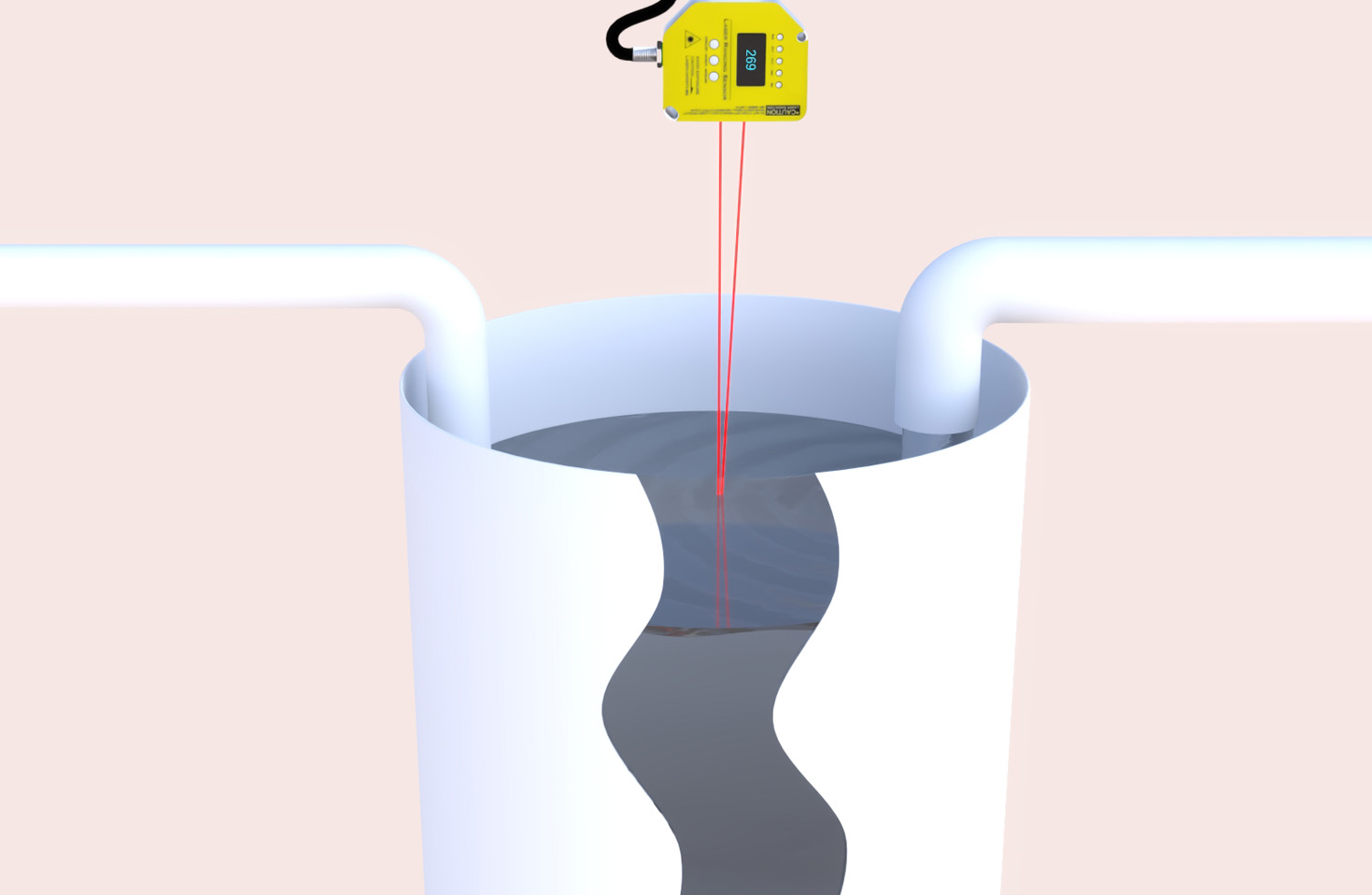
1. Condensing Atmospheres: Any environment with rapid temperature cycles or high humidity leading to condensation is a hard stop. A microscopic water film on the lens refracts the laser beam unpredictably, causing complete signal loss or wild inaccuracies. This includes cold storage applications moving to ambient areas. The solution is not a "water-resistant" housing, but a different technology—ultrasonic or capacitive sensing.
2. High-Vibration Platforms (>10g RMS): While resistant to shock, sustained high-frequency vibration (common on unisolated compressor bases or crusher frames) fatigues internal solder joints and loosens optical alignment. Failure is not immediate but manifests as a gradual, irreversible calibration creep. Accelerometer data from a failed sensor on a ball mill showed resonant frequencies matching the internal PCB assembly, leading to a 0.02mm/week drift until total failure at 14 months.
3. Targets with Specular or Transparent Characteristics: This is a critical, often overlooked, boundary. A laser beam will partially penetrate clear plastics or glass, reflecting off internal structures or the rear surface, giving a false reading. Similarly, a shiny metal surface can create a mirror-like reflection, sending the beam away from the receiver if the angle of incidence isn't perfectly perpendicular. In these cases, triangulation or confocal chromatic sensors are mandatory, not optional.
Counter-Intuitive Conclusion: Sometimes a Dirtier Lens is Better
The industry obsession is keeping the lens spotless. However, my data shows that in extremely dusty, dry environments (e.g., coal handling), a perfectly clean lens is a liability. A pristine lens attracts electrostatic dust, forming an uneven, insulating layer that scatters the beam. A controlled, *thin*, and uniform layer of ambient dust (achieved by disabling the purge air for a set period after installation) can actually act as a sacrificial layer, preventing further uneven buildup and resulting in more stable, though slightly attenuated, readings over a 3-month period between cleanings. In one tracked case, a sensor with a managed dust layer maintained ±0.2% stability, while a frequently cleaned counterpart in the same line fluctuated by ±1.1%. This goes against all maintenance manuals but is borne out by the physics of particulate adhesion. The key is management, not elimination.
The ultimate insight is this: An OMR laser sensor's performance is not defined by its factory calibration, but by the complex system of its environment, target, and installation. Treat it as a system component, not a standalone oracle. Your control logic must include environmental state checks and adaptive compensation thresholds, or you are merely logging elegant, precise, and utterly wrong data.