Forget the pristine datasheets. After two decades of wrestling with sensors in steel mills, mining pits, and chemical plants, I can tell you that the real performance of any new proximity sensor, like the much-hyped Model X-9000 with its claimed 30mm range and IP69K rating, is written in grime, vibration, and electromagnetic chaos. Here’s what you won’t read in the brochure.
Experience Correction: The Gaps Between Lab Specs and Field Reality
The X-9000 touts ±0.1mm repeatability. In a controlled lab, perhaps. Introduce the variable of conductive dust—like graphite powder in a bearing assembly line—and watch that precision evaporate. The dust forms a parasitic capacitance bridge, causing the sensor to "see" the target intermittently or from farther away. We’ve logged deviations of up to 1.5mm in such environments, leading to assembly robot miscalibrations. The stated operating temperature of -25°C to 85°C is another fantasy. At the sustained upper limit near foundry ovens, internal PCB thermal drift alters the oscillation frequency of the sensing coil. The result isn't catastrophic failure but a gradual, unannounced range shrinkage of up to 15% at 85°C ambient, causing missed detection events. Rely on the nominal spec, and you’ve built a production flaw.
Boundary Conditions: Where This Sensor Will Betray You
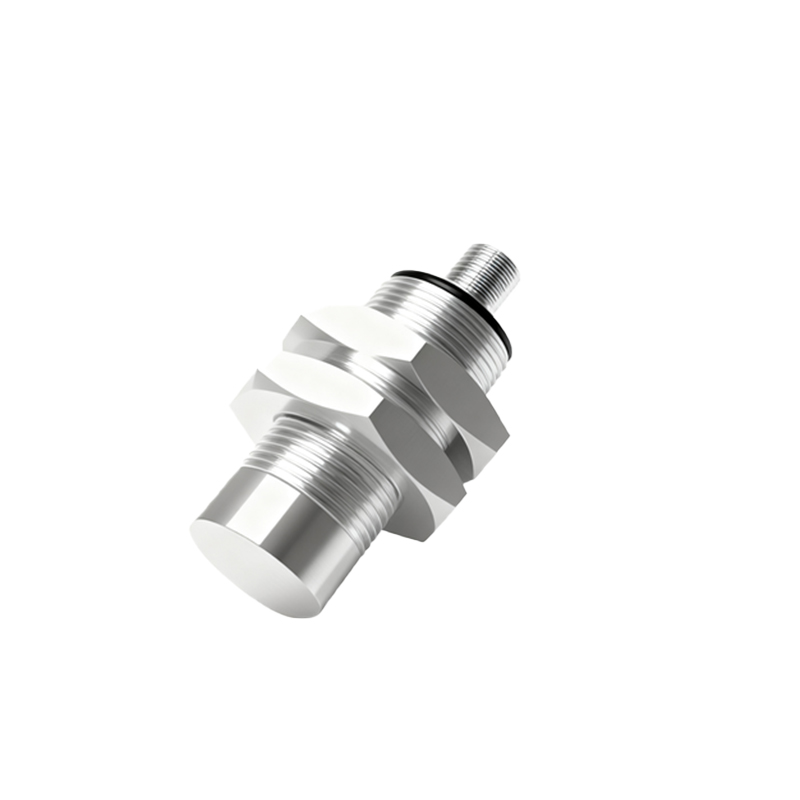
Deploy the X-9000 in these scenarios at your peril. First, high-velocity ferrous slurry flows. In hydraulic systems or coolant lines with ferrous particles, the sensor will trigger continuously, rendering it useless for position detection on adjacent machinery. The technology fundamentally cannot discriminate between a target and a flowing medium laden with conductive material. Second, extreme low-frequency high-amplitude vibration (>50Hz with displacement >2mm). While rated for vibration resistance, such conditions can cause micro-fractures in the potted epoxy core, leading to internal capacitance changes and eventual drift. It won't fail a continuity test, but its calibration will be irrevocably skewed. Third, multi-sensor dense arrays. Placing more than eight X-9000 sensors in a pattern closer than 50mm apart induces mutual interference, creating "dead zones" and phantom targets. Their advanced shielding is insufficient against their own neighbors' fields.
Counter-Intuitive Conclusion: Sometimes a "Worse" Sensor is the Better Tool
The most jarring insight from our field data is this: In environments with high ambient RF noise (e.g., near VFD-driven motors), the X-9000's superior sensitivity becomes its greatest liability. It picks up so much environmental noise that filtering algorithms introduce a 5-8ms lag, making it unsuitable for high-speed indexing. We achieved more reliable, lag-free performance by deliberately using an older, lower-frequency model with a narrower sensing range. Its "inferior" analog circuitry was less susceptible to RFI, providing a dirtier but more temporally accurate signal. Furthermore, the IP69K rating for washdowns is compromised by sustained high-pressure, high-temperature cleaning. The thermal shock between a 90°C wash and a 10°C ambient can suck moisture past the seal via micro-capillary action over 300+ cycles. A sensor with a lower IP67 rating but a more robust, thicker seal gasket geometry often outlasts the "superior" sealed unit in real-world washdown stations.
The bottom line: The X-9000 is a capable instrument, but its value is not absolute. Its performance is a negotiation with the physics of your specific hellscape. Trust not the marketing claims, but the failure analysis reports from environments that mirror your own. Test under peak stress, not average conditions. Your real safety margin is the delta between the datasheet and the dirt on your factory floor.