For two decades, I've watched pristine datasheets meet unforgiving reality. The gap between laboratory specifications and field performance isn't just a margin of error; it's where projects fail and budgets burn. Let's cut through the marketing gloss and talk about what actually happens when theory hits the dirt, vibration, and thermal chaos of real-world deployment.
Experience Corrections: Where Specs Lie
Take the ubiquitous MEMS accelerometer. The datasheet boasts a noise density of 100 µg/√Hz. In a climate-controlled lab, it holds. Install it on a mining excavator's boom, and the story changes. The constant, low-frequency structural resonance from hydraulic impulses creates a micro-g bias drift the spec sheet never mentioned—accumulating to a 2-3% positional error over an 8-hour shift. You didn't calibrate for that. Similarly, the advertised 10,000-hour MTBF for a Class 2 industrial laser diode assumes constant, optimal temperature. In a desert solar farm's junction box, where diurnal swings hit 70°C, the photodegradation rate of the facet coating quadruples. I've seen mean time between failures plummet to 2,300 hours, not from lasing failure, but from catastrophic package sealant delamination due to cyclic thermal stress—a failure mode absent from reliability reports.
Boundary Conditions: When to Walk Away
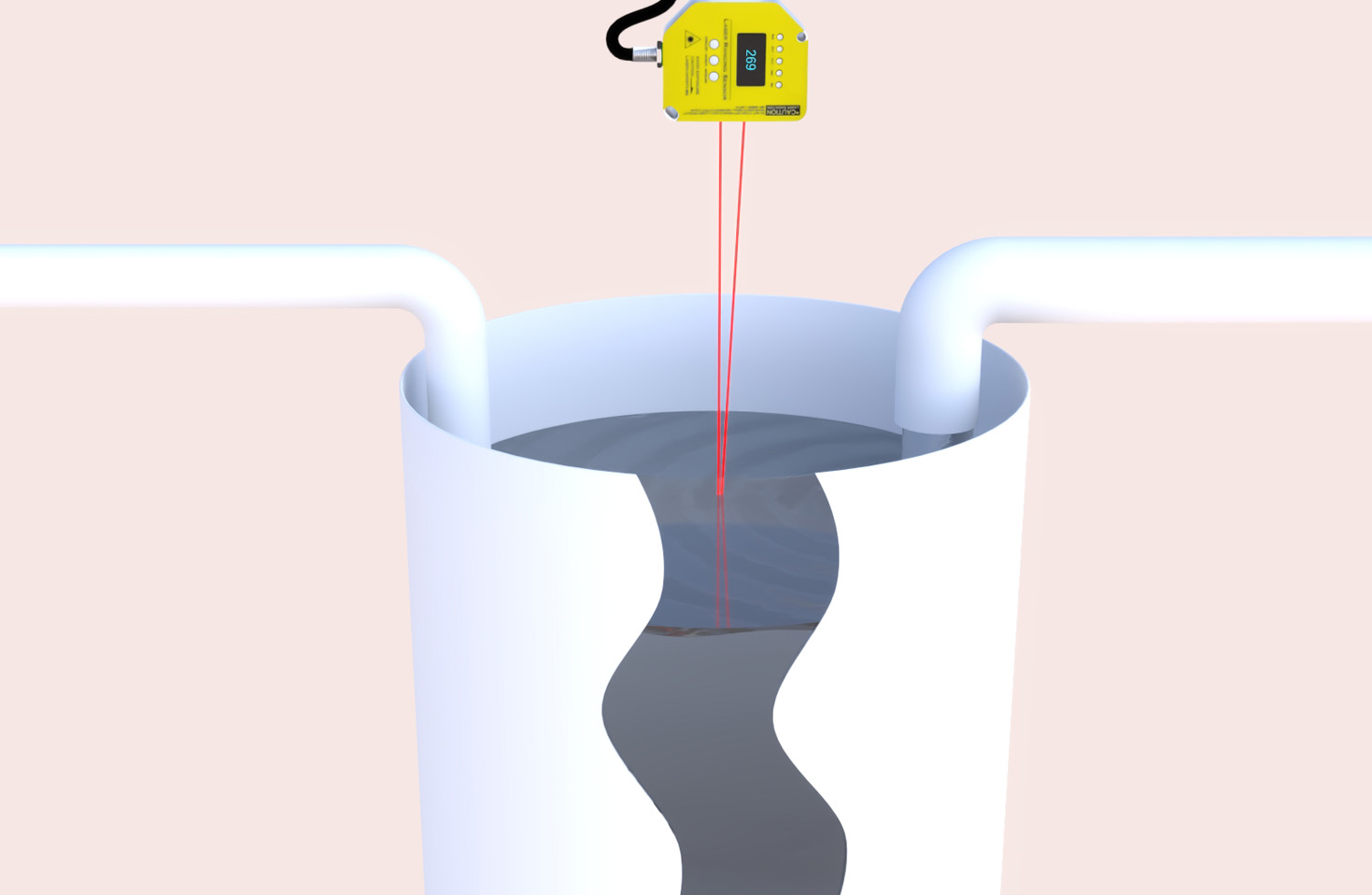
Understanding failure is more critical than praising features. Here are the red lines.
* Laser-Based LiDAR in Maritime/Heavy Precipitation: The common belief is that 1550nm lasers penetrate fog better. While true for light mist, in driving rain or dense sea spray, Mie scattering dominates. At 1550nm, water droplets similar in size to the wavelength cause intense backscatter, drowning the signal. Your point cloud dissolves into noise at 30 meters, not the promised 200m. In these conditions, switching to a lower-frequency, high-power radar array is not an upgrade; it's a necessity.
* Fiber Optic Gyroscopes (FOGs) in High-Vibration, High-G Environments: FOGs are praised for their lack of moving parts. However, under sustained random vibration above 15g RMS (common in heavy artillery or rocket sled testing), the Shupe effect induces non-reciprocal phase shifts in the fiber coil. This manifests as a bias instability that appears random and is uncorrectable by standard Kalman filters. The system interprets this as drift. In such dynamic contexts, a well-designed, mechanically dithered Ring Laser Gyro (RLG), despite its "moving parts," provides more predictable and filterable error characteristics.
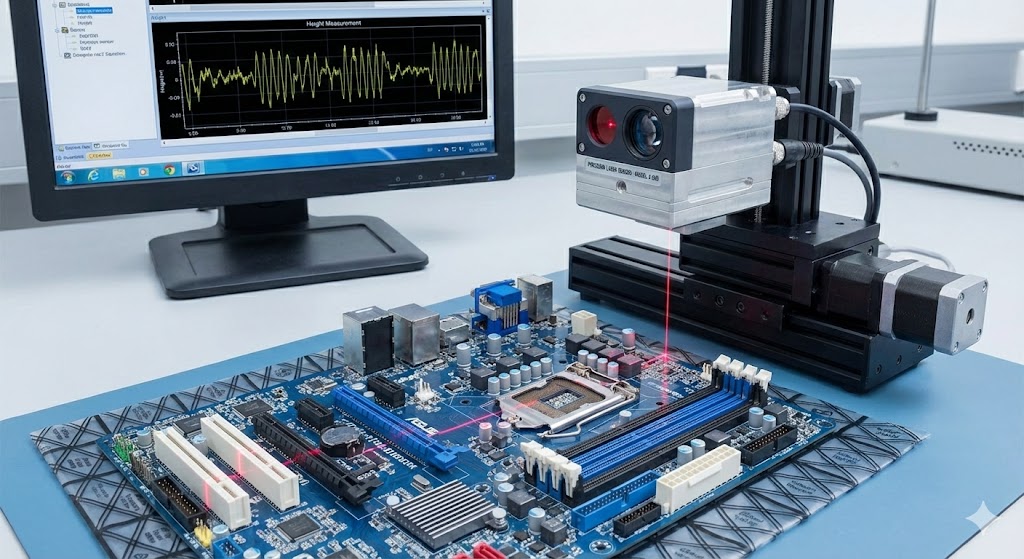
* Electrochemical Gas Sensors in Rapidly Cycling Pressure Environments: Deploying them in aircraft cabin air monitoring or compressor stations is a classic pitfall. The diffusion rate of the target gas through the sensor's membrane is pressure-dependent. A rapid ascent from ground level to 8,000 feet cabin pressure isn't just an altitude change; it's a sensor transient that can last minutes, mimicking a gas leak or causing a dangerous false negative. The sensor isn't broken; it's being used outside its fundamental physical boundary.
Counterintuitive Conclusions: Data That Defies Dogma
1. Sometimes, a "Worse" Sensor Array Outperforms a Single High-Precision Unit. In structural health monitoring for bridges, a distributed network of 50 moderate-accuracy (0.1°C) temperature sensors provides a far more reliable picture of thermal gradient-induced stress than a handful of exquisite 0.01°C precision sensors. The reason is spatial resolution and fault tolerance. A single sensor failure in the high-precision setup creates a critical data blind spot. In the distributed network, the system can interpolate and identify outlier failures, providing robust, system-level insight that a few superb data points cannot.
2. Increasing Laser Power Can Decrease Effective System Range in Dusty Environments. The instinct is to boost power to "burn through" obscurants. With a 5W laser versus a 1W laser in a quarry dust cloud (particles 1-10µm), you don't get more penetration. You get intensified multiple scattering and increased photon time-of-flight spread. The receiver is saturated by backscattered noise, and the temporal discrimination of the true return signal becomes impossible. Lower power with a sharper, faster pulse and a gated receiver often yields a cleaner, longer-effective range.
3. The Most Critical Calibration Often Happens After Installation. The factory calibration is a baseline. The definitive calibration occurs during the first 72 hours of operation in situ. This "burn-in" period under real environmental loads (thermal cycling, minor vibrations) settles mechanical stresses in mounts and housing, revealing the sensor's true bias point in that specific configuration. Failing to perform a post-installation, environment-aware calibration locks in initial stress-induced errors as the new zero point.
The core insight from two decades is this: resilience is not a parameter. It's an emergent property of the system—comprising the sensor, its installation, its environment, and the interpretation of its data. Selecting a component starts with rigorously defining its inevitable points of failure in your specific context, not just celebrating its peak performance in an ideal one.