Forget the pristine lab curves and marketing slicks. Two decades on the factory floor, in mines, and on offshore rigs have taught me that a proximity sensor's true performance is defined at the edges of its specification sheet, not the center. Here’s the unvarnished truth you won't find in the manual.
Experience Correction: The Myth of "Rated" Sensing Distance.
The advertised sensing distance (Sn) is a theoretical maximum under ideal conditions: a standard target at 23°C. In reality, thermal drift is your silent enemy. A high-temperature M18 inductive sensor rated for 8mm at 25°C might see its effective sensing distance shrink by 15-20% when ambient temperatures hit 70°C, not due to failure, but due to oscillator circuit damping. Similarly, the common belief that all ferrous metals are detected equally is dangerously wrong. A36 mild steel gives you the Sn. Switch to 410 stainless, and you might lose up to 30% of your effective range due to lower permeability. The real spec to obsess over is the "assured operating distance" (Sa), typically 0.9 x Sn. Design with Sa, not Sn, or your automated line will become a crash scene.
Boundary Conditions: Where This Technology Fails.
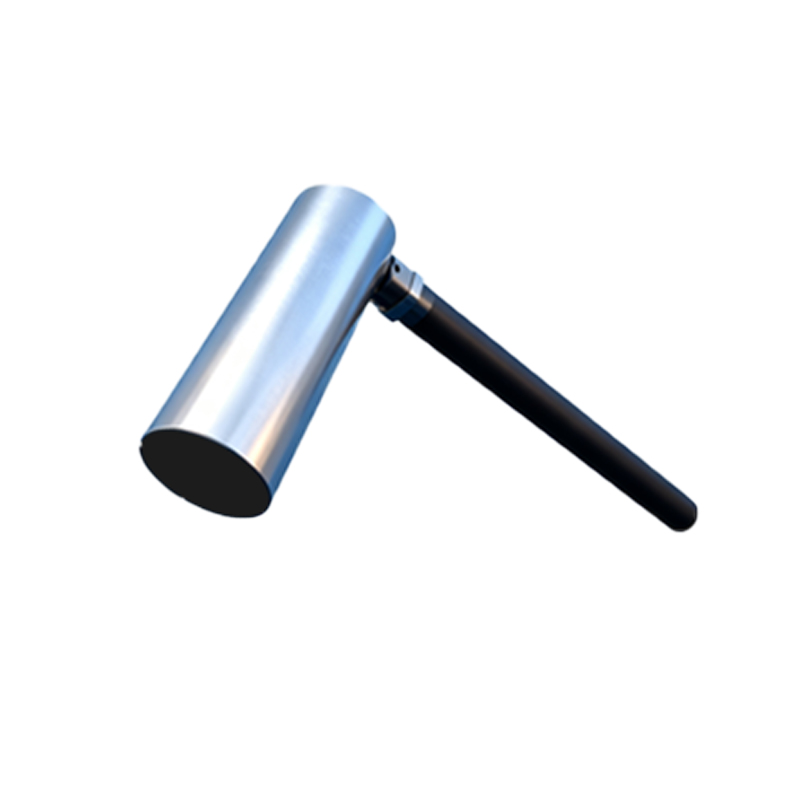
Proximity sensors are not universal detectives. Knowing their failure modes is critical.
1. Conductive Contaminants: Inductive sensors will fail catastrophically in environments with airborne conductive dust—think aluminum machining swarf or graphite powder. A fine layer builds up on the face, eventually causing the sensor to latch on, signaling "target present" permanently. I've seen this trigger false e-stops in CNC mills weekly. The solution isn't a "tougher" sensor; it's a different technology—capacitive or ultrasonic.
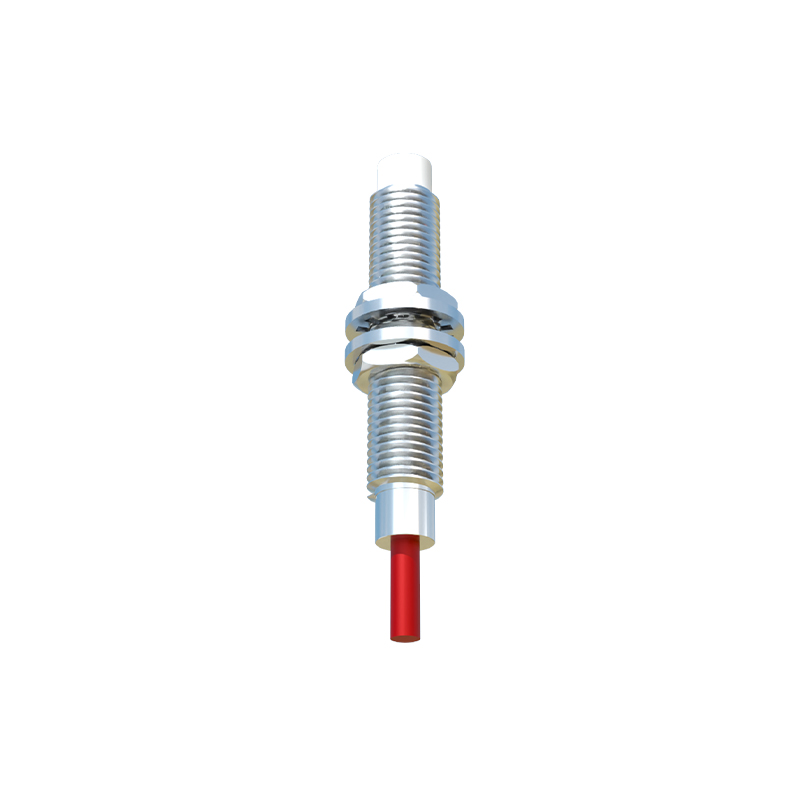
2. High-Speed, Small-Target Applications: Need to count gear teeth or detect tiny fasteners on a conveyor? The sensor's switching frequency is only half the story. The target size relative to the sensing face is paramount. If the target width is less than 60% of the sensor face diameter, the effective switching frequency can drop by over 50%, causing missed counts. For a 30mm diameter sensor, a 10mm wide bolt moving at 1m/s is a high-risk application.
3. Extreme Electromagnetic Interference (EMI): Placing a DC sensor within 2 meters of a 1000A AC welding line, even with shielded cables, is asking for trouble. The magnetic fields induce phantom signals. The industry "rule" of 1-meter separation is insufficient for high-current transients. You need DC sensors with robust RFI/EMI shielding, ferrite cores on cables, and often, a switch to analog current-output models (4-20mA) which are inherently more noise-immune than digital switches.
Counterintuitive Conclusions: Data-Driven Insights That Defy Convention.
1. A Higher IP Rating Can Increase Failure Rate in Dry, Abrasive Conditions. IP67/IP68 seals keep water out but can trap abrasive dust (silica, ceramic) inside the mounting thread. During vibration, this dust acts as lapping compound, grinding away the housing and compromising integrity. In such environments, a well-ventilated IP65 enclosure with a routine purge-air system often yields a longer mean time between failures (MTBF) than a hermetically sealed unit.
2. Sometimes, a Less Accurate Sensor is More Reliable. For simple presence/absence detection of a large metal plate, a low-cost, low-frequency inductive sensor often outperforms a high-frequency, precision model. Why? The simpler oscillator circuit in the low-end sensor is less susceptible to noise from variable-frequency drives (VFDs) and has fewer components to fail. The "precision" is unnecessary overhead that introduces failure points. Don't over-specify.
3. The "Dead Zone" is Your Friend for Vibration Immunity. All proximity sensors have a hysteresis zone—a difference between the switch-on and switch-off points. Datasheets treat it as a necessary evil. In practice, you can exploit it. For a sensor detecting a shaking conveyor part, deliberately mounting it so the target operates deep within this hysteresis zone (e.g., at 60% of Sn) makes the system immune to vibration-induced chatter. It sacrifices a bit of theoretical precision for rock-solid, real-world reliability.
The bottom line: Proximity sensors are brilliant, but they are contextual tools. Their performance is a negotiation between physics and the chaos of your specific application. Trust, but verify—with a thermocouple, an oscilloscope,