After two decades on factory floors, in mining pits, and on offshore rigs, I've learned that proximity sensor selection starts where the datasheet ends. The published specs are a best-case scenario, a laboratory promise that often fractures under the grit and vibration of reality. Let's cut to the critical insights.
Experience Corrections: The Gap Between Theory and Grime

The advertised sensing distance? Assume a 15-25% derating in environments with conductive dust (e.g., carbon, metal fines) or heavy non-conductive contamination (flour, cement). The dielectric constant of the contaminant layer creates a parasitic capacitance that dampens the sensor's field. I've documented inductive sensors rated for 15mm failing to reliably detect a target at 10mm after three weeks in a graphite milling station. The fix wasn't a "more robust" sensor, but a simple, pressurized air purge kit—a solution never found in the OEM manual. Similarly, the touted IP67/IP69K ratings guarantee survival in static immersion tests, but they say little about thermal cycling. Rapid temperature swings in washdown environments can create a vacuum inside the housing, drawing in moisture through microscopic cable gland imperfections. I've autopsied dozens of "waterproof" sensors filled with condensation. The lesson: For cyclic environments, specify sensors with potted electronics and a vented (but filtered) housing to equalize pressure.
Boundary Conditions: When to Walk Away
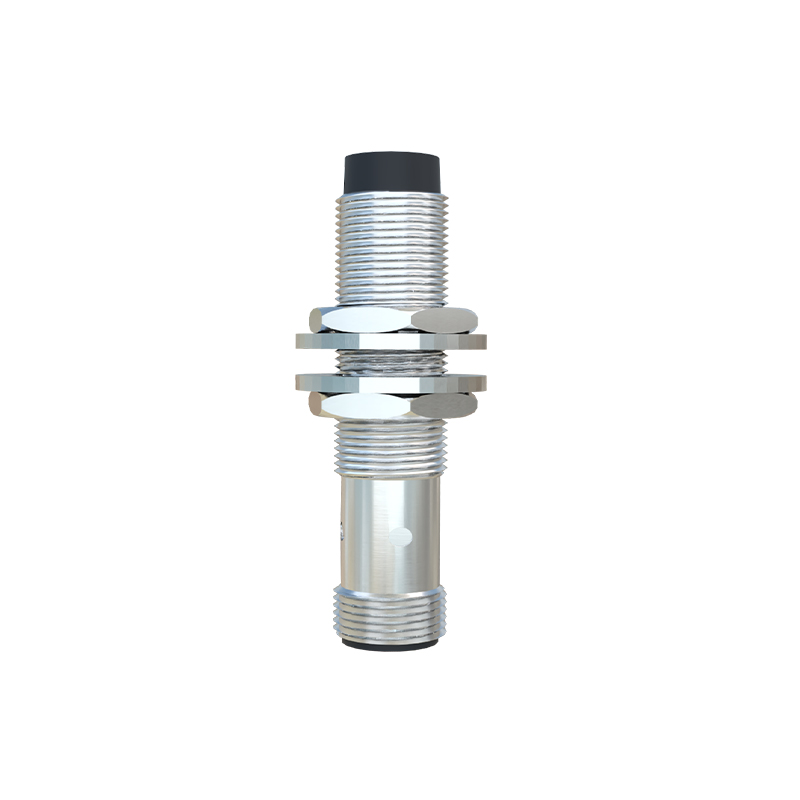
Proximity sensors are not universal tools. Knowing their failure modes is paramount.
1. Extreme Electromagnetic Interference (EMI): Placing an inductive sensor within 2 meters of a 1000A+ AC welding station is a recipe for false triggers or permanent latch-up. The magnetic fields induce currents in the sensor's oscillator coil, mimicking a target. Ferrous weld spatter accumulation on the sensing face compounds the problem.
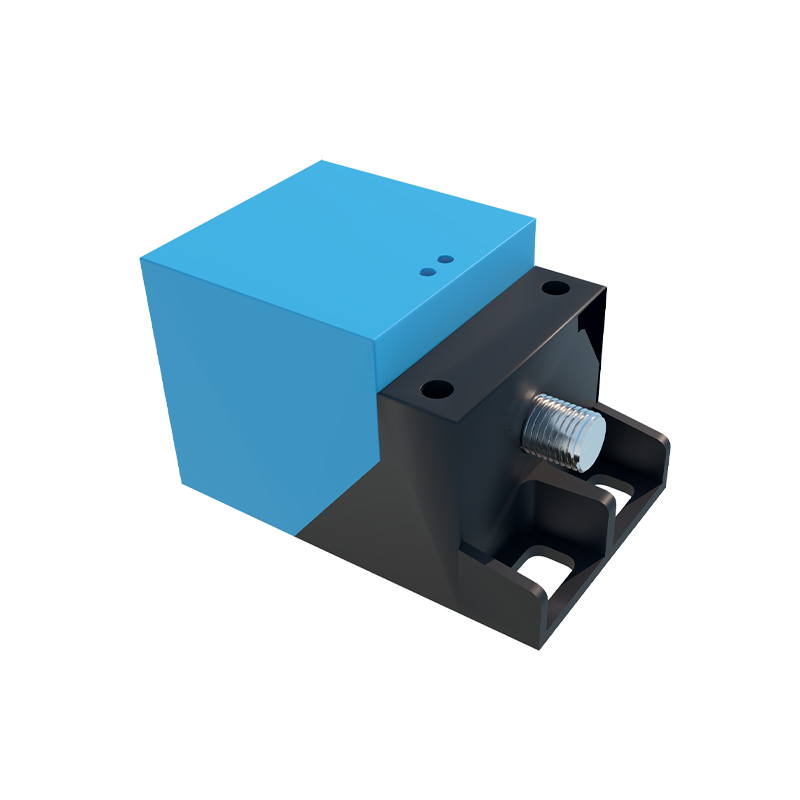
2. High-Speed, Non-Ferrous Targets: An inductive sensor is useless for detecting individual aluminum cans on a conveyor exceeding 3-4 kHz. Eddy currents don't form fast enough. Here, a capacitive sensor might seem logical, but it will fail due to sensitivity to moisture film variation on the can surface. The correct, counter-intuitive solution is often a miniature ultrasonic sensor or a specialized low-mass photoelectric.
3. Viscous Media Adhesion: In food processing with sticky fats or sugars, or in asphalt handling, any sensor with a flat face will eventually foul. The accumulating layer becomes the perceived "target." The boundary condition is clear: if the media is adhesive, you must specify a sensor with a pronounced, tapered sensing face (e.g., a "horn" or "cone" style) or employ a non-contact design with a remote emitter/receiver.
Counter-Intuitive Conclusions: Data-Driven Reversals
1. Sometimes, Less Sensitivity is More: In a high-vibration setting, engineers often crank up the sensitivity potentiometer to compensate for target wobble. This is a critical error. Increased sensitivity amplifies vibration noise, leading to erratic output. The solution is to reduce sensitivity to the minimum threshold that still reliably sees the target at its farthest vibration point, thereby creating a wider, more stable noise margin. Data from a steel mill roller alignment system showed a 300% increase in mean time between failures (MTBF) by reducing sensitivity by 30%.
2. The "Compatible" Material Trap: Datasheets list "sensing distances for steel." A common assumption is that stainless steel, being ferrous, will perform similarly. Wrong. The lower relative permeability of many stainless grades (especially Austenitic series like 304) can reduce effective sensing distance by up to 40% compared to mild steel. The most reliable target material for inductive sensors is not the most advanced alloy, but plain, low-carbon cold-rolled steel.
3. Costly Redundancy vs. Smart Geometry: The instinct for critical detection is to install redundant sensors. However, two identical sensors side-by-side can interfere magnetically or ultrasonically, causing mutual blindness. A more elegant and often cheaper solution is a single sensor with a strategically placed, shaped target (e.g., a star or castellated wheel). This transforms a binary presence/absence check into a reliable pattern verification, immune to the single-point failures that plague duplicate systems. In a turbine overspeed application, this geometric approach proved more reliable than a triple-redundant sensor array at half the system cost and complexity.
The final word: Treat the proximity sensor not as a commodity component, but as a system interface defined by its environment. Its true specifications are written by the grime, vibration, EMI, and material quirks of your specific application. Test prototypes in-situ, under