Forget the datasheet. After twenty years of deploying proximity sensors in environments ranging from automated foundries to offshore drilling rigs, I've learned that the real operating manual is written in failures, not in theory. The industry is saturated with platitudes about reliability and precision. Let's cut through the noise and talk about what actually matters when the pressure is on, the temperature is extreme, and failure is not an option.
Experience Correction: The Myth of "Stable" Sensing Distance.
Every sensor datasheet proudly lists a nominal sensing distance (Sn). In a clean lab at 25°C, it's accurate. In the field, it's a suggestion. The most critical, often unquantified deviation comes from target material composition and surface condition. A standard inductive sensor calibrated for mild steel will see its effective sensing distance drop by up to 40% when targeting 304 stainless steel. For capacitive sensors, the dielectric constant of the target is king. A sensor tuned for water-based liquids will completely misread the level of a hydrocarbon, not by a few percent, but by orders of magnitude. The "correction factor" tables in appendices are your first bible; ignore them at your peril. Furthermore, electromagnetic interference in a panel packed with VFDs (Variable Frequency Drives) can effectively reduce a sensor's Sn by inducing noise that masks the true signal, leading to intermittent failures that are hell to diagnose. The fix? Never install at the nominal Sn. My rule is derate by at least 25% for inductive, 35% for capacitive, and budget for a 15% drift over a three-year period due to coil aging and environmental contamination.
Boundary Conditions: Where This Technology Breaks.
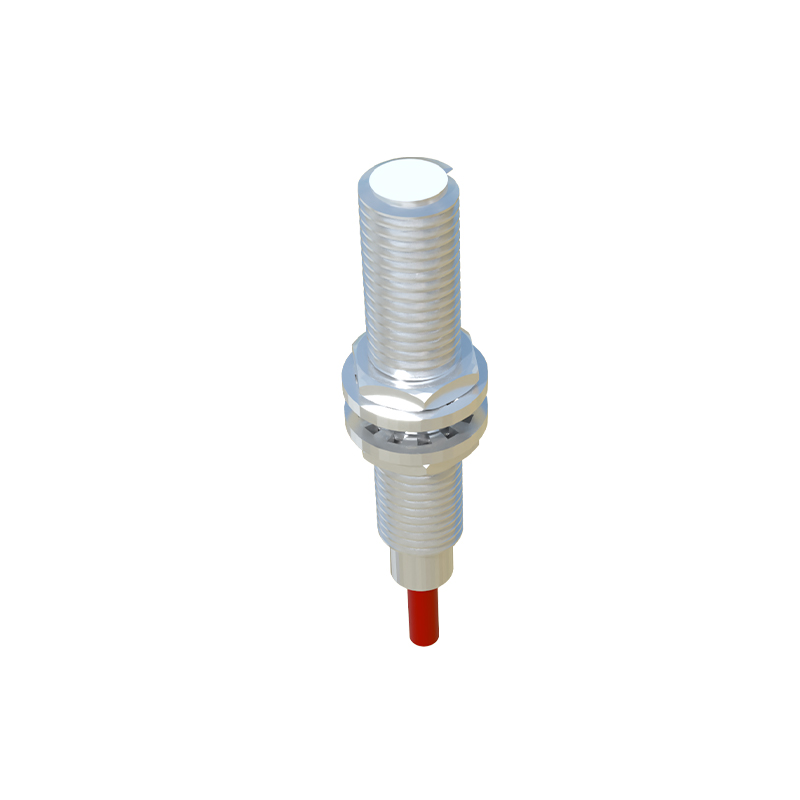
Proximity sensors are not universal detectives. Knowing their breaking points is more valuable than knowing their strengths.
1. High-Viscosity Media and Slurry Encapsulation: Any capacitive or ultrasonic sensor used for liquid level detection in a slurry (e.g., mining tailings, food puree) will fail. The medium will coat the sensing face, creating a new, permanent "target" that renders the sensor blind to actual level changes. Heated diaphragms are a band-aid, not a cure, in sustained operations.
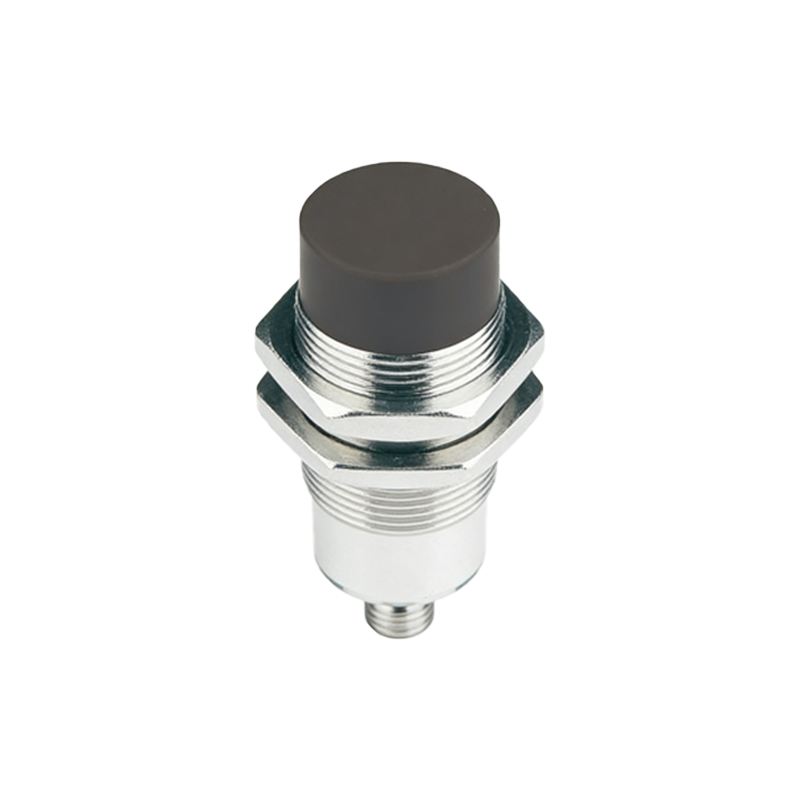
2. Extreme Dynamic Targets: Sensing a fastener on a high-speed conveyor moving at 5 m/s is possible. Reliably sensing that same fastener when its orientation is tumbling and unpredictable is not. The effective sensing area becomes a probabilistic guess. In such cases, a photoelectric curtain or vision system, though more complex, is the only responsible choice.
3. Metallic Dust Environments: Inductive sensors in machining centers with aluminum or steel dust are time bombs. The dust accumulates, is detected, and can cause a permanent "on" state. Sealing ratings (IP69K) keep coolant out but do nothing for this. This is a fundamental physics limitation, not a seal failure.
4. Very Low-Power or Battery-Powered Applications: The leakage current of a standard DC 3-wire sensor, often in the range of 1-2 mA, is trivial on a line. On a battery-powered IoT device, it's a battery killer in days. You must move to specialized two-wire designs or ASIC-based sensors with microamp quiescent current, accepting a trade-off in sensing distance and load capacity.
Counter-Intuitive Conclusions: Data-Driven Heresies.
1. A More Expensive Sensor Can Be Less Reliable. A high-precision, ultra-short-range sensor with a 0.1mm repeatability is engineered for stability at its limits. In a high-vibration environment (like a stamping press), this sensitivity becomes a liability. It will detect minute positional oscillations as triggers, causing false actuation. A cheaper, less precise sensor with a larger hysteresis and a longer range, installed with a generous gap, will provide bulletproof operation. Precision and robustness are often inversely correlated.
2. The "Fail-Safe" Output Configuration is Often the Less Safe Choice. The instinct is to set a sensor to "Normally Closed" so that a wire break causes a safe shutdown. In complex safety circuits with multiple series-connected sensors, this can mask a single-point failure. If one sensor in a chain fails internally to a closed state, the system reads "healthy" while a critical guard is open. A monitored "pulse-test" circuit or dedicated safety sensors (with dual channels and cross-monitoring) is the only true solution. Conventional fail-safe wiring gives a false sense of security.
3. Temperature Compensation Can Be Your Enemy. Many modern sensors boast internal temperature compensation. For a slow, ambient shift, it's